
 By adnanshabbir942@gmail.com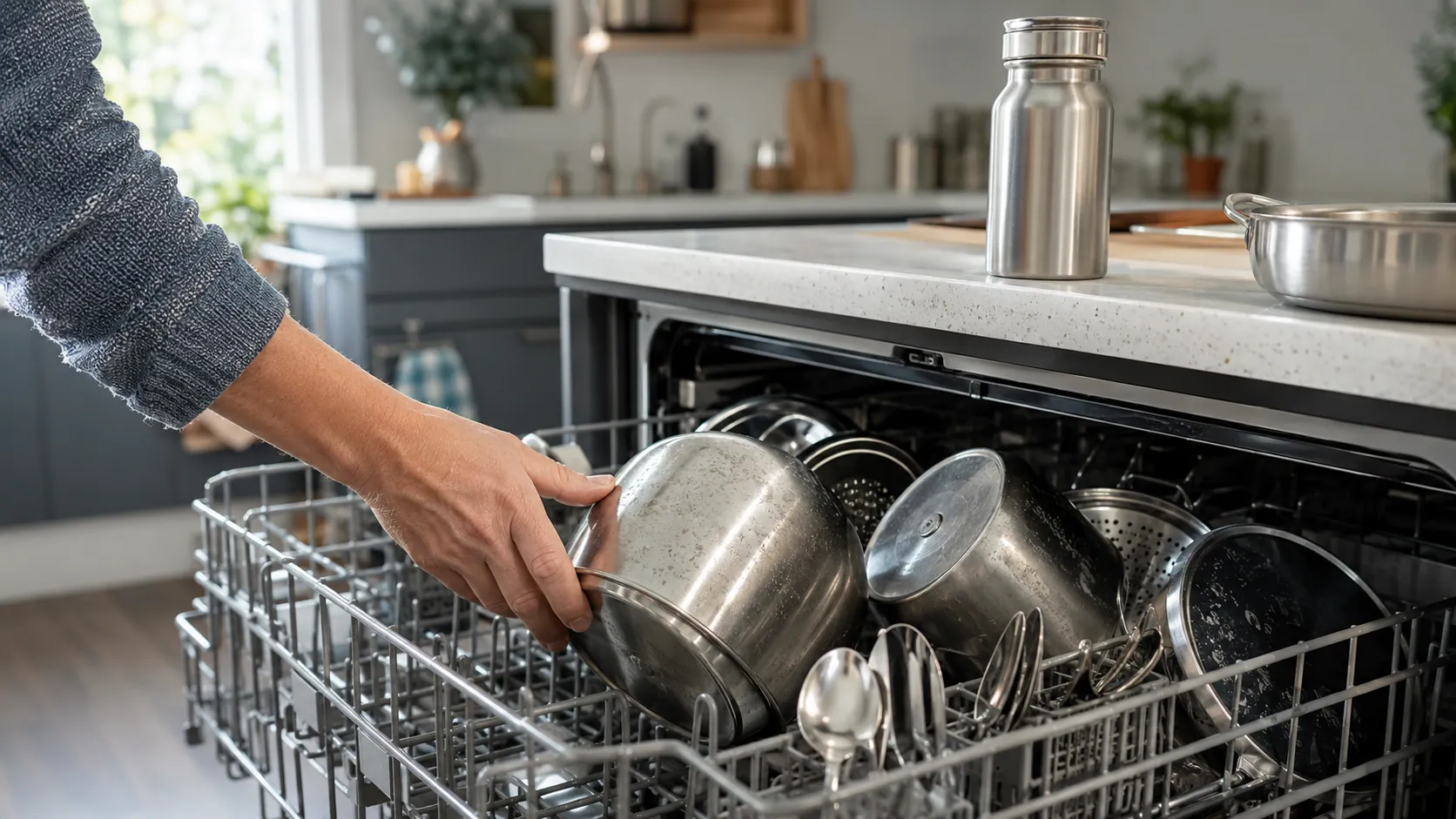
Can you put stainless steel in the dishwasher? Yes, in many cases you can—but that does not mean every stainless steel item belongs there, or that dishwashing is always the best choice for its long-term care. Most brands and care guides agree on the same basic answer: a lot of stainless steel cookware, utensils, and some bottles are technically dishwasher safe, but repeated exposure to high heat, strong detergent, and mineral-rich water can leave behind water spots, cloudy film, discoloration, or even shorten the life of the finish. That is why checking the dishwasher-safe label and the manufacturer’s instructions matters more than the material name alone.
For searchers looking for a quick answer, here is the simplest version: plain stainless steel is often safe for the dishwasher, but items with insulation, painted coatings, wood handles, rubber parts, sharp knife edges, or exposed non-stainless materials are more likely to do better with hand washing. In other words, the better question is not only “can stainless steel go in the dishwasher?” but also “should this particular stainless steel item go in the dishwasher?”
The Short Answer: When Stainless Steel Is Dishwasher Safe
If you are wondering whether stainless steel is dishwasher safe, the answer is usually yes for many everyday items. Common examples include some stainless steel bowls, measuring cups, measuring spoons, flatware, and many pieces of stainless steel cookware. Whirlpool’s general dishwasher guide explicitly includes stainless steel among items that can often go in the dishwasher, while Finish’s care guides also discuss cleaning stainless steel pots and pans and stainless steel water bottles in the machine.
Still, dishwasher safe is not a universal promise. A product can be made from 18/8 stainless steel, 18/10 stainless steel, 18/0 stainless steel, or even 304 stainless steel, and yet brand design choices still matter. The lid, welds, handle material, exterior finish, painted surface, insulation, or exposed aluminum core may change the care instructions. That is why manufacturer’s instructions matter more than internet myths or assumptions based on the word stainless alone.
When You Should Not Put Stainless Steel in the Dishwasher
There are several situations where putting stainless steel in the dishwasher is not a smart move, even if the item survives a cycle or two. The first is insulated drinkware. Some stainless steel water bottles, travel mugs, and insulated containers are dishwasher safe, but others are not—especially older models, items with vacuum insulation, or products with decorative coatings. Finish notes that some painted or insulated bottles should be washed more carefully, and brand-specific care pages often vary by model.
The second big exception is knives. Even if the steel itself resists corrosion, dishwashing can dull the blade, loosen handles, or increase wear over time. The same logic applies to pieces with wood handles, plastic handles, rubber handles, or mixed-material construction. Misen also highlights that features like non-stick coatings, handle materials, and exposed aluminum edges can change whether a pan is truly dishwasher friendly in real life.
Another case is premium cookware you want to keep looking new. A pan may be labeled dishwasher safe stainless steel cookware, yet frequent dishwashing can slowly reduce shine, encourage minor staining, or create a dull surface. That is why many cooks ask, “is dishwasher safe bad for stainless steel pans over time?” The honest answer is that the cookware may remain usable, but the finish may not stay as attractive as it would with gentle hand cleaning. Reddit discussions around stainless steel sauté pans reflect this exact concern from real users.
Stainless Steel Cookware vs. Bottles vs. Utensils: The Rules Are Different
One reason this keyword is so confusing is that people talk about stainless steel as if it were one single category. It is not. Stainless steel cookware, stainless steel travel cups, stainless steel utensils, and stainless steel mixing bowls do not all behave the same way in the dishwasher.
With cookware, many brands allow dishwashing, but also admit that hand wash stainless steel pan care may preserve the finish better. That is especially true for high-end pans with layered construction or polished exteriors. A pan can be structurally fine and still come out with water spots or dullness after repeated cycles.
With water bottles, the decision is even more product-specific. Searchers often ask, “can stainless steel water bottles go in the dishwasher?” Sometimes yes, sometimes no. The safest answer depends on whether the bottle is uninsulated, insulated, painted, powder-coated, or has special lid parts. Finish’s guidance around stainless steel water bottle dishwasher safe care shows that details like lids and coatings make a real difference.
With utensils, cutlery, and bowls, the dishwasher is often less risky, but not always perfect. You can usually put stainless steel utensils in the dishwasher, and many people do. But if your home has hard water, harsh detergent, or crowded loads, you may still see cloudy film, spots, or minor staining. This is one of the biggest content gaps in competitor pages: they spend much more time on cookware and bottles than on flatware, mixing bowls, lunch containers, or pet bowls.
Why the Dishwasher Can Damage Stainless Steel Over Time
To understand why dishwashing can affect stainless steel, it helps to know how the material protects itself. Stainless steel resists rust because it forms a thin protective surface layer often described as a chromium oxide layer. That protective layer is one reason alloys like 18/8, 18/10, and 304 stainless steel are valued in kitchens. But while the material is corrosion-resistant, it is not completely immune to harsh treatment.
Inside a dishwasher, stainless steel faces a rough environment: high heat, strong alkaline detergents, forceful water spray, food acids, and repeated wet-dry cycles. Misen notes that things like acidic foods—including tomato sauce, vinegar, and citrus residue—can combine with aggressive dishwasher conditions to affect appearance over time. Finish also explains that the grade and composition of the steel influence how well it resists staining and corrosion.
That is why people search for terms like pitting, discoloration, corrosion, rust, water spots, and cloudy film. In many cases, the damage is cosmetic rather than catastrophic. The pan still works. The bottle still holds water. But the appearance changes, and that matters to most owners—especially if they bought premium cookware.
What “Dishwasher Safe” Really Means
One of the biggest misunderstandings around this topic is the phrase dishwasher safe itself. Many readers assume it means, “This item will look perfect forever if I wash it in the dishwasher.” That is not what the phrase usually means.
In practice, dishwasher safe usually means the item can tolerate dishwasher cleaning under normal recommended conditions without immediate failure. It does not guarantee zero dulling, zero spotting, zero color changes, or zero long-term wear. That is why one brand may say a pan is dishwasher safe while also recommending hand washing for the best finish and longest life. Whirlpool and Misen both support this broader interpretation, even though they present it in different ways.
So if you have ever wondered what dishwasher safe really means, the answer is this: it means acceptable machine washing, not always ideal machine washing.
Stainless Steel Grades Explained: 18/8, 18/10, 18/0, and 304
Another topic that supports topical authority is stainless grade. Competitors do mention 18/8 stainless steel, 18/10 stainless steel, 18/0 stainless steel, and 304 stainless steel, but most do not explain them clearly enough for the average reader.
The numbers generally refer to the approximate makeup of the alloy, especially the percentages of chromium and nickel. In simple terms, more corrosion resistance often means better performance against staining and rust. That does not mean a higher grade automatically makes every item dishwasher safe, because construction still matters. A 304 stainless steel pot with a delicate handle, layered base, or branded exterior may still need more careful treatment than a plain bowl.
Here is a quick reference:
| Stainless grade | What it usually suggests | Dishwasher takeaway |
| 18/10 | Higher nickel content, strong corrosion resistance | Often performs well, but still check label |
| 18/8 | Common food-grade stainless option | Usually durable for kitchen use |
| 18/0 | No nickel or low nickel | Can be more budget-friendly, may be less corrosion-resistant |
| 304 stainless steel | Widely used, corrosion-resistant food-safe grade | Strong option, but not a blanket dishwasher guarantee |
The key lesson is that grade matters, but it is only one part of the story.
How to Put Stainless Steel in the Dishwasher the Right Way
If you do decide to machine wash stainless steel cookware or drinkware, the way you load it matters. This is where many users go wrong.
First, rinse off heavy residue, especially from acidic foods like tomato sauce, vinegar, or citrus-based sauces. Second, check whether the item belongs on the top rack or bottom rack. Many sturdy pans belong securely on the bottom, while smaller pieces and some lids may do better on the top. Third, remove or open lids, separate detachable parts, and position bottles or containers upside down only if the brand recommends it. Finish’s guidance around lid off, parts separation, and practical loading details is especially useful here.
Next, use a reasonable cycle and quality detergent. You do not always need the harshest setting. Overkill is one reason owners later wonder, “will the dishwasher ruin my stainless steel sauté pan?” In many cases, a normal cycle plus prompt drying gives better results than the hottest, longest cycle available. After the wash, take the item out and towel dry if needed. That one small habit can reduce water spots and help preserve appearance.
Common Problems After Dishwashing Stainless Steel—and How to Fix Them
The most common complaint is water spots. These are often caused by minerals in the water rather than by the steel itself. If your house has hard water, spots may show up more often on polished items. A rinse aid, prompt drying, and avoiding overcrowded loads can help.
Another issue is cloudy film or dullness. This often happens when detergent residue or mineral buildup stays on the surface. It can make otherwise good cookware look old before its time. A gentler wash routine and careful drying often help reduce it. Misen also discusses restoring shine without harsh chemicals, which lines up well with user pain points around finish loss.
Then there is rainbow discoloration, which many competitors barely address even though searchers often care about it. People ask, “why does stainless steel turn rainbow in the dishwasher?” That effect can be related to heat, minerals, or residue and is often cosmetic rather than dangerous. This is a valuable gap keyword opportunity because it lets your article solve a problem the current SERP handles poorly.
Finally, small rust specks can appear in some situations. Sometimes the source is not the stainless item itself, but contact with other materials, harsh detergent, or poor dishwasher conditions. This is why comparison guidance—like what metals should not go in the dishwasher—helps support the main topic.
Is It Better to Hand Wash Stainless Steel?
For many readers, this is the real question. Is it better to hand wash stainless steel cookware? In a lot of cases, yes—especially if you care about appearance, polished finishes, and long-term aesthetics.
That does not mean dishwashing is wrong. If a pan or bowl is labeled safe and you use the dishwasher occasionally, it will probably be fine. But if you want the best odds of preserving shine and avoiding pitting, discoloration, and loss of shine, hand washing is usually the better option. This is the core of the dishwasher or hand-wash stainless steel debate, and it is where competitor content converges most clearly.
A practical middle ground works best for many people: dishwasher-safe items can go through the machine when needed, while premium pans, insulated bottles, knives, and favorite pieces get hand washed.
What Other Metals and Kitchen Items Should Not Go in the Dishwasher?
If you want to build broader kitchen-care confidence, it helps to know that stainless steel is not the only material affected by dishwasher conditions. Whirlpool’s broader guide also discusses items like silver, sterling silver flatware, cast iron, copper, coated cookware, and delicate kitchenware that may not react well to dishwashing.
That context matters because many spotting, staining, and corrosion problems are made worse when materials mix in the same load. So while the main question is “can you put stainless steel in the dishwasher?”, a smarter household-care mindset is to ask, “what else is in the dishwasher with it?”
Quick Reference Table
| Item | Dishwasher safe? | Best advice |
| Plain stainless steel bowl | Often yes | Check label, dry promptly |
| Stainless steel cookware | Often yes | Safe in many cases, hand wash for best finish |
| Stainless steel water bottle | Sometimes | Depends on insulation, coating, and lid |
| Stainless steel knife | Usually not ideal | Hand wash to protect blade and handle |
| Stainless steel utensil/cutlery | Often yes | Watch for spots in hard water |
| Premium clad pan | Often technically yes | Hand wash if appearance matters |
FAQ
Can all stainless steel go in the dishwasher?
No. Many items can, but not all stainless steel should. Construction, coating, insulation, and brand care rules matter.
Can you put stainless steel knives in the dishwasher?
It is usually better not to. The blade and handle can wear faster, even if the steel itself resists rust.
Can stainless steel water bottles go in the dishwasher?
Sometimes. It depends on whether the bottle is insulated, painted, coated, or has special lid parts.
Why does stainless steel get spots after the dishwasher?
Usually because of hard water, detergent residue, or drying conditions rather than because the steel is defective.
Is 18/10 stainless steel dishwasher safe?
Often yes, but the grade alone is not enough. Always follow the manufacturer’s instructions.
Final Words
So, can you put stainless steel in the dishwasher? Usually yes—but with caution. Many stainless steel cookware, bowls, utensils, and some bottles are made to handle dishwashing. But dishwasher safe is not the same as risk-free, and the wrong cycle, detergent, finish, or item type can lead to water spots, cloudy film, discoloration, or reduced shine over time. The best rule is simple: check the care label first, treat specialty items more carefully, and use hand washing when you want the best long-term look and performance.
Disclaimer:
This article is for general informational and household care guidance only. Stainless steel dishwasher safety can vary by item type, brand, coating, insulation, handle material, and manufacturer instructions. Always check the care label or product guide before placing stainless steel items in the dishwasher.