
 By adnanshabbir942@gmail.com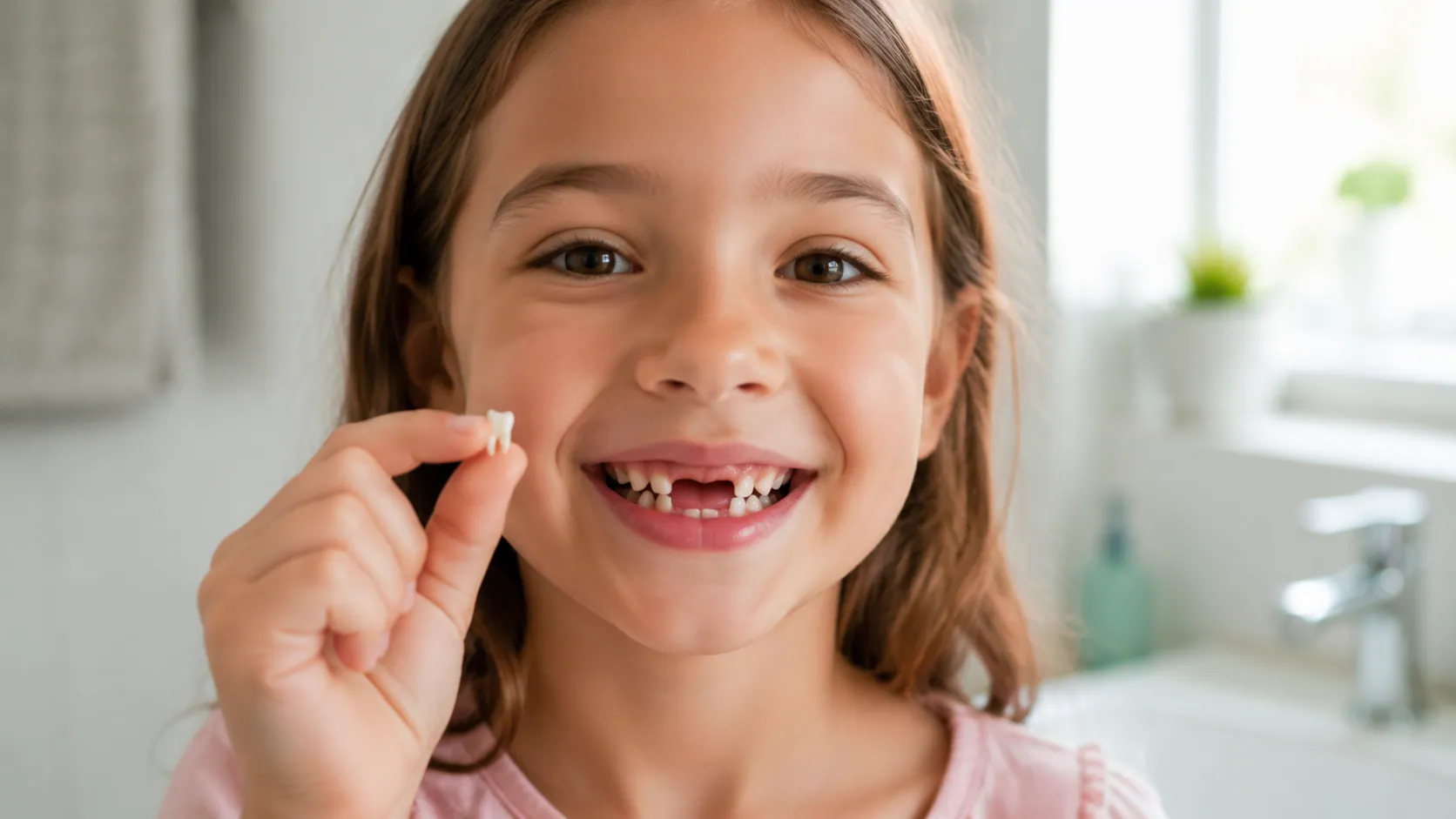
When do kids lose their first tooth? Most children lose their first baby tooth around age 5 to 7, with age 6 being the most common average. For many kids, the first tooth to fall out is one of the lower central incisors, which are the two bottom front teeth. This is a normal part of children’s dental development, as baby teeth, also called primary teeth or milk teeth, loosen to make space for permanent teeth. Mayo Clinic notes that baby teeth usually loosen and fall out around age 6, while the ADA’s eruption information shows that primary teeth shed throughout childhood as adult teeth come in.
For parents, the first loose tooth can feel exciting, emotional, and a little confusing. You may wonder if your child is losing teeth too early, too late, or in the right order. The good news is that there is a wide normal range. Some kids lose their first tooth at age 5, while others may not lose one until age 7 or a little later.
This guide explains the normal baby teeth falling out timeline, which tooth usually falls out first, what to do with a loose tooth, when to call a pediatric dentist, and how to keep new adult teeth healthy.
What Age Do Kids Usually Lose Their First Tooth?
Most kids lose their first tooth around age 6, but the normal range is usually age 5 to 7. Some children start earlier, especially if their baby teeth came in early during infancy. Others start later, especially if their first baby teeth came in later than average.
A child’s first tooth loss is not a race. Dental development varies from child to child. One child may have a wiggly tooth in kindergarten, while another may not lose a tooth until first or second grade. In many cases, both situations are normal.
The key point is that baby teeth loosen when the permanent teeth underneath begin to move upward. As the adult tooth grows, the baby tooth root slowly breaks down. This makes the tooth feel loose, wiggly, or “ready” to fall out.
Parents often search what age do kids lose their first tooth because they want reassurance. If your child is around age 5, 6, or 7, and the tooth is loose without pain, swelling, injury, or infection, it is usually part of normal tooth shedding. The first permanent teeth often begin appearing around the same time that primary teeth start to shed.
However, if your child loses a tooth before age 4, has severe pain, has swelling around the gums, or has a tooth knocked loose by an accident, it is best to contact a dentist.
Which Baby Tooth Usually Falls Out First?
The first baby tooth to fall out is usually one of the lower central incisors. In simple words, these are the two bottom front teeth. Mayo Clinic’s baby teeth diagram also explains that baby teeth usually fall out in the order they came in, starting with the lower central incisors, followed by the upper central incisors.
This means the common first-tooth pattern looks like this:
| Common First Teeth to Fall Out | Simple Parent-Friendly Name |
| Lower central incisors | Bottom front teeth |
| Upper central incisors | Top front teeth |
| Lateral incisors | Teeth beside the front teeth |
If your child’s bottom front tooth is loose around age 6, that usually matches the expected pattern. The tooth may wiggle for days or weeks before it finally falls out. Some children enjoy gently wiggling it with their tongue, while others feel nervous and avoid touching it.
It is also normal for the exact order to vary slightly. For example, one child may lose a top front tooth before another lower tooth becomes loose. Small differences do not automatically mean something is wrong. The bigger concern is whether there is pain, swelling, trauma, crowding, or a permanent tooth coming in where it does not have enough space.
Why Do Baby Teeth Fall Out?
Baby teeth fall out because they are temporary teeth designed to guide your child’s early chewing, speaking, smiling, and jaw development. Children usually have 20 baby teeth, and these teeth hold space for future permanent teeth.
As the adult teeth develop underneath the gums, they gradually push upward. This pressure causes the roots of the baby teeth to dissolve, a process often called root resorption. Once the roots become short enough, the baby tooth loses support and starts to wiggle. Eventually, the tooth comes out on its own.
This is why parents should usually avoid forcing a tooth out before it is ready. A baby tooth that is truly ready often comes out with little discomfort. A tooth that is pulled too early may cause more bleeding, pain, or fear for the child.
Baby teeth also play an important role before they fall out. They help children chew food, pronounce words, and keep proper space for adult teeth. If a baby tooth is lost too early from tooth decay, dental caries, or trauma, it may affect spacing and alignment. That is one reason routine dental checkups matter even though baby teeth are temporary.
Baby Teeth Falling Out Order and Timeline
The baby teeth falling out order often follows a predictable pattern. Teeth usually fall out in a similar order to how they first came in. The front teeth usually go first, followed by lateral incisors, molars, canines, and second molars.
Here is a simple baby teeth falling out timeline:
| Baby Tooth Type | Common Age Range |
| Lower central incisors | 6–7 years |
| Upper central incisors | 6–7 years |
| Lateral incisors | 7–8 years |
| First molars | 9–11 years |
| Canines / cuspids | 9–12 years |
| Second molars | 10–12 years |
Cleveland Clinic describes a similar pattern, with most kids losing the first tooth around age 6, usually the two bottom front teeth first, followed by the two front teeth on top. It also notes that the 6-year molars begin coming in around this period, but these are permanent teeth that grow behind the baby molars rather than replacing a baby tooth.
By around age 12 or 13, many children have lost most or all of their baby teeth. Mayo Clinic notes that by age 13, most children have all their adult teeth, though wisdom teeth come much later for many people.
Remember, this timeline is a guide, not a strict rule. Some children are naturally early, and some are naturally late. Girls may sometimes lose baby teeth slightly earlier than boys, but every child’s dental development is individual.
Is Early or Late Tooth Loss Normal?
Parents often worry about both early tooth loss and late tooth loss. The answer depends on your child’s age, symptoms, and the reason the tooth is loose.
If a child loses a tooth at age 5, it can be completely normal. Many children begin losing baby teeth around this age, especially if their first teeth came in early. A healthy, painless loose tooth near the front of the mouth is usually not a major concern.
If a child loses a tooth at age 4 or younger, parents should pay closer attention. Sometimes this happens naturally, but early tooth loss may also be linked to injury, cavities, decay, or dental infection. If the tooth fell out after a fall, accident, or sports injury, a dentist should check the area.
Late tooth loss can also be normal. Some children do not lose their first tooth until age 7 or even later. If your child’s baby teeth came in late as an infant, they may also fall out later. However, if your child has not lost any baby teeth by age 7 or 8, or if permanent teeth appear to be blocked, crowded, or coming in behind baby teeth, a dental examination is helpful.
A good rule is simple: variation is normal, but pain, swelling, pus, injury, severe bleeding, or delayed development should be checked by a pediatric dentist.
What Should Parents Do When a Baby Tooth Gets Loose?
When a baby tooth gets loose, the best approach is usually patience. A loose tooth can take days or weeks to fall out. Some teeth loosen quickly, while others seem to wiggle forever before they finally come out.
Encourage your child to gently wiggle the tooth with their tongue or clean fingers only if it feels comfortable. Do not twist, pull hard, or force the tooth out. If the tooth is ready, it will usually come out with very little pressure.
Your child should continue brushing, but they may need to brush gently around the loose tooth. Keeping the area clean helps protect the gums and nearby teeth. Flossing should also continue where possible, but do not force floss into a painful or very sensitive area.
If your child feels nervous, explain the process in simple language: “Your big tooth is helping the baby tooth move out.” This turns the moment into a normal growth milestone instead of something scary.
A practical parent tip is to avoid making the loose tooth a big battle. Some kids love the Tooth Fairy idea, while others dislike anyone looking at the tooth. Let your child have some control. Calm support often works better than pressure.
What to Do After Your Child’s First Tooth Falls Out
After your child’s first baby tooth falls out, you may notice a small amount of bleeding. This is usually normal. Have your child bite gently on clean gauze or tissue for a few minutes. The bleeding should slow down quickly.
The gum may feel tender for a short time, so soft foods can help. Foods like yogurt, mashed potatoes, soup that is not too hot, scrambled eggs, oatmeal, smoothies, or soft fruit are usually easier to eat. Avoid very hard, crunchy, or sticky foods if the area feels sore.
Your child should keep brushing twice a day, but they can be gentle around the empty space. The goal is to keep the mouth clean without irritating the gum. If your dentist has recommended fluoride toothpaste, continue using the correct amount for your child’s age.
This is also a good time to celebrate the first tooth falling out milestone. Some families use a tooth box, a Tooth Fairy note, or a small certificate. The celebration does not have to be expensive. The real purpose is to help your child feel proud, brave, and comfortable with this natural change.
Call a dentist if bleeding does not stop, the pain is strong, the gum looks swollen, or the tooth was lost because of an accident.
What If an Adult Tooth Comes in Behind a Baby Tooth?
Sometimes a permanent tooth starts coming in behind a baby tooth before the baby tooth falls out. Parents often call this shark teeth in kids because it can look like two rows of teeth.
This commonly happens behind the lower front teeth. In many cases, if the baby tooth is already loose, the dentist may simply monitor it. As the baby tooth falls out and the tongue naturally pushes the new tooth forward, the adult tooth may move into a better position over time.
However, a dental check is a good idea if the baby tooth is not loose, the adult tooth is far out of place, the child has pain, or there are signs of crowding or alignment issues. A pediatric dentist can decide whether the tooth should be monitored or whether treatment is needed.
Parents should not try to remove a firm baby tooth at home just because an adult tooth is visible. If the tooth is not ready, forcing it can cause pain and fear. A dentist can evaluate the spacing, gum health, and position of the permanent tooth safely.
When to Call a Dentist About a Loose or Lost Baby Tooth
Most loose baby teeth are normal, but some signs deserve professional attention. Call a dentist or pediatric dentist if your child has severe pain, swelling, pus, fever, or a loose tooth caused by an injury.
You should also contact a dentist if your child loses a baby tooth before age 4, has not lost any baby teeth by age 7 or 8, or if a permanent tooth is coming in behind a baby tooth that is not loose. A baby tooth that turns gray after trauma, a gum bump, or ongoing bad breath around one tooth can also be a warning sign.
Here are clear reasons to book a dental visit:
| Situation | Why It Matters |
| Tooth knocked loose by injury | The root, gum, or permanent tooth may be affected |
| Loose tooth with swelling or pus | Could suggest infection |
| Severe pain or fever | Needs professional evaluation |
| No tooth loss by age 7 or 8 | Dentist can check development |
| Adult tooth coming in behind baby tooth | May need monitoring for crowding |
| Baby tooth lost very early | May affect spacing for permanent teeth |
Routine dental checkups also help track tooth eruption, tooth loss order, cavities, and oral hygiene. The ADA’s MouthHealthy eruption chart notes that people usually have 20 baby teeth and later develop 32 permanent teeth, which is why tracking development over time is useful.
How to Keep New Permanent Teeth Healthy
Once permanent teeth come in, they need strong daily care because they are meant to last a lifetime. The first adult teeth are often the front teeth and 6-year molars. These molars come in behind the baby molars and are easy to miss because no baby tooth falls out first.
Children should brush twice a day and floss daily with help from an adult when needed. Many kids do not have the hand coordination to clean perfectly on their own, so parent supervision is important even after they start brushing independently.
A healthy dental routine includes:
| Habit | Why It Helps |
| Brushing twice a day | Removes plaque and protects enamel |
| Flossing daily | Cleans between teeth |
| Fluoride toothpaste | Helps strengthen enamel |
| Water instead of sugary drinks | Reduces cavity risk |
| Routine dental checkups | Tracks growth and prevents problems |
Limit sugary snacks and drinks, especially sticky candy, soda, and frequent juice. Cavities can develop in baby teeth and permanent teeth, and untreated decay may cause pain, infection, and early tooth loss.
Some dentists may recommend dental sealants for molars. Sealants are thin protective coatings placed on chewing surfaces to help prevent cavities in the grooves of back teeth.
How to Comfort a Child Who Is Nervous About Losing a Tooth
For adults, a loose tooth may seem small. For a child, it can feel strange, scary, or exciting. Some kids worry it will hurt. Others worry about blood, swallowing the tooth, or how their smile will look.
The best thing parents can do is stay calm. Use simple words and avoid scary details. You might say, “Your baby tooth is making room for your grown-up tooth.” This helps your child understand the process without fear.
Do not tease your child or force them to wiggle the tooth if they are uncomfortable. Instead, let them ask questions. You can read a children’s book about losing teeth, make a first-tooth certificate, or use a small tooth box as a keepsake.
If your family enjoys the Tooth Fairy tradition, it can make the milestone fun. But the Tooth Fairy is optional. The most important thing is helping your child feel safe and proud.
A helpful parent reminder is this: losing a tooth is not just a dental event. It is also a childhood milestone. Gentle reassurance can turn anxiety into confidence.
Baby Teeth vs. Milk Teeth vs. Primary Teeth
The terms baby teeth, milk teeth, and primary teeth usually mean the same thing. They all refer to the first set of teeth children get before their permanent teeth come in.
In the United States, many parents say baby teeth. In the UK, Australia, and some other regions, people often say milk teeth or wobbly tooth. Dentists may use the term primary teeth because it is the clinical term.
So if you see searches like milk teeth falling age, milk teeth falling order, or when do baby teeth fall out, they are usually talking about the same dental process. Using these terms naturally in an article helps answer regional search behavior while keeping the content clear for parents everywhere.
FAQs
When do kids lose their first tooth?
Most kids lose their first tooth around age 5 to 7, with age 6 being common. The exact timing depends on the child’s dental development.
Which baby tooth falls out first?
The lower central incisors, or bottom front teeth, usually fall out first. The top front teeth often follow.
Is losing a tooth at age 5 normal?
Yes, losing a tooth at age 5 can be normal, especially if the child got baby teeth early. Call a dentist if the tooth was lost because of injury, pain, decay, or swelling.
Is it normal for a 7-year-old not to lose teeth?
Yes, it can still be normal. Some children lose teeth later. However, if your child has no loose teeth by age 7 or 8, a dentist can check whether the permanent teeth are developing properly.
Should I pull my child’s loose tooth?
Usually, no. Let the tooth fall out naturally. Gentle wiggling is fine if the child is comfortable, but avoid forcing a tooth out before it is ready.
How long does it take for a loose baby tooth to fall out?
A loose baby tooth may take days or weeks to fall out. If it is painful, stuck, or causing eating problems, ask a dentist for advice.
What if my child swallowed a baby tooth?
In many cases, a swallowed baby tooth passes naturally. If your child has choking, breathing trouble, chest pain, stomach pain, or unusual symptoms, seek medical advice.
What if the adult tooth comes in before the baby tooth falls out?
This can happen and is often called shark teeth. If the baby tooth is loose, it may fall out on its own. If it is not loose or there is crowding, schedule a dental check.
When should I call a dentist for a loose baby tooth?
Call a dentist if there is severe pain, swelling, pus, fever, trauma, early tooth loss before age 4, no tooth loss by age 7 or 8, or a permanent tooth not coming in properly.
Conclusion
Most kids lose their first tooth around age 5 to 7, and age 6 is the most common average. The first tooth to fall out is usually one of the lower central incisors, also known as the bottom front teeth. From there, baby teeth usually continue falling out in a predictable order as permanent teeth come in.
A little variation is normal. Some children lose baby teeth early, while others start later. What matters most is whether your child is comfortable, the gums look healthy, and the tooth loss is not caused by injury or decay.
Parents should avoid forcing a loose tooth, keep up with brushing and flossing, watch for warning signs, and schedule routine dental checkups. With calm support and good oral care, your child’s first lost tooth can become a positive and memorable milestone.
Disclaimer
This article is for general informational purposes only and is not a substitute for professional dental advice. Children’s dental development, needs, and situations may vary. For specific concerns about your child’s teeth, consult a qualified dentist or pediatric dental professional.