
 By adnanshabbir942@gmail.com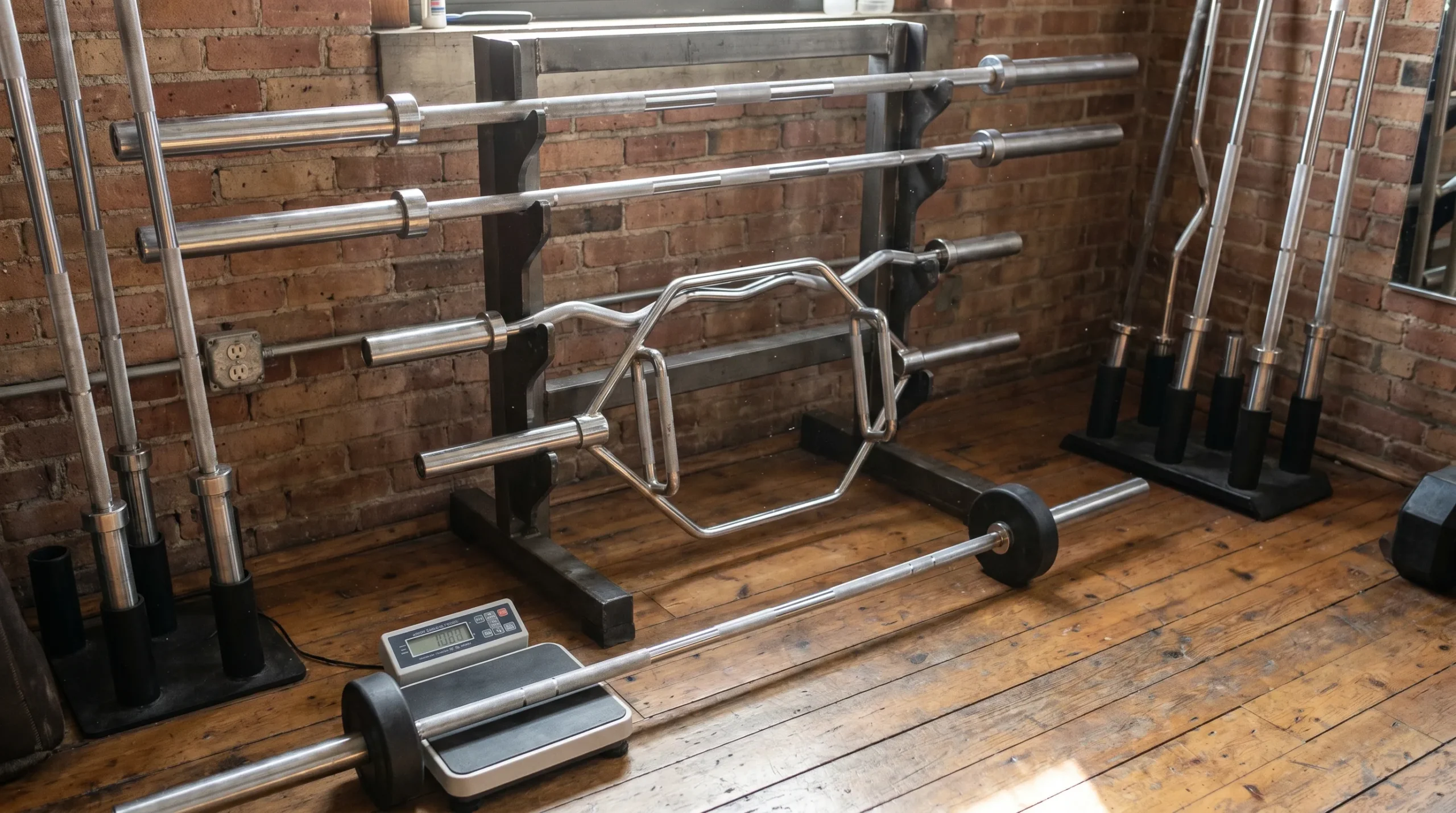
How much does the bar weigh is one of the most common questions new and experienced lifters ask, and the short answer is this: in most gyms, a standard men’s Olympic barbell weighs 45 pounds (20 kilograms), while a women’s Olympic barbell weighs 33 pounds (15 kilograms). But that does not mean every bar in every gym weighs the same. Smith machine bars, EZ curl bars, trap bars, fixed barbells, and other specialty bars can feel very different and often have very different actual weights.
That is where many people get confused. You may be doing a bench press, deadlift, back squat, or overhead press and assume the bar is always 45 lb, but that is not always true. Some bars are shorter, some have different grip diameters, some use rotating sleeves, and some machines use a counterbalance system that makes the bar feel much lighter than it really is. If you want to track progressive overload, log your workouts correctly, and choose the right bar for your fitness goals, you need to know what kind of bar you are using.
This guide will walk you through standard barbell weight, Olympic barbell weight, women’s barbell weight, Smith machine bar weight, and the typical ranges for common specialty bars. It will also show you how to count the full load correctly, including the barbell, weight plates, and sometimes even the clips or collars. I did not receive any actual extra keywords beyond the placeholder text, so I have written the article without adding extra keyword phrases that were not provided.
The Standard Answer: How Heavy Is a Barbell in Most Gyms?
In most commercial gyms, the bar people mean when they ask “how much does the bar weigh” is the men’s Olympic barbell, and that bar weighs 20 kg, which is about 45 lb. The International Weightlifting Federation lists the official men’s bar at 20 kg and the official women’s bar at 15 kg, with the men’s bar marked in blue and the women’s bar marked in yellow for easy recognition.
That official standard matters because many gyms use bars built around those dimensions. A men’s Olympic bar is usually around 220 cm long, and a women’s Olympic bar is around 201 cm long. The grip diameter is also different: the men’s bar is about 28 mm, while the women’s bar is about 25 mm. Those details may sound small, but they affect how the bar feels in your hands during Olympic lifts, rows, squats, and bench press movements.
Still, a standard barbell weight is not the same thing as a universal gym-bar answer. Some facilities use lighter training bars, fixed bars, or bars with slightly different specifications. That is why it is smarter to think in terms of bar type instead of assuming every straight bar is automatically 45 pounds.
Olympic Barbell Weight vs Standard Barbell Weight
A lot of lifters use the terms standard barbell and Olympic barbell as if they mean exactly the same thing, but they are not always identical. An Olympic barbell is built to meet a more specific set of dimensions and usually has 2-inch sleeves for Olympic plates, rotating sleeves, and a design made for lifts such as the snatch and clean and jerk. The IWF standards fix the men’s version at 20 kg and the women’s version at 15 kg.
A generic standard bar may refer to something shorter, lighter, or made for a home gym rather than official or competition-style lifting. This is one reason people search phrases like “barbell vs Olympic bar difference” or “standard bar vs Olympic bar.” In daily gym talk, many people say “standard bar” when they really mean the common full-size 45 lb barbell. But from a practical point of view, the safest approach is to look at the sleeves, length, and markings before you log the weight.
If your goal is accurate training, this distinction matters. A lighter non-Olympic bar changes your total load, while a true Olympic bar lets you compare your numbers more consistently across gyms and programs.
Men’s vs Women’s Barbell Weight
The difference between men’s barbell weight and women’s barbell weight is one of the most useful facts for beginners. A men’s Olympic barbell weighs 20 kg / 45 lb, while a women’s Olympic barbell weighs 15 kg / 33 lb. The women’s bar is also shorter and usually has a smaller grip diameter, which often makes it more comfortable for lifters with smaller hands.
This matters because many people walk into a gym, pick up a bar from the rack, and assume it must be 45 pounds. Sometimes that is correct. Sometimes it is not. In Olympic weightlifting settings and many CrossFit gyms, women’s bars are common and intentionally used, not treated as beginner-only tools. They are official bars with their own standardized size and weight.
So if you are asking “how much does a women’s barbell weigh” or “how much does a 15 kg barbell weigh in pounds,” the answer is 33 pounds. And if you are trying to compare your numbers across workouts, using the wrong assumption here can throw off your logging by 12 pounds every set.
How Much Does the Bench Press Bar Weigh?
Many users who search “how much does the bar weigh” are really asking about the bench press bar weight. In many commercial gyms, the bench press bar is simply a 45 lb Olympic-style barbell. That means if you load one 45 lb plate on each side, your total is 135 lb, not 90 lb.
But there is an important catch. Not every bench setup uses the same kind of bar. Some gyms have fixed benches with bars that are part of a station, and those can differ from a free-standing Olympic barbell. Some beginner or studio gyms may also use lighter bars. So while 45 pounds is the best default answer for how much does the bench press bar weigh, you should still check the exact setup before assuming.
A simple rule helps here: if the bench uses a normal full-size Olympic bar, count 45 lb unless the bar is marked otherwise. If it is a fixed station or looks shorter, thinner, or built into the rack, verify it first.
Smith Machine Bar Weight: Why It Feels Lighter
The Smith machine bar weight is one of the biggest sources of confusion in the gym. Unlike a free barbell, a Smith bar moves on rails and often uses a counterbalance system. Because of that design, the bar can feel much lighter than a regular free-weight bar, even before you add plates. Recent guides show large variation: one source puts Smith bars anywhere from 6 to 45 pounds, another gives a more typical range of 15 to 30 pounds, and another reports many models falling in the 8 to 12 kg range.
That wide range explains why two people can use different Smith machines and report totally different answers. In some commercial gyms, the bar may feel almost empty because the machine offsets much of the load. In older or non-counterbalanced machines, it may be much heavier and closer to a traditional bar. This is why “actual bar weight vs felt weight” matters so much on Smith machines.
If you want the true number, check the label on the frame, the machine manual, or ask gym staff. If none of those options work, some lifters estimate the load with a scale-based method, but the easiest and most reliable answer is always the manufacturer’s stated bar weight.
Specialty Bars and What They Usually Weigh
Once you move beyond straight bars, the answer to “how much do bars weigh” becomes more varied. Trap bars, EZ curl bars, safety squat bars, and other specialty bars are useful for different exercises and body types, but they are not standardized the same way official Olympic bars are.
A trap bar or hex bar often falls somewhere between about 40 and 70 pounds, depending on the design. Some recent guides say the most common standard trap bars are around 45 to 55 pounds, while lighter versions may fall into the 25 to 35 pound range. That makes the trap bar a good example of why you should never guess based on appearance alone.
An EZ curl bar is usually lighter. Recent references put many curl bars in the 10 to 30 pound range, with Olympic EZ curl bars often around 20 to 25 pounds. That is why an EZ bar is often a more beginner-friendly option for biceps curl work, skull-crushers, and some triceps exercises than a full-size straight barbell.
Safety squat bars, power bars, and squat bars can be heavier and more specialized. Official Olympic bars are standardized, but these specialty tools are not always built to one universal competition rule across all manufacturers. Some heavy-duty squat bars may reach around 55 pounds, especially when built for high loads and extra stiffness.
To make this easier to scan, here is a simple barbell weight by type chart:
| Bar type | Typical weight | Notes |
| Men’s Olympic barbell | 45 lb / 20 kg | Official IWF standard |
| Women’s Olympic barbell | 33 lb / 15 kg | Official IWF standard |
| Smith machine bar | Varies widely: ~6–45 lb | Depends on machine and counterbalance |
| Trap / hex bar | ~40–70 lb | Standard versions often around 45–55 lb |
| EZ curl bar | ~10–30 lb | Olympic EZ bars often around 20–25 lb |
| Heavy squat bar | Can be ~55 lb | Manufacturer-specific, not universal |
This is also where exercise selection matters. A trap bar may be better for some lifters doing deadlifts because of its more neutral setup. An EZ curl bar may reduce wrist strain on arm work. A women’s barbell may be a better fit for some beginners, not because it is “less serious,” but because it may simply fit their strength level and hand size better.
Should You Count the Weight of the Bar?
Yes, you absolutely should count the weight of the barbell. If you are doing bench press, squat, deadlift, rows, or any other barbell movement, the bar is part of the total load your body is moving. Ignoring it gives you inaccurate numbers and makes it harder to track progress honestly.
A simple example makes this clear. If the bar weighs 45 pounds and you add one 45-pound plate to each side, the plates alone equal 90 pounds. But the real total is 135 pounds because you must also include the bar. This is one of the easiest mistakes beginners make when they first start logging workouts.
If you train on a Smith machine, the same principle applies, but you need the correct machine-specific bar number first. Once you know the actual bar weight, include it in the calculation just like you would with a free barbell.
Do Clips, Collars, and Locks Count Too?
In strict terms, yes, clips, collars, or locks also add weight. Whether you count them in everyday logging depends on how precise you want to be. Some gym collars are light enough that casual lifters ignore them, but certain clip or collar setups may add around 1 pound per clip, or about 2 pounds total for the pair.
For most everyday training, the bar and plates matter the most. But if you are trying to be highly accurate, especially in a structured strength program, counting the collars is reasonable. The key point is consistency. Use the same method each time so your workout log remains comparable from week to week.
How to Tell What Bar You’re Using at the Gym
If you want to know how to tell if a bar is 45 pounds, start by looking for markings. Some bars have weight details on the end cap, while Smith machines may list the bar weight on a label on the frame or in the model information. The IWF also notes official identification colors for men’s and women’s bars, which can help when you are in a better-equipped training environment.
Next, look at the size and construction. A full men’s Olympic bar is usually around 220 cm long with a 28 mm shaft, while the women’s version is shorter and about 25 mm in diameter. A bar with rotating sleeves and Olympic plate ends is more likely to be a true Olympic-style bar than a lighter standard bar.
If you are still unsure, ask staff or check the manufacturer’s page for that exact model. That extra minute can save you from weeks of inaccurate numbers in your training log.
Beginner Guide: Which Bar Should You Start With?
A lot of beginners assume they must start with a 45 lb barbell, but that is not always the best choice. If your current strength, mobility, or confidence level makes a full Olympic bar feel too heavy, there is nothing wrong with starting with a lighter option. Depending on the exercise, a women’s barbell, EZ curl bar, lighter training bar, or certain fixed bars may help you learn proper form and technique first.
This matters because the “best” starting bar depends on the movement. For bench press, rows, and some beginner strength work, a lighter bar may let you control the movement better and build confidence. For arm work, an EZ curl bar may feel more natural on the wrists. For some lifters, a women’s barbell is a very practical choice because of its 33-pound weight and smaller grip diameter.
The smartest beginner approach is simple: choose a bar that lets you move with control, maintain good position, and progress over time. The goal is not to impress anyone with the heaviest empty bar. The goal is to train well.
A Simple Real-World Case Study
Imagine two lifters starting a new program in different gyms. The first lifter benches with a regular Olympic bar and one 45-pound plate on each side. That total is 135 pounds. The second lifter uses a Smith machine with one 45-pound plate on each side, but the Smith bar on that machine weighs only 20 pounds. Their total is 110 pounds, not 135. Even though the setups look similar at a glance, the actual training load is different.
That is exactly why knowing the true barbell weight matters. Without it, two workouts can look identical on paper while actually being very different in real life.
FAQ
Is every gym bar 45 pounds?
No. Many full-size Olympic-style bars are 45 pounds, but women’s bars, Smith machine bars, EZ curl bars, trap bars, and other specialty bars can weigh very different amounts.
How much does a women’s barbell weigh?
A standard women’s Olympic barbell weighs 15 kg, which is about 33 pounds.
How much does a Smith machine bar weigh?
There is no single answer. Recent guides show a broad range, often from about 6 to 45 pounds, depending on the machine and whether it uses a counterbalance system.
Do you count the bar in total weight?
Yes. The bar, the plates, and sometimes the collars are all part of the total load you lift.
How much does an EZ curl bar weigh?
Many EZ curl bars fall roughly in the 10 to 30 pound range, with Olympic EZ bars often around 20 to 25 pounds.
Conclusion
So, how much does the bar weigh? In the most common gym scenario, the answer is 45 pounds (20 kilograms) for a men’s Olympic barbell. But that is only the starting point. A women’s barbell is typically 33 pounds (15 kilograms), a Smith machine bar can vary widely, and specialty bars like trap bars and EZ curl bars often fall into their own ranges.
The best habit is to stop guessing. Check the markings, confirm the bar type, and count the full load correctly every time. That one small step makes your workout log more accurate, your progress easier to measure, and your training much smarter.
Disclaimer:
This article is for general informational and fitness education purposes only. Barbell weights, machine resistance, and equipment details can vary by gym, brand, and model. Always check the equipment label, ask gym staff, and choose weights that match your strength, form, and safety needs.