
 By adnanshabbir942@gmail.com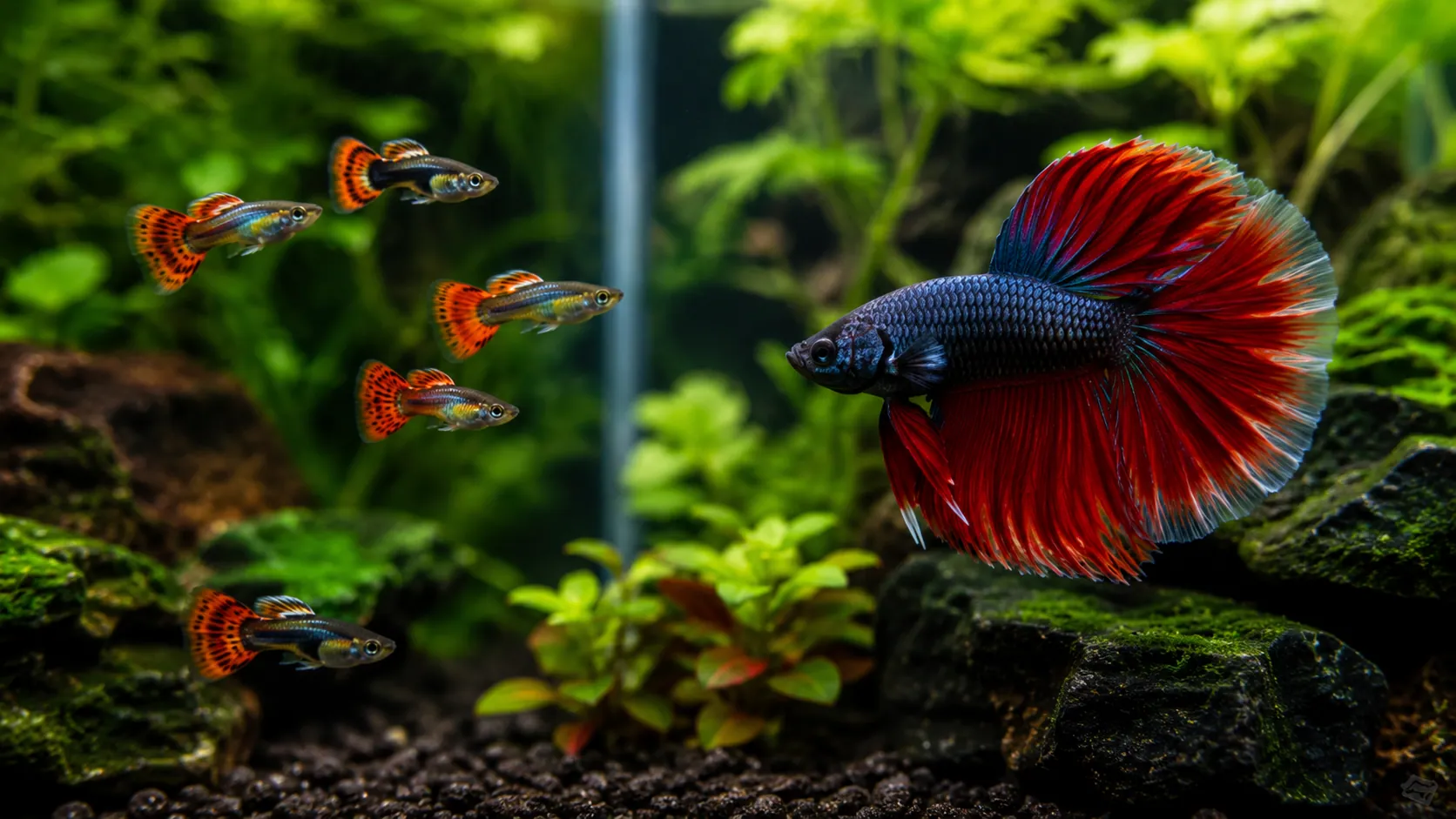
Sometimes, but it is a risky pairing and usually not the best choice for a beginner aquarium. While both fish are small, colorful, and commonly sold as beginner aquarium fish, their behavior can be very different. A betta may look calm at first, but many bettas are territorial, especially around fish with bright colors or flowing fins.
The real answer depends on several important factors, including the betta’s personality, the type of guppy, the tank size, the sex of both fish, the number of hiding places, and how feeding is managed. Some calm bettas may ignore guppies in a large, well-planted betta community tank, while others may chase, nip, or stress them within minutes.
Many new fish owners ask about betta and guppy compatibility because both species are attractive, easy to find, and often recommended as simple freshwater fish. But keeping a betta fish with guppies is not as simple as placing them in the same tank and hoping they get along. Guppies are active swimmers, and male guppies often have colorful tails that can trigger a betta’s aggressive or territorial response.
In this guide, you’ll learn when guppies can live with bettas, when this pairing should be avoided, what warning signs to watch for, how to set up the tank more safely, and which tank mate options may be better for a peaceful aquarium.
Can a Betta Fish Live With a Guppy?
A betta can sometimes live with guppies in a large, well-planted tank, but it is not guaranteed and is often not recommended for beginners. The riskiest setup is usually a male betta with guppies, especially fancy male guppies, because their bright colors and flowing tails can trigger chasing, flaring, stress, or fin nipping. A calm female betta with guppies, especially female guppies, may be less risky, but the tank still needs close monitoring because every betta has a different personality. If you want to try a betta guppy tank, always have a backup tank, divider, or safe separation plan ready before adding them together. This way, if the fish show aggression or stress, you can separate them quickly before injuries happen.
Why Bettas and Guppies Can Be a Difficult Match
Bettas and guppies can be a difficult match because they do not always understand each other’s behavior. A territorial betta fish often prefers to claim a quiet area of the tank as its own space. If another fish swims too close again and again, the betta may see it as a challenge rather than harmless activity. This is one of the main reasons betta aggression can become a problem in a community aquarium.
The risk is higher with fancy guppies with bettas because many male guppies have bright colors, long tails, and flowing fins. To a betta, this can look similar to another flashy fish entering its territory. The betta may respond by flaring, chasing, or trying to nip the guppy’s fins. Even if the betta does not attack right away, the guppy may still feel unsafe if it is constantly being followed or cornered.
Guppies can also create stress because they are active swimmers. They often move around the whole tank, explore different levels, and may swim through the betta’s preferred resting area. A calm betta might ignore this, but a more defensive betta may become irritated over time. This is why aquarium compatibility is about more than size; it also depends on swimming style, personality, and space.
It is also important to remember that guppies are not always harmless. In crowded tanks or stressful conditions, guppy fin nipping can happen too, especially if the betta has long, delicate fins. A guppy may peck at fins out of stress, curiosity, or competition for food.
The biggest issue is not always a dramatic fight. Sometimes the real problem is constant low-level stress. A stressed betta fish or stressed guppy may hide more, eat less, lose color, breathe heavily, or become more likely to develop illness. Over time, stress can weaken the fish’s immune system and make problems like fin damage, infections, and poor appetite more likely. This is why bettas and guppies should only be kept together with careful planning, enough space, and close observation.
Best and Worst Betta-Guppy Pairings
Not every betta and guppy combination has the same level of risk. Some pairings are more likely to cause chasing, stress, or fin damage, while others may work in the right tank setup. Still, no pairing is 100% safe, because betta temperament can vary a lot from one fish to another.
| Pairing | Risk Level | Why |
| Male betta + male fancy guppies | High | Bright colors and flowing fins can trigger aggression |
| Male betta + female guppies | Medium to high | Female guppies are less flashy, but they may still be chased |
| Female betta + female guppies | Lower, but not risk-free | Often calmer, but personality still matters |
| Female betta + male guppies | Medium | Male guppies may still be too colorful, fast, or active |
| Short-finned guppy strains + calm betta | Possible | Less visual trigger, but still requires careful monitoring |
The riskiest setup is usually a male betta with male guppies, especially if the guppies are bright, fancy, and long-finned. These guppies may look too similar to a rival fish, which can cause the betta to flare, chase, or attack. Even if the guppies are peaceful, their appearance alone may be enough to create tension.
A female betta with guppies may be a better option in some cases, especially with female guppies. Female bettas are often less dramatic than males, but they are still bettas and can still become territorial. Some female bettas are calm in a community tank, while others may chase smaller fish or nip fins.
The best guppies for a betta tank, if someone decides to try this pairing, are usually less flashy fish, such as short fin guppies or female guppies with simple coloring. These are less likely to trigger a betta than bright fancy guppy tank mates with large, flowing tails. Even then, the setup needs enough room, plants, hiding spots, and daily observation.
This pairing should be avoided in small tanks, bowls, uncycled tanks, bare tanks, or tanks without plants. In tight spaces, fish cannot escape each other, water quality changes faster, and stress builds quickly. A peaceful-looking setup can turn unsafe if the tank is too small or poorly prepared.
Tank Size, Setup, and Water Conditions Needed for a Safer Betta-Guppy Tank
If you want to try keeping bettas and guppies together, the betta guppy tank size matters a lot. A larger tank gives both fish more room to avoid each other, which can reduce chasing and stress. For this pairing, a tank of 20 gallons or more is a much safer choice than a small aquarium. A small tank does not give the betta enough territory or the guppies enough space to swim away if tension starts.
Small tanks also create problems beyond aggression. There are fewer escape routes, fewer places to hide, and less room for plants or decorations that break the line of sight. Waste can build up faster too, which makes water quality harder to control. Poor water quality can stress both fish and make a peaceful setup turn risky very quickly.
The good news is that betta and guppy water parameters can overlap when the tank is stable. Bettas prefer warm water, and PetMD lists a suitable betta temperature range of about 76–81°F. Guppies also do well in warm tropical water, with PetMD listing about 72–82°F, while noting that the temperature should stay stable and not swing more than about 2°F within 24 hours. For a shared tank, a practical betta guppy water temperature is usually around 76–78°F, as long as both species are healthy, properly acclimated, and showing normal behavior.
A safer setup should include a gentle filter flow, because bettas do not enjoy being pushed around by strong current. At the same time, guppies need clean, oxygenated water, so filtration is still important. Use an aquarium heater and thermometer to keep the temperature steady instead of guessing by room temperature.
The tank should also be fully cycled before adding fish. In a healthy cycled tank, ammonia and nitrite should stay at 0 ppm, because both can harm fish even at low levels. Nitrate should also be kept low through regular water changes and proper maintenance.
A planted aquarium is one of the best ways to make this pairing safer. Live or silk plants, driftwood, caves, and tall decorations help create visual barriers so the betta does not constantly see the guppies. Floating plants can also help a betta feel more secure near the surface, where it often rests and breathes. At the same time, leave some open swimming space for guppies, since they are active fish that like to move around the tank.
The goal is to create a peaceful community tank, not just a tank where the fish survive. A good betta-guppy setup should give the betta quiet resting areas, the guppies enough swimming space, and both species clean, stable water.
How to Introduce a Betta to Guppies Without Creating Instant Stress
Introducing a betta to guppies should be done slowly and carefully. This is not a pairing where you simply place both fish in the tank and hope they get along. A calm introduction gives you time to watch their behavior and step in before chasing, biting, or stress becomes serious.
The best method is usually to add the guppies first and let them settle into the tank before adding the betta. This helps because the betta is less likely to see the entire aquarium as its personal territory from the beginning. If the betta is added first and becomes used to owning the space, it may treat new guppies as intruders.
Before adding the betta, rearrange some plants, rocks, caves, or decorations. This simple step can break up existing territory lines and make the tank feel slightly new to all fish. It also creates more visual barriers, which are very helpful in a guppy community tank setup because fish need places to move out of sight.
When introducing betta to guppies, an acclimation box or temporary divider can be useful. This allows the betta and guppies to see each other without direct contact. Watch how the betta reacts. Some flaring at first may happen, but constant charging, intense staring, or repeated attempts to attack through the divider are warning signs.
Keep the lights dim during the first introduction. Bright lights can make fish feel more exposed, while dimmer lighting may help reduce stress. It also helps to feed both species before the introduction. A betta that has already eaten may be less likely to chase out of food excitement, and guppies may be less likely to crowd the betta during feeding time.
After the betta is released, watch closely for the first few hours. Then continue checking often over the next several days. Some problems do not show up immediately. A betta may seem calm at first but become territorial later, or guppies may start nipping once they feel comfortable.
The most important aquarium introduction tip is to have a separation plan ready before you start. Whether you use a backup tank, breeder box, or divider, you should be able to remove one fish quickly if needed. Learning how to add tank mates to a betta tank safely is mostly about patience, observation, and not forcing a pairing that clearly is not working.
Warning Signs Your Betta and Guppies Should Not Live Together
Even if a betta and guppies seem fine at first, their behavior can change once they settle into the tank. The most important thing is to watch for early fish compatibility warning signs before stress turns into injury or illness.
A clear warning sign is betta chasing guppies again and again. A short chase during introduction may happen, but repeated chasing is different. If the guppies cannot swim normally, rest, or eat without being followed, the tank is not peaceful. Constant flaring is another concern. A betta that flares at guppies all day is showing territorial stress, not normal community behavior.
You should also look closely at the guppies’ tails. Guppy fin damage, torn edges, missing pieces, or ragged tails may mean the betta is nipping them. In some cases, guppies may also nip the betta’s fins, especially if the tank is crowded, feeding is competitive, or the betta has long flowing fins.
Other warning signs include guppies hiding near the surface, staying in corners, breathing heavily, losing color, or avoiding open swimming areas. A stressed guppy may stop acting active and curious. A stressed betta may also hide more than usual, refuse food, clamp its fins, show dull color, or become more aggressive over time.
It is important to understand that “no injuries yet” does not always mean the tank is peaceful. Some fish live under constant low-level pressure before any visible damage appears. This kind of aquarium bullying can be easy to miss because it may look like normal chasing or “play” to a new fish keeper.
If you notice repeated chasing, betta attacking guppy behavior, fin damage, heavy breathing, or one fish being unable to eat normally, separate the fish immediately. Do not wait for a serious injury. Long-term stress can weaken immunity and may lead to problems like fin rot, infections, poor appetite, and disease outbreaks in the tank.
Feeding Problems in a Betta and Guppy Tank
Feeding can be another challenge in a mixed betta and guppy aquarium because these fish do not eat in exactly the same way. Bettas are carnivorous fish that need a protein-rich diet, while guppies are more flexible omnivores that usually accept flakes, micro pellets, and other small foods. Understanding what do bettas eat and how guppies feed can help prevent stress and competition.
Guppies are often fast, active eaters. They may rush to the surface and grab food before a slower or shy betta gets enough. This creates fish food competition, especially in a busy community tank. Some bettas are bold and will push through guppies to eat, but others may back away if the guppies are too active.
For safer betta guppy feeding, feed in separate areas of the tank. You can offer floating betta pellets on one side for the betta while giving the guppies small flakes or micro pellets on the other side. This helps each fish get the right food without crowding the same spot.
A helpful routine is to watch the fish during feeding, not just sprinkle food and walk away. Make sure the betta actually eats its pellets and the guppies are not stealing everything first. At the same time, avoid overfeeding to “make sure everyone gets some,” because extra food can quickly pollute the water.
Remove uneaten food after feeding to protect water quality. Leftover guppy food, flakes, and pellets can break down in the tank and raise waste levels, which may stress both species. In a betta-guppy setup, the best feeding plan is simple: use the right foods, feed in separate spots, watch who actually eats, and keep the water clean.
Common Mistakes New Fish Keepers Make With Bettas and Guppies
One of the most common betta guppy mistakes is keeping them together in a tank that is too small. A 5-gallon tank or smaller is not a good setup for bettas and guppies together. Even if the fish are small, they still need space to swim, rest, hide, and avoid each other. In a small tank, the betta may feel crowded, the guppies may have nowhere to escape, and waste can build up quickly.
Another mistake is adding fancy male guppies with a male betta. Fancy guppies often have bright colors and long, flowing tails, which may trigger a betta’s territorial behavior. A new fish keeper may choose them because they look beautiful together, but appearance does not always mean compatibility. This is why many betta tank mates for beginners should be chosen for behavior first, not color.
Some people also assume that a calm betta in the store will stay calm in a home tank. This is not always true. A betta may look relaxed in a small store cup or display tank because it has little room to react. Once it enters a larger aquarium and begins claiming territory, its behavior can change. A peaceful-looking betta can still chase guppies later.
An uncycled tank is another serious mistake. Bettas and guppies should not be added to a new aquarium before the nitrogen cycle is established. Without a cycled tank, ammonia and nitrite can rise and stress or harm the fish. Stress from poor water quality can also make aggression and illness more likely.
Skipping quarantine is also risky. New guppies can carry parasites, bacterial infections, or other problems into the tank, even if they look healthy at first. Quarantining new fish before adding them to the main aquarium helps protect both the guppies and the betta.
Another beginner mistake is ignoring fin nipping because it looks “minor.” A small tear in a tail may not seem serious, but repeated nipping can lead to infection, stress, and fin rot. If you see damaged fins, repeated chasing, or fish hiding often, treat it as a warning sign instead of waiting for the problem to get worse.
Guppy group balance can also cause issues. Keeping too many male guppies together without enough space can lead to chasing, stress, and competition. On the other hand, adding female guppies can create a guppy breeding problem because guppies reproduce quickly. If the tank becomes an overstocked aquarium, water quality drops faster and stress rises for every fish in the tank.
The safest approach is to plan the tank before buying fish. Think about adult size, behavior, breeding, water quality, and backup options. Many beginner fishkeeping mistakes happen because the fish are bought first and the compatibility research happens later.
Better Tank Mates If You Already Have a Betta or Guppies
Sometimes the best advice is not to force an attractive but risky pairing. Bettas and guppies are both beautiful fish, but that does not mean they are always the best match. If the goal is a calm, healthy aquarium, it may be better to choose betta alternatives or safe guppy tank mates instead.
For bettas, calmer tank mates often work better, depending on tank size and the betta’s personality. Nerite snails are a popular option because they stay out of the betta’s swimming space and help clean algae from surfaces. Mystery snails can also work in suitable tanks, although some curious bettas may nip at their feelers. Snails are not perfect for every betta, but they are often safer than flashy fish.
In larger tanks, Corydoras catfish may be a good option when kept in proper groups. They usually stay near the bottom and do not look like rival bettas. Kuhli loaches can also work in larger planted tanks because they are shy, peaceful bottom dwellers that need hiding spaces and stable water. In suitable community setups, harlequin rasboras may be a better schooling fish choice than guppies because they are usually less flashy and less likely to trigger a betta.
For guppies, peaceful community fish are often easier to manage than bettas. Good options may include platies, Endlers, Corydoras, snails, and some peaceful tetras, depending on the tank’s water conditions. These guppy community fish still need proper group sizes, enough swimming room, and clean water, but they are often a more natural fit for an active livebearer tank.
The best betta tank mates and beginner aquarium tank mates are not the same for every aquarium. Compatibility still depends on tank size, water temperature, filtration, hiding places, group size, and individual temperament. A peaceful fish can become stressed in the wrong setup, and a usually territorial fish may behave better in a large, well-planted tank.
The main goal is not just to create a colorful aquarium. The goal is to build a peaceful fish tank where every fish can eat, swim, rest, and behave naturally without being chased or stressed.
Should You Try Keeping a Betta With Guppies? A Practical Decision Checklist
If you are asking, “should I keep betta with guppies?”, the safest answer is to look at your setup before looking at the fish. A betta and guppy tank can sometimes work, but only when the aquarium gives both species enough space, hiding places, and stable conditions. Use this betta guppy checklist before trying the pairing.
You may consider it only if:
- The tank is at least 20 gallons.
- The tank is cycled, heated, filtered, and planted.
- The betta is calm and not highly reactive.
- The guppies are not overly flashy, colorful, or long-finned.
- You have a backup tank or divider ready.
- You can monitor behavior every day.
- The tank has plants, caves, and visual barriers.
- All fish are eating normally and showing no stress signs.
A larger planted tank gives fish more room to avoid each other. It also makes guppy tank planning easier because guppies are active swimmers and need open space. The betta, on the other hand, needs calm resting areas where it does not feel crowded.
You should avoid it if:
- You have a male betta and fancy male guppies.
- The tank is small, bare, or crowded.
- The aquarium is not fully cycled.
- The betta already attacks snails, reflections, or other fish.
- You are a complete beginner with no backup plan.
- You cannot watch the fish closely after introduction.
- You are trying to control guppy fry by adding a betta.
- The guppies already show stress, torn fins, or hiding behavior.
Using a betta to control guppy fry is not a reliable or kind long-term plan. It may create stress, aggression, and poor betta fish compatibility in the tank. Good community aquarium advice is always based on prevention: choose fish that can live peacefully together instead of trying to force a risky setup.
A good rule is simple: if you are not ready to separate the fish immediately, do not try the pairing yet. Compatibility is not just about whether fish can survive together. It is about whether they can live normally, eat well, and stay healthy in a safe aquarium setup.
Conclusion: Can a Betta Fish Live With a Guppy Safely?
Can a betta fish live with a guppy? Sometimes, but it is a cautious “maybe,” not a guaranteed yes. A betta and guppy tank works best only when the fish have the right personalities, enough space, stable water, a planted setup, and daily observation from the owner.
The riskiest pairing is usually a male betta with fancy male guppies because the guppies’ bright colors and flowing tails can trigger chasing, flaring, or fin nipping. Female guppies with a calm female betta may be less risky, but even that setup still needs careful monitoring. No betta fish advice can promise that every individual fish will behave the same way.
The most important thing is to choose peace over appearance. A beautiful aquarium is not truly successful if the fish inside are stressed, hiding, fighting, or unable to eat comfortably. Healthy fish should have room to swim, safe places to rest, clean water, and tank mates that do not make them feel threatened.
If you are new to beginner fish care, start with safer tank mates or keep your betta and guppies in separate, well-maintained tanks. A calm, healthy peaceful fish tank is always better than a colorful setup that causes stress.
FAQ About Bettas and Guppies Living Together
Can a male betta live with guppies?
A male betta with guppies is usually risky, especially if the guppies are colorful males with long, flowing tails. Some calm male bettas may tolerate guppies in a large, planted tank, but it should never be assumed. Every betta has a different personality, and a peaceful-looking betta can still become territorial later.
Can a female betta live with guppies?
A female betta with guppies may be a better option than a male betta, but it is still not risk-free. Female bettas can also chase, nip, or stress guppies if they feel crowded or irritated. A larger tank with plants, hiding places, and careful monitoring is still important.
Will a betta kill a guppy?
Yes, it can happen. If you are wondering will betta kill guppy, the answer depends on the betta’s temperament, the guppy’s size, and the tank setup. Even if the betta does not kill the guppy, repeated chasing, biting, or fin damage can cause serious stress and illness.
Will guppies nip a betta’s fins?
Yes, guppies can nip a betta’s fins in some situations. If you are asking do guppies nip betta fins, the risk is higher in crowded tanks, stressful setups, or tanks where food competition is strong. A betta with long, flowing fins may be more vulnerable to curious or stressed guppies.
Can bettas eat baby guppies?
Yes. Can betta eat guppy fry? In many cases, yes, a betta may eat baby guppies if it can catch them. However, using a betta to control guppy fry is not a reliable or recommended plan. It can create stress for the fish and does not solve the main issue of guppies breeding quickly.
What size tank do bettas and guppies need?
A larger tank is much safer for this pairing. A 20-gallon planted tank or bigger is better than a small tank because it gives the betta and guppies more room, more hiding places, and more escape routes. Small tanks increase conflict, waste buildup, and stress, which makes betta-guppy compatibility harder.
Disclaimer
This article is for general informational purposes only and is intended to help readers understand basic betta and guppy compatibility. Fish behavior, tank conditions, and individual results can vary, so always observe your aquarium closely and seek advice from an experienced aquarist or aquatic veterinarian when needed.