
 By adnanshabbir942@gmail.com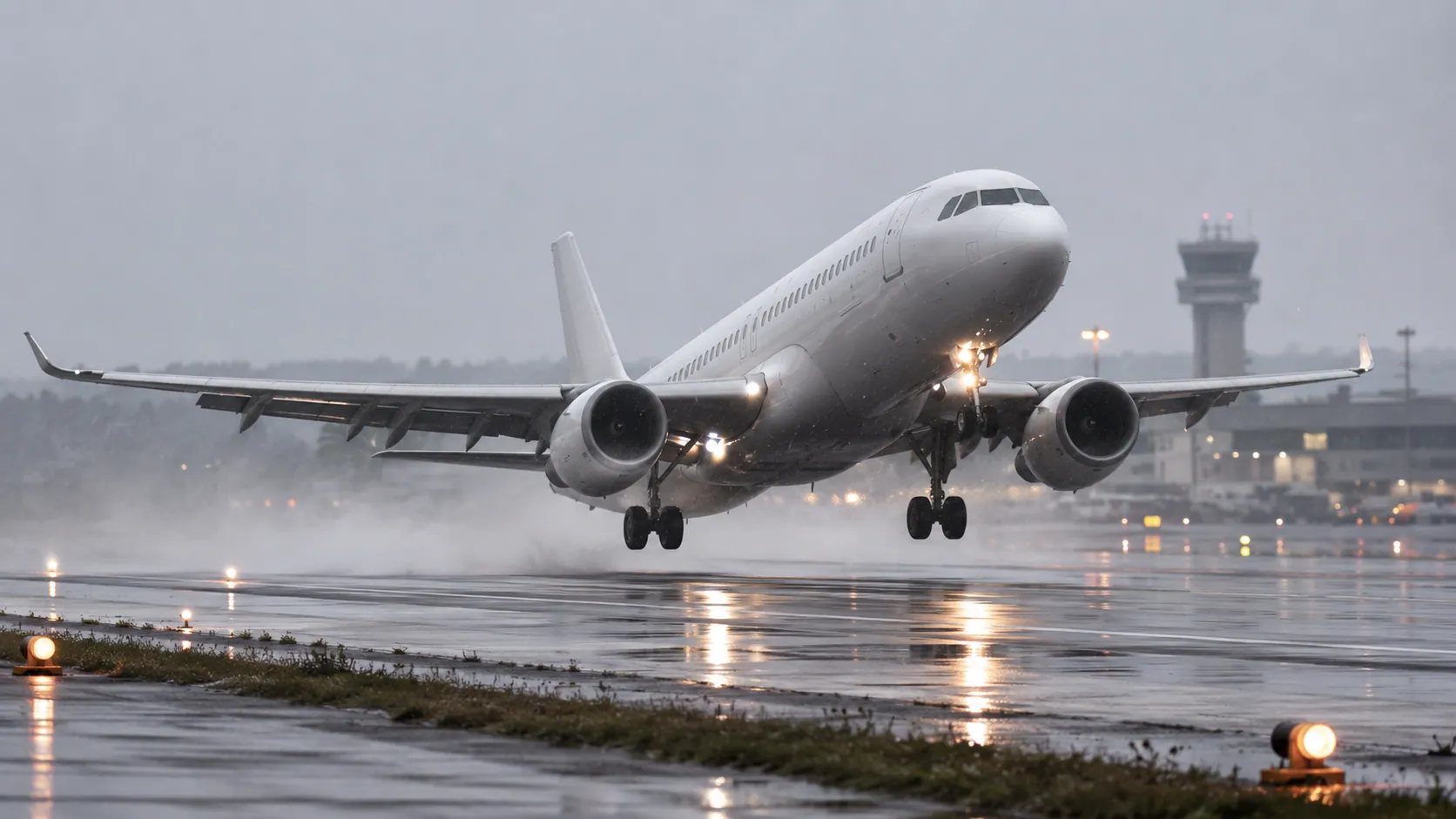
Can planes take off in the rain is one of the most common questions passengers ask when they see dark clouds, wet runways, or heavy rain in the forecast before a flight. The simple answer is yes, planes can usually take off in the rain. Modern aircraft, trained pilots, airport systems, and airline safety procedures are designed to handle rainy weather safely.
However, rain is not always the full story. A flight may still be delayed or canceled if rain comes with thunderstorms, lightning, wind shear, poor visibility, flooding, icing, strong winds, or unsafe runway conditions. In other words, normal rain is usually manageable, but severe weather can change the decision.
For nervous flyers, this can feel confusing. One minute the airline says the plane can fly, and the next minute the flight is delayed. That does not mean something is wrong with the plane. It usually means pilots, dispatchers, air traffic control, and airport teams are checking conditions carefully before allowing a safe departure.
Can Planes Take Off in the Rain?
Yes, planes can take off in the rain in most normal weather conditions. Rain by itself does not usually stop a commercial aircraft from departing. Airplanes are built to fly through clouds, moisture, and wet weather. Commercial jets also use advanced navigation systems, cockpit instruments, weather radar, windshield wipers, heated windshields, runway lights, and instrument landing systems to help pilots operate safely when visibility is reduced.
A rainy takeoff may look dramatic from the passenger window, especially when water sprays from the tires or rain streaks across the glass. But from an aviation safety point of view, rain is a routine condition. Airports around the world operate in wet weather every day.
What matters most is whether the complete situation is safe. Pilots and airline dispatchers consider runway conditions, braking action, wind direction, visibility minimums, aircraft weight, takeoff distance, storm activity, and air traffic control instructions. If all conditions are within legal and operational limits, the flight can usually depart.
A good way to understand it is this: rain is not automatically dangerous, but the conditions that sometimes come with rain can be. That is why a plane may take off safely in steady rain but wait on the ground during a thunderstorm.
Is It Safe to Fly in the Rain?
For commercial flights, flying in the rain is generally safe when the aircraft, runway, weather, and air traffic conditions meet approved safety standards. Pilots are trained for rainy weather, and airlines follow strict procedures before every departure.
Modern aircraft are designed with systems that help during wet weather. These include anti-ice systems, de-icing systems, weather radar, cockpit instruments, aircraft windshield systems, braking systems, and performance calculation tools. Pilots also receive updated aviation weather information before and during the flight.
Rain may feel uncomfortable for passengers because it can make the outside view darker, louder, and less clear. But aircraft do not depend only on what passengers can see out the window. Pilots use instrument flight rules, onboard weather radar, air traffic control guidance, runway lights, and airport weather reports to make safe decisions.
The most important safety point is that pilots do not take off just because a flight is scheduled. If conditions are unsafe, the plane waits. A delay can be frustrating, but it is often a sign that the safety system is working properly.
As one common aviation idea says: “A delayed flight is better than an unsafe flight.” That simple principle explains why airlines may pause operations when rain turns into severe weather.
Can Planes Take Off in Heavy Rain?
Planes can take off in heavy rain in some situations, but the decision depends on several factors. Heavy rain is more serious than light or moderate rain because it can reduce visibility, create more standing water on the runway, slow airport ground operations, and make weather conditions change quickly.
Heavy rain does not automatically mean the flight is unsafe. Large commercial jets can often operate in heavy rainfall if visibility is acceptable, runway drainage is working, braking action is good, and no dangerous storm cell is near the departure path. However, heavy rain can become a problem when it is linked with thunderstorms, wind shear, microbursts, lightning, hail, flooding, or very poor visibility.
For example, a plane may be able to take off in a heavy downpour if the rain is steady and the runway is clear. But if that heavy rain is part of a thunderstorm, pilots may wait until the storm moves away. This is because thunderstorms can create fast-changing wind, strong turbulence, lightning, and dangerous conditions near the ground.
Heavy rain can also affect takeoff performance calculation. Pilots and dispatchers consider aircraft weight, runway length, temperature, wind, and runway surface condition. If more distance is needed because the runway is wet, the crew must confirm the aircraft can safely accelerate, take off, or stop if needed.
So, the better answer is: yes, planes can take off in heavy rain, but only when visibility, runway conditions, aircraft performance, and surrounding weather are within safe limits.
Why Rain Alone Usually Does Not Cancel Flights
Many passengers ask, does rain cancel flights? Usually, the answer is no. Rain alone rarely causes a flight cancellation. Airlines expect rain. Airports are designed with drainage systems, runway surfaces, taxiways, lighting systems, and ground procedures to support safe operations in wet weather.
Flights are more likely to be delayed or canceled when rain is connected to other hazards. These may include thunderstorms, lightning near the airport, strong winds, poor visibility, runway flooding, air traffic delays, or icing conditions. In these cases, the issue is not simply that water is falling from the sky. The issue is that the total operating environment may not be safe or efficient.
Rain can also cause schedule disruption indirectly. For example, a flight at your airport may be delayed because the aircraft is arriving late from another city affected by storms. Crew members may also be delayed. Air traffic control may slow departures and arrivals to keep more space between aircraft. Ground crews may have to pause baggage loading or fueling during lightning.
This is why two airports can have rain, but only one has major delays. The difference may be storm intensity, runway drainage, visibility, airport traffic volume, wind, and air traffic control flow.
What Weather Conditions Can Stop a Plane from Taking Off?
Rain is only one part of aviation weather. Several other conditions can stop or delay takeoff because they create more serious safety risks.
| Weather Condition | Why It Can Delay Takeoff |
| Thunderstorms | They can bring lightning, hail, severe turbulence, wind shear, and dangerous storm cells. |
| Lightning near the airport | It may stop ramp operations, fueling, baggage loading, and ground movement. |
| Wind shear or microbursts | Sudden wind changes near the ground can be dangerous during takeoff and landing. |
| Poor visibility or fog | If visibility is below minimums, pilots may not be allowed to depart. |
| Standing water on the runway | It can reduce tire traction and increase hydroplaning risk. |
| Freezing rain or icing | Ice can affect wings, control surfaces, and aircraft performance. |
| Strong crosswinds | Wind may exceed safe aircraft or runway limits. |
| Airport flooding | Flooding can close runways, taxiways, terminals, or ground operations. |
A key aviation concept is that takeoff is not based on one simple question like “Is it raining?” Instead, it is based on a full go/no-go decision. Pilots, dispatchers, and air traffic control look at the complete picture.
For example, rain with calm winds and good visibility may be fine. Rain with low clouds, lightning, and wind shear may not be safe. This is why flight crews sometimes wait for a storm cell to pass before departure.
Rain vs Thunderstorms: What Is the Real Difference?
Passengers often use the words rain and storm as if they mean the same thing, but in aviation they are very different. Rain vs thunderstorm flight safety is one of the most important distinctions to understand.
Normal rain is often manageable. It may reduce visibility, wet the runway, and make takeoff feel louder or bumpier, but it does not usually stop a commercial jet from flying. Thunderstorms are different because they can contain lightning, hail, severe turbulence, strong updrafts, downdrafts, microbursts, and wind shear.
Pilots usually avoid flying directly through strong thunderstorm cells. Weather radar helps crews see areas of intense weather, often shown in colors such as green, yellow, and red radar zones. Aircraft may be routed around the strongest areas, or departures may be paused until the storm moves away.
| Condition | Usually Safe for Takeoff? | Main Concern |
| Light rain | Usually yes | Minor visibility or runway wetness |
| Moderate rain | Usually yes | Runway and visibility checks |
| Heavy rain | Depends | Reduced visibility and standing water |
| Thunderstorm | Often delayed or avoided | Lightning, wind shear, severe turbulence |
| Freezing rain | High concern | Icing and aircraft performance |
This is why a flight may take off in rain but not during an active thunderstorm. It is not fear of rain. It is respect for fast-changing severe weather.
How Rain Affects Visibility and Wet Runways
Rain can affect takeoff in two practical ways: visibility and runway condition.
First, heavy rain can reduce how far pilots can see. In aviation, visibility matters because pilots and airports must meet specific visibility minimums and legal minimums. If visibility falls below what is allowed for that aircraft, airport, or procedure, takeoff may be delayed.
However, pilots do not rely only on eyesight. They use cockpit instruments, runway lights, navigation systems, instrument procedures, weather reports, and air traffic control instructions. This is why flights can operate safely even when the view from the cabin window looks unclear.
Second, rain affects the runway surface. A wet runway can reduce tire traction and affect braking action. If water builds up, there is a risk of hydroplaning, also called aquaplaning. This means the tires may ride on a thin layer of water instead of gripping the pavement properly.
Airports are built with drainage systems to move water away from runways and taxiways. Pilots also receive runway condition information and may adjust performance calculations. If the runway has too much standing water or poor braking action, the flight may wait.
This does not mean wet runways are automatically unsafe. It means they require careful checks.
How Pilots Decide If It Is Safe to Take Off in Rain
Before a rainy takeoff, pilots and airline teams make a safety decision based on several pieces of information. This is often called a go/no-go decision.
Pilots review weather conditions such as rain intensity, wind, visibility, cloud height, storms, and possible icing. They may check aviation weather tools such as METAR reports, TAF forecasts, airport weather observations, and real-time weather updates. Dispatchers may also support the decision for commercial flights.
The crew also checks the aircraft itself. They confirm that systems are working correctly, including engines, brakes, flight controls, anti-ice systems, cockpit instruments, navigation systems, and weather radar. If a system needed for rainy or low-visibility conditions is not available, the flight may be delayed.
Runway information is also important. Pilots consider runway condition reports, braking action reports, runway length, aircraft weight, wind direction, and takeoff distance. They calculate whether the aircraft can safely accelerate, lift off, and continue the takeoff. They also consider the possibility of a rejected takeoff, where the aircraft must stop safely on the runway if a serious issue happens before a certain point.
Air traffic control may also delay takeoff because of traffic spacing, storm cells, airport congestion, or a ground stop. The final decision is not casual. It is based on safety limits, procedures, and real-time information.
Why Flights Get Delayed When It Rains
If planes can take off in rain, why do flights get delayed when it rains? This is a very common passenger question.
The answer is that rain often affects more than the airplane. It can affect the entire airport system. Heavy rain may slow taxiing, reduce visibility, create runway inspections, delay baggage loading, or increase spacing between aircraft. If thunderstorms are nearby, ramp workers may need to stop outdoor work for safety. Fueling, catering, baggage handling, and aircraft movement may pause until lightning risk decreases.
Air traffic control may also slow departures and arrivals. In bad weather, controllers may increase spacing between aircraft or route planes around storm cells. This can create a ground delay program, gate hold, or airport ground stop, especially at busy airports.
Delays can also spread from one city to another. If your aircraft is coming from a storm-affected airport, your flight may be late even if the weather where you are is only light rain. This is called a schedule ripple effect.
So when passengers ask, does rain delay flights? the answer is: rain can delay flights, but usually because it affects visibility, runway conditions, ground operations, air traffic flow, or storm safety.
Can Small Planes Take Off in Rain?
Small planes can sometimes take off in rain, but they may face stricter limits than commercial jets. A large airliner and a small private aircraft should not be treated as the same thing.
Commercial jets usually have advanced systems, strong engines, multiple trained crew members, airline dispatch support, weather radar, and access to major airport infrastructure. Small aircraft may have fewer systems and may be more affected by wind, turbulence, icing, and poor visibility.
The pilot’s certification also matters. A VFR pilot flying under visual flight rules may not be allowed to depart if visibility or cloud conditions are below required limits. An instrument-rated pilot flying under IFR, or instrument flight rules, may have more options, but still must follow safety limits.
Rain can also be more uncomfortable in a small aircraft because passengers may feel bumps and wind changes more clearly. If the rain is light and visibility is good, a small plane may fly safely. But if the rain comes with thunderstorms, low clouds, icing, or strong winds, the safest decision may be to wait.
What Passengers May Feel During a Rainy Takeoff
A rainy takeoff can feel more intense than a normal takeoff, especially for nervous flyers. Passengers may hear rain hitting the aircraft, see water streaming across the window, notice spray from the runway, or feel bumps as the plane climbs through clouds.
These sensations are usually normal. The engines may sound powerful because takeoff already requires high thrust. Water spray may look dramatic, but it does not mean the aircraft is struggling. Rain on the window can also make the outside view seem worse than the actual flight conditions.
Turbulence is another common worry. Rain itself does not always mean heavy turbulence. Bumps are usually linked to air movement, clouds, wind currents, storms, and temperature changes. If thunderstorms are present, pilots try to avoid the strongest areas.
For passengers with fear of flying or weather anxiety, it helps to remember that pilots are not guessing. They have weather radar, training, checklists, and support from dispatchers and air traffic control. If the flight takes off, it means the crew has determined that conditions are safe enough for departure.
Should You Check Your Flight Status When It Rains?
Yes, you should check your flight status when it rains, especially during heavy rain, thunderstorms, or busy travel periods. Even if planes can fly in rain, schedules can change quickly because of airport operations, air traffic control, or weather moving across the route.
The best places to check are your airline app, airport website, flight tracking tool, email alerts, and text notifications. Real-time flight updates are more useful than simply looking at a general weather app because the airline receives operational information about the aircraft, crew, airport, and route.
If heavy rain is expected, it is smart to leave extra time for the airport. Road traffic may be slower, security lines may be busier, and airport ground operations may take longer. If your flight is delayed, avoid assuming it is unsafe to fly. In many cases, the airline is waiting for better spacing, improved visibility, a runway update, or a storm cell to move away.
Checking your flight status also helps you avoid unnecessary stress. Instead of guessing, you can follow the latest airline information.
Simple Tips for Nervous Flyers During Rainy Weather
Rainy weather can make flying feel more stressful, but a few simple habits can help. First, remember that rainy flights are common. Pilots train for wet weather, and commercial aircraft are built to handle it.
Second, focus on official updates rather than constantly watching weather radar. Weather apps can make storms look alarming, but pilots and dispatchers use aviation-specific tools. They are looking at details such as storm movement, runway conditions, visibility minimums, wind shear alerts, and air traffic flow.
Third, arrive early if the weather is bad. This gives you time to handle road delays, check-in issues, or gate changes without rushing. Stress often feels worse when you are late.
Fourth, listen to crew instructions. Flight attendants and pilots are trained to keep passengers informed and safe. If there is a delay, it usually means the airline is being cautious.
Finally, remind yourself that aviation is built around conservative decision-making. A flight crew will not take off simply because passengers want to leave on time. Passenger and crew safety comes first.
Quick Safety Summary
Here is the simple takeaway:
| Question | Simple Answer |
| Can planes take off in the rain? | Yes, usually. |
| Can planes take off in heavy rain? | Sometimes, if visibility and runway conditions are safe. |
| Does rain cancel flights? | Rain alone rarely cancels flights. |
| Does rain delay flights? | Yes, if it affects visibility, runway safety, ground operations, or air traffic. |
| What weather is more serious than rain? | Thunderstorms, lightning, wind shear, microbursts, fog, icing, and flooding. |
| Are wet runways dangerous? | Not automatically, but they require braking and performance checks. |
| Should nervous flyers worry? | Normal rain is usually manageable; delays are often a safety precaution. |
The key point is simple: rain is usually manageable, but severe weather must be respected.
Conclusion: Rain Is Usually Manageable, but Safety Comes First
So, can planes take off in the rain? Yes, in most cases they can. Modern aircraft, trained pilots, airline procedures, runway systems, air traffic control, and weather technology make rainy takeoffs a normal part of aviation.
The real concern is not ordinary rain. The bigger concerns are thunderstorms, lightning, wind shear, poor visibility, standing water, runway flooding, icing, strong winds, and unsafe runway conditions. These conditions can delay or cancel flights because safety comes before schedule.
For passengers, the most helpful thing is to stay informed through real-time flight updates and remember that delays are often protective. If your plane takes off in the rain, it means the crew, airline, and airport have checked the conditions and decided the flight can depart safely.
Disclaimer:
This article is for general informational purposes only and should not be considered aviation, safety, or travel advice. Flight decisions during rain can vary based on aircraft type, runway conditions, visibility, thunderstorms, wind, airport operations, and airline safety procedures. Always follow official airline, airport, and crew updates for your specific flight.