
 By adnanshabbir942@gmail.com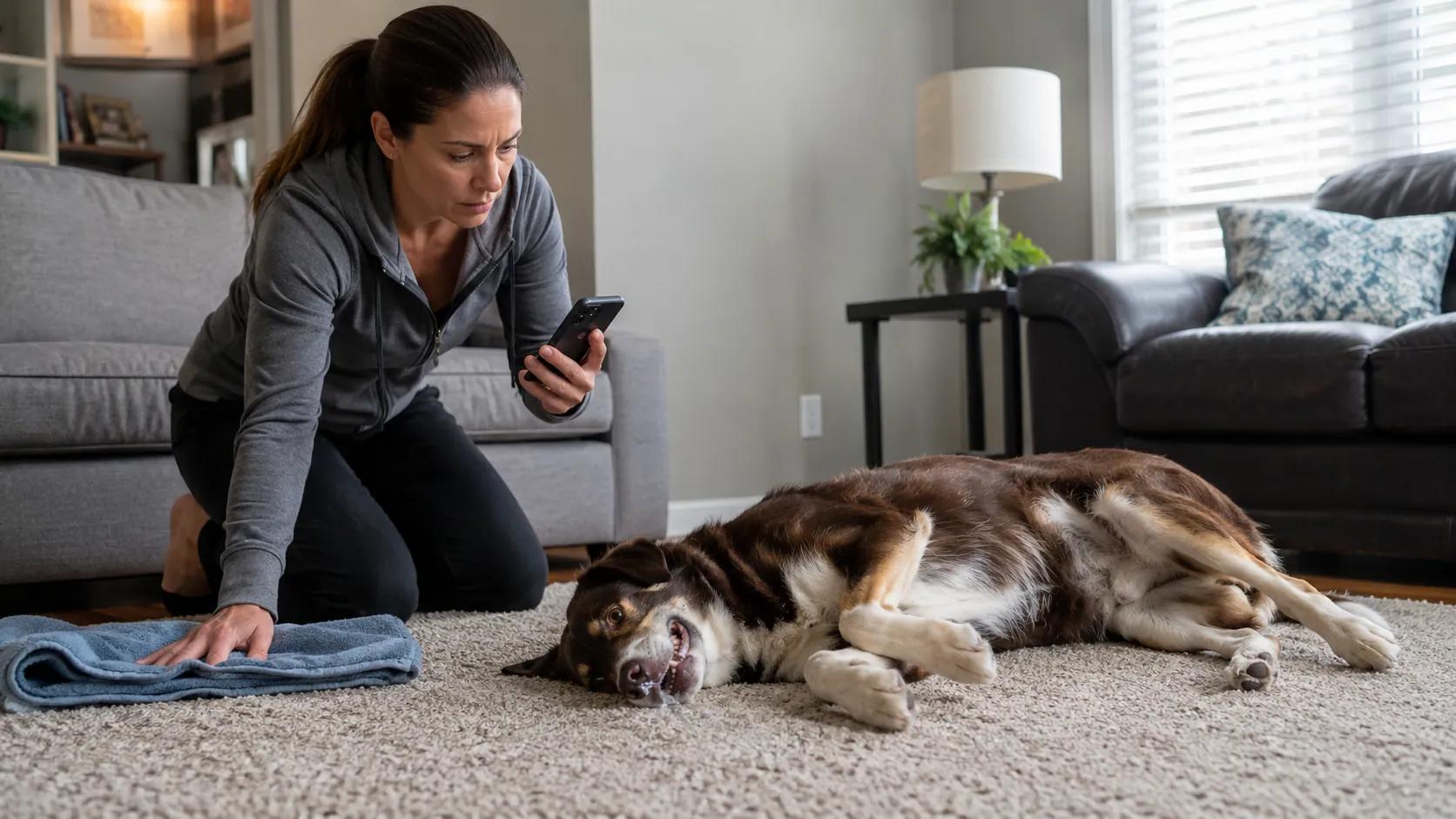
What to do if your dog has a seizure is one of the scariest questions a pet owner may search in a panic, but the most important first step is simple: stay calm and keep your dog safe. A dog seizure can look frightening because your dog may collapse, shake, drool, paddle their legs, lose awareness, or seem confused afterward. In that moment, your job is not to stop the seizure by force. Your job is to protect your dog from injury, time the seizure, avoid unsafe actions, and contact a veterinarian when needed.
Most short seizures stop on their own, but some situations need emergency veterinary care, especially if the seizure lasts longer than 5 minutes, happens more than once, or your dog does not recover normally. This guide explains dog seizure first aid, what to do during and after a seizure, warning signs, possible causes, treatment, and how to prepare if it happens again.
Quick Dog Seizure Emergency Checklist
If your dog is actively having a seizure, use this quick checklist first:
| What to Do | Why It Helps |
| Stay calm | Your dog needs a safe, quiet environment. |
| Move hazards away | Remove sharp objects, furniture, stairs, and water risks nearby. |
| Do not hold your dog down | Restraining can cause injury or stress. |
| Do not put anything in your dog’s mouth | Dogs do not swallow their tongues, and you may get bitten. |
| Start a timer | Seizure duration helps determine if it is an emergency. |
| Keep the room quiet and dim | Noise and stimulation may make recovery harder. |
| Record a video if safe | A video can help your vet understand the episode. |
| Call your vet for red flags | Long, repeated, or unusual seizures need medical advice. |
A dog seizure emergency checklist should be simple because owners are often scared in the moment. Focus on safety first. Move chairs, tables, toys, or other objects away from your dog. If your dog is near stairs, a pool, pond, road, or hard furniture, gently protect the area around them without grabbing their body or mouth.
The most important digit-based rule to remember is this: if a dog seizure lasts longer than 5 minutes, or if your dog has multiple seizures within 24 hours, contact an emergency vet immediately.
What to Do During a Dog Seizure
During a seizure, your dog may not be aware of what is happening. They may have convulsions, muscle spasms, paddling movements, drooling, foaming at the mouth, or loss of consciousness. Some dogs may only show smaller signs such as facial tremor, lip smacking, fly-biting, staring into space, or rhythmic twitching.
The safest response is to create a safe environment during seizure. Clear the area around your dog. Keep children and other pets away. Turn off loud sounds if possible. Dim the lights and keep the room calm. Speak softly, but do not shout, shake, or try to “wake up” your dog.
Start timing the seizure as soon as you notice it. Even if it feels much longer, many seizures last only a few seconds to a few minutes. Timing matters because your vet will ask how long the active seizure lasted.
If you can safely record a short video, do so from a distance. A video may help your veterinarian tell whether the episode looked like a focal seizure, grand mal seizure, tremor, fainting episode, or another neurological problem.
Do not put your hands near your dog’s mouth. A seizing dog may bite unintentionally. This does not mean your dog is aggressive; it simply means they are not fully conscious or in control.
What Not to Do When Your Dog Has a Seizure
Many owners panic and try to stop the seizure physically, but that can make things worse. The biggest rule is: do not put anything in your dog’s mouth. Do not place your hand, a spoon, a cloth, food, water, or medicine inside the mouth during the seizure.
A common myth is that a dog can swallow their tongue during a seizure. This is not true. Dogs do not swallow their tongues during seizures, and trying to pull the tongue can injure your dog or cause a serious bite.
Also, do not hold your dog down. Avoid physical restraint because your dog’s body may be moving uncontrollably. Holding the legs, head, or body can cause muscle injury, joint strain, or panic after the seizure ends.
Do not shout, hit, shake, pour water, or try to force your dog to stand. Do not give human medication. Do not give extra seizure medication unless your veterinarian has specifically told you to do that as part of a seizure care plan.
A helpful quote to remember is: “Protect the space, not the body.” Your goal is to make the surroundings safer while letting the seizure pass.
When Is a Dog Seizure an Emergency?
Knowing when to call a vet for dog seizure is critical. Some seizures are short and your dog may recover, but others can become dangerous quickly.
Call an emergency vet right away if:
- The seizure lasts longer than 5 minutes
- Your dog has multiple seizures within 24 hours
- Your dog has one seizure after another without fully recovering
- This is your dog’s first seizure
- Your dog may have eaten a toxin, poison, medication, or harmful food
- Your dog is injured, pregnant, very young, elderly, or already ill
- Your dog has trouble breathing or does not return to normal
- Your dog seems severely overheated after the seizure
Two important medical terms are cluster seizures and status epilepticus. Cluster seizures in dogs means more than one seizure happens in a short period, often within 24 hours. Status epilepticus in dogs means a seizure lasts too long or does not stop normally. Both can become medical emergencies.
Long seizures can raise body temperature, increase risk of brain stress, and require urgent veterinary care. Even if your dog seems fine afterward, a first-time seizure should be discussed with a veterinarian because the underlying cause may need testing.
What to Do After Your Dog Has a Seizure
Knowing what to do after your dog has a seizure is just as important as knowing what to do during one. After the active seizure stops, your dog may enter the post-ictal phase, also called the recovery phase. During this time, your dog may seem confused, restless, blind, hungry, thirsty, clingy, anxious, or very tired.
Keep your dog in a quiet darkened space. Let them recover naturally. Speak gently and avoid crowding them. Some dogs pace or bump into things because of temporary confusion or temporary blindness. Keep them away from stairs, furniture corners, pools, or other hazards.
Offer water when your dog is alert enough to drink safely. Avoid giving food immediately if your dog is still disoriented, because they may choke or vomit. Once your dog is more normal, a small digestible meal may be okay, especially if your vet has previously advised it.
Check your dog for injuries, especially around the head, legs, mouth, and nails. Then write down what happened. Include the time, duration, symptoms, recovery behavior, and possible triggers. If it was your dog’s first seizure, call your vet for guidance.
Dog Seizure Recovery Timeline: What Is Normal Afterward?
A dog seizure recovery timeline can vary. Some dogs recover in minutes, while others may act strange for hours. The post-seizure period can look alarming, but some confusion is common.
| Time After Seizure | What You May Notice | What to Do |
| First few minutes | Wobbliness, panting, confusion, drooling | Keep the area safe and quiet. |
| First hour | Pacing, hunger, thirst, clinginess, anxiety | Offer water when alert and monitor closely. |
| First 24 hours | Tiredness or mild behavior changes | Watch for repeat seizures or worsening signs. |
Many owners ask, “Why is my dog confused after a seizure?” The answer is often the post-ictal phase in dogs. The brain is recovering from abnormal electrical activity, so your dog may not act like themselves right away.
However, call your vet if confusion is severe, your dog cannot stand, breathing seems abnormal, another seizure occurs, or recovery feels unusually long compared with previous episodes.
What Does a Dog Seizure Look Like?
Dog seizure symptoms can vary widely. A dramatic seizure may include collapse, stiffness, paddling limbs, salivating excessively, urinating involuntarily, defecating involuntarily, and loss of consciousness. This is often what people imagine when they think of a grand mal seizure in dogs.
But not every seizure looks dramatic. A focal seizure in dogs may affect only one part of the body or behavior. Your dog may twitch one side of the face, snap at the air, stare blankly, make chewing motions, or show a “chewing gum fit.” Some dogs may seem restless, clingy, or vocal before a seizure. These warning signs may happen in the pre-ictal phase.
Common signs of a dog seizure include:
- Muscle twitching
- Facial tremor
- Drooling
- Paddling movements
- Staring into space
- Fly-biting
- Snapping jaw
- Loss of consciousness
- Confusion after the episode
Because symptoms can overlap with other conditions, a video and vet evaluation are very helpful.
Dog Seizure vs Fainting, Tremors, Dreaming, or Stroke-Like Episodes
Sometimes owners search for dog seizure vs fainting, dog seizure vs tremors, or dog seizure vs dreaming because the event is unclear. This is a smart concern because not every shaking or collapsing episode is a seizure.
A seizure often includes abnormal body movements, loss of awareness, drooling, paddling, or a confused recovery phase. Fainting, also called syncope, may involve sudden collapse but often has a quicker recovery. Tremors may cause shaking while the dog remains awake and responsive. Dreaming or sleep twitching usually happens while the dog is asleep and stops when the dog wakes.
A vestibular episode or stroke-like condition may cause head tilt, balance problems, circling, or abnormal eye movement. These can look frightening and still need veterinary guidance.
Do not try to diagnose the episode at home. Instead, record what you saw, note how long it lasted, and tell your vet whether your dog was conscious, responsive, stiff, paddling, drooling, or confused afterward.
Common Causes of Seizures in Dogs
The causes of seizures in dogs can range from manageable conditions to urgent medical problems. A seizure is a symptom, not a final diagnosis. It means there was abnormal or unusual electrical activity in the dog’s brain, but the reason for that activity can vary.
Common dog seizure causes include idiopathic epilepsy, toxins, low blood sugar, liver disease, kidney disease, brain tumors, trauma, infection, distemper, meningitis, heatstroke, and medication reactions.
Age can matter. In some dogs, epilepsy may begin between 6 months and 6 years old. A first seizure in puppy may raise concerns about low blood sugar, toxins, infections, or congenital problems. A first seizure in older dog, especially after 5 years of age, may require careful evaluation for metabolic disease, organ problems, or brain tumors.
Possible causes include:
| Cause | Why It Matters |
| Idiopathic epilepsy | A common seizure disorder in some dogs. |
| Low blood sugar / hypoglycemia | Can trigger weakness, collapse, or seizures. |
| Liver disease or kidney disease | Can affect toxins and metabolism in the body. |
| Brain tumors or trauma | May cause neurological signs. |
| Toxins | Sudden seizures may follow poison exposure. |
| Heatstroke | Overheating can become life-threatening. |
Your veterinarian may recommend diagnostic tests based on your dog’s age, history, symptoms, and seizure pattern.
Household Toxins That May Trigger Dog Seizures
Toxin exposure is an important content gap because many seizures happen suddenly, and owners may not realize a household item is dangerous. Possible toxin-related seizure risks include xylitol poisoning, chocolate, human medications, antifreeze, pesticides, slug bait, marijuana toxicity, lawn chemicals, and flea and tick medication misuse.
If you suspect poison exposure, do not wait to “see what happens.” Call your vet, an emergency veterinary clinic, or animal poison control for guidance. Try to identify what your dog may have eaten, how much, and when.
Never give home remedies, force vomiting, or give human medication unless a veterinarian instructs you. Some substances can cause more harm if vomiting is forced.
Seasonal risks can also matter. During holidays, dogs may access chocolate, alcohol, rich foods, or sugar-free products containing xylitol. In summer, overheating and lawn chemicals may increase risk. In spring, pesticides and garden products may be more common.
Types and Phases of Dog Seizures
Understanding types of seizures in dogs can make the event less confusing. A focal seizure may affect one body part or one behavior. A generalized seizure or grand mal seizure affects the whole body and may include collapse, paddling, stiffness, and loss of consciousness. Cluster seizures involve repeated seizures, while status epilepticus is a prolonged seizure emergency.
Seizures may also have phases:
The pre-ictal phase happens before the seizure. A dog may seem restless, clingy, anxious, or unusual. The ictal phase is the active seizure itself, when abnormal electrical activity causes symptoms. The post-ictal phase is the recovery period, when your dog may be confused, tired, hungry, thirsty, or temporarily blind.
Not every dog shows all phases clearly. Some seizures happen suddenly with no warning. That is why a seizure diary can help identify patterns over time.
What to Tell Your Vet After a Dog Seizure
After a seizure, your vet will need clear details. This is where dog seizure observation notes become very useful. Even small details can help your veterinarian decide whether your dog needs bloodwork, toxin screening, imaging, medication, or monitoring.
Tell your vet:
- When the seizure happened
- How long it lasted
- What your dog was doing before it started
- Whether your dog lost consciousness
- What movements or symptoms you saw
- Whether your dog urinated, defecated, drooled, or vomited
- How your dog behaved afterward
- Whether there was possible toxin exposure
- Any medication, missed medication dose, or food change
- Whether this has happened before
- Whether you have a video
A dog seizure video for vet diagnosis can be very helpful, but only record if your dog is already safe. Do not prioritize video over moving hazards away.
How Vets Diagnose and Treat Dog Seizures
Dog seizure treatment depends on the cause, frequency, and severity. A single short seizure may lead to monitoring and diagnostic testing, while repeated or prolonged seizures may require urgent treatment.
Your vet may perform a physical exam, neurological exam, blood tests, urine testing, toxin screening, or follow-up bloodwork. In some cases, advanced imaging such as MRI or CT may be recommended, especially if there are neurological signs, first seizures in older dogs, or concern for structural brain disease.
Common seizure medications for dogs may include phenobarbital, levetiracetam, Keppra, zonisamide, Zonegran, potassium bromide, or other anticonvulsant medications. Emergency or rescue medications such as diazepam or midazolam may be used only under veterinary direction.
Do not start, stop, or change medication without your vet’s advice. Some seizure medicines require careful dosing, regular monitoring, and blood level checks.
Long-Term Care for Dogs With Recurrent Seizures or Epilepsy
Many dogs with dog epilepsy can still have a good quality of life with proper care. Long-term seizure management may include medication, regular veterinary checkups, a consistent routine, trigger awareness, and careful monitoring.
A dog with idiopathic epilepsy may need treatment for life, but that does not mean life is over. Many owners successfully manage recurrent seizures with a plan from their vet.
Helpful long-term habits include keeping a seizure journal, giving medication on schedule, avoiding known triggers when possible, and maintaining stable sleep, exercise, hydration, and nutrition. If your dog has medication side effects such as sedation, appetite changes, wobbliness, or behavior changes, tell your vet rather than stopping the medicine suddenly.
The goal is not always to eliminate every seizure. In many cases, the goal is to reduce seizure frequency, duration, and severity while protecting your dog’s comfort and safety.
How to Create a Seizure-Safe Home and Emergency Kit
If your dog has recurrent seizures, a seizure-safe home for dogs can reduce injury risk. Block access to stairs when unsupervised. Keep your dog away from pools, ponds, balconies, or sharp furniture edges. If seizures often happen in a certain area, make that space softer and safer.
A simple seizure emergency kit may include your vet’s phone number, emergency clinic contact, medication list, timer, notepad, towel, seizure log, and poison control information. If your vet has prescribed rescue medication, keep it where you can find it quickly and use it only as directed.
Also consider other pets. During a seizure, dogs in the same home may become curious, scared, or reactive. Move other pets away calmly to prevent accidental injuries.
Dog Seizure Log: What to Track After Each Episode
A seizure log for dogs helps your vet see patterns that may not be obvious from memory. You can use a notebook, phone note, spreadsheet, or dog seizure monitoring app.
Track the date, time, duration, symptoms, possible triggers, food changes, stress, weather changes, missed medication, toxin exposure, recovery behavior, and whether emergency care was needed.
A good seizure diary may include:
| Detail to Track | Example |
| Date and time | May 9, 8:15 PM |
| Duration | About 90 seconds |
| Symptoms | Paddling, drooling, confusion |
| Recovery | Pacing for 20 minutes |
| Possible trigger | Missed medication, heat, stress, toxin risk |
This simple habit can improve veterinary decision-making and help you feel more prepared.
FAQs About What to Do If Your Dog Has a Seizure
Should I take my dog to the vet after one seizure?
Yes, you should contact your vet, especially if it is your dog’s first seizure. A short seizure may not always mean emergency treatment is needed, but your vet can help decide whether your dog needs testing or monitoring.
Can a dog die from a seizure?
Many short seizures stop on their own, but prolonged seizures, status epilepticus, toxin exposure, severe overheating, or repeated seizures can become life-threatening. A seizure lasting more than 5 minutes should be treated as urgent.
Can dogs swallow their tongue during a seizure?
No. Dogs do not swallow their tongues during seizures. Do not put your hand or any object in the mouth because of bite risk.
Why is my dog confused after a seizure?
Confusion is often part of the post-ictal phase. Your dog’s brain is recovering, so they may seem disoriented, blind, hungry, thirsty, anxious, or tired for a while.
What if my dog has more than one seizure in 24 hours?
This may be cluster seizures in dogs and should be treated seriously. Contact a veterinarian or emergency clinic for guidance.
Should I record my dog’s seizure?
Yes, if it is safe. A short video can help your vet understand the type of episode, but safety comes first.
Conclusion: Stay Calm, Keep Your Dog Safe, and Call Your Vet When Needed
Knowing what to do if your dog has a seizure can help you respond with confidence during a frightening moment. The key steps are to stay calm, create a safe space, keep your hands away from your dog’s mouth, avoid restraint, time the seizure, and watch the recovery closely. Call your vet if it is your dog’s first seizure, if the seizure lasts longer than 5 minutes, if there are multiple seizures within 24 hours, or if toxin exposure is possible.
Disclaimer
This article is for general informational purposes only and is not a substitute for professional veterinary advice, diagnosis, or treatment. Every dog’s health, symptoms, and recovery may vary based on individual circumstances. Always contact a qualified veterinarian if your dog has a seizure or shows concerning signs.