
 By adnanshabbir942@gmail.com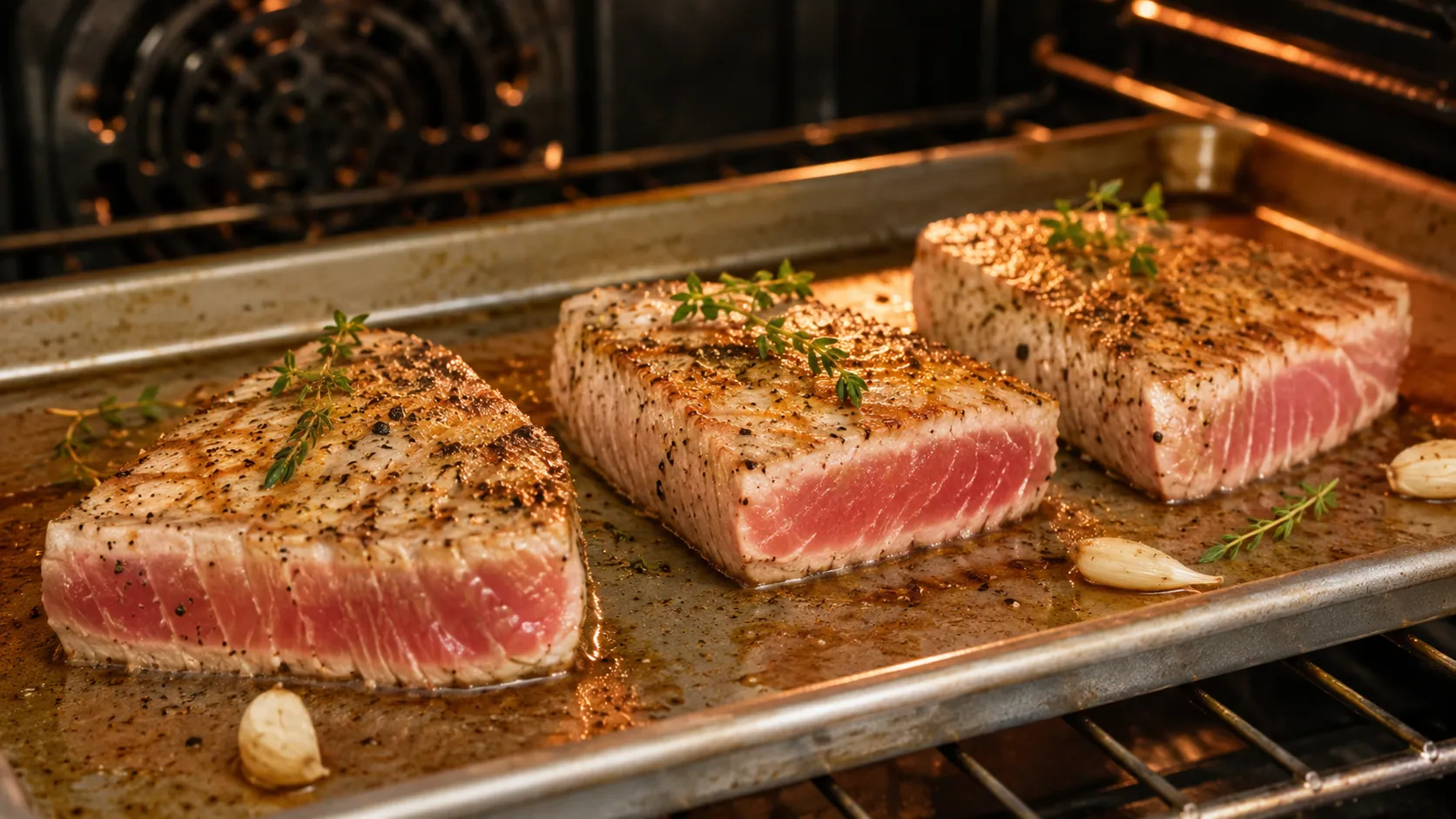
How do I cook tuna steaks in the oven is a common question because tuna looks simple, but it can turn dry fast if it is baked too long. The good news is that oven-baked tuna steak is easy when you control three things: oven temperature, cooking time, and internal temperature.
Tuna steaks are firm, lean, and naturally high in protein, so they cook much faster than many other types of fish. A basic baked tuna steak only needs olive oil, lemon juice, salt, pepper, and a few herbs. You can bake it gently at 350°F, cook it faster at 400°F, or use a hot 450°F oven for a sheet pan-style dinner.
This guide explains how to cook tuna steaks in the oven, how long to bake them, what temperature to use, how to tell when tuna steak is done, and how to keep the fish moist instead of tough or chalky.
Quick Answer: How Do I Cook Tuna Steaks in the Oven?
To cook tuna steaks in the oven, start by patting the tuna dry with a paper towel. Brush both sides with olive oil or extra-virgin olive oil, then season with salt, black pepper, garlic powder, lemon juice, and fresh herbs. Place the tuna in a lightly greased baking dish, oven dish, or on a sheet pan, then bake in a preheated oven until it reaches your preferred doneness.
For most home cooks, a good starting point is:
| Oven Temperature | Approximate Time | Best For |
| 350°F | 15 to 20 minutes | Gentler baked tuna, more cooked center |
| 400°F | 10 to 14 minutes | Balanced texture and easy timing |
| 450°F | 5 to 6 minutes per side | Fast sheet pan tuna steaks |
The safest fully cooked guideline for fish is 145°F internal temperature, measured with a kitchen thermometer or meat thermometer. At that point, the fish should look opaque and flake more easily with a fork. However, many people prefer ahi tuna or yellowfin tuna with a pink center because it stays softer and more moist.
The best way to cook tuna steak is to avoid guessing. Use the cooking time as a guide, but rely on tuna steak thickness, visual cues, and internal temperature for the final result.
Ingredients for Oven-Baked Tuna Steaks
A simple tuna steak recipe does not need many ingredients. Tuna has a bold, meaty flavor, so the goal is to season it without covering it up.
For a basic oven-baked tuna steak, you need fresh tuna steak or thawed frozen tuna steaks, olive oil, lemon juice, salt, black pepper, and garlic. Fresh herbs such as basil, oregano, thyme, or parsley add a clean flavor that works well with seafood.
A simple seasoning mix can include:
| Ingredient | Why It Works |
| Olive oil | Helps prevent dryness and carries flavor |
| Lemon juice | Brightens the fish and balances richness |
| Garlic powder or fresh garlic | Adds savory depth |
| Salt and black pepper | Brings out the tuna’s natural flavor |
| Oregano, thyme, or basil | Creates a lemon herb tuna steak flavor |
You can also build a more flavorful marinated tuna fillet by mixing olive oil, lemon juice, garlic, herbs, and a little soy sauce. For a Mediterranean-style baked tuna, add cherry tomatoes, capers, black olives, basil leaves, breadcrumbs, and extra-virgin olive oil. For a sheet pan dinner, pair tuna steaks with baby red potatoes, roasted vegetables, or Parmesan-seasoned potatoes.
A good rule is to keep the seasoning simple if your tuna is high quality. If the tuna is frozen or very mild in flavor, a stronger marinade such as soy ginger tuna steak marinade, teriyaki tuna steak, or lemon garlic baked tuna steak can help.
Best Oven Temperature and Cooking Time for Tuna Steaks
One reason people get confused about how long to cook tuna steak in the oven is that recipes use different temperatures. Some bake tuna at 350°F for a slower, more cooked result. Others use 450°F for a fast sheet pan meal. Both methods can work, but the best choice depends on thickness and doneness.
Baking Tuna Steaks at 350°F
Baking at 350°F is a gentler method. It works well for tuna steaks topped with tomatoes, olives, capers, breadcrumbs, or a savory Mediterranean topping. It is also a good option if you want a more fully cooked tuna steak.
A fresh tuna steak about 3/4 inch thick may take around 15 to 20 minutes at 350°F, depending on how done you want it. Thicker tuna steaks may need more time, while thinner steaks may cook faster.
Baking Tuna Steaks at 400°F
Baking at 400°F is a balanced method for beginners. It gives enough heat to cook the tuna efficiently without the aggressive speed of a hotter oven. For many tuna steaks around 1 inch thick, 10 to 14 minutes is a practical range.
This temperature works well for a simple baked tuna steak with olive oil, lemon juice, garlic, and herbs.
Baking Tuna Steaks at 450°F
A 450°F oven is best for quick cooking, especially for sheet pan tuna steaks. If you are making sheet pan lemon herb tuna steaks and potatoes, the potatoes usually need to start baking first because they take much longer than tuna. Then the tuna can be added near the end and baked for about 5 to 6 minutes per side.
Here is a helpful timing chart:
| Tuna Steak Thickness | Oven Temperature | Approximate Cooking Time | Best Use |
| Thin tuna steaks | 400°F–450°F | 5 minutes per side | Quick baked tuna |
| 3/4 inch thick | 350°F | 15 to 20 minutes | More cooked tuna |
| 3/4 inch thick | 450°F | 6 minutes per side | Sheet pan method |
| 1 inch thick | 400°F | 10 to 14 minutes | Balanced texture |
| Thick tuna steaks | 350°F–400°F | 12 to 18 minutes | Even cooking |
Cooking time is only an estimate. Always check the center, especially if you are cooking ahi tuna steak in the oven or baking frozen tuna steaks.
Step-by-Step Guide to Baking Tuna Steaks
Here is a simple step-by-step baked tuna steak recipe for beginners.
Step 1: Thaw and Pat the Tuna Dry
If your tuna steaks are frozen, thaw them in the refrigerator before cooking. Once thawed, pat the tuna dry with paper towels. Patting dry helps the olive oil and seasoning stick better. It also prevents excess moisture from steaming the fish.
Step 2: Season or Marinate the Tuna
Brush both sides of the tuna steak with olive oil. Add salt, black pepper, garlic powder, and lemon juice. For more flavor, let the tuna sit in a simple marinade for 15 to 30 minutes.
Avoid marinating tuna too long in acidic ingredients like lemon juice because acid can start changing the texture of the fish.
Step 3: Preheat the Oven
Preheat the oven to your chosen temperature. Use 350°F for a gentle bake, 400°F for a balanced method, or 450°F for a faster sheet pan dinner.
Step 4: Place Tuna in a Baking Dish or Sheet Pan
Put the tuna steaks in a lightly greased baking dish, oven dish, or on a baking sheet. Leave space between each steak so heat can circulate evenly.
If using potatoes or vegetables, remember that they usually need more time than tuna. Start the vegetables first, then add the tuna near the end.
Step 5: Bake Until Desired Doneness
Bake the tuna until the outside is opaque and the center reaches your preferred doneness. Use a thermometer if possible. For fully cooked fish, aim for 145°F internal temperature.
Step 6: Rest Briefly Before Serving
Let the tuna rest for a few minutes after baking. This helps the juices settle and reduces the chance of a dry texture. Remember that carryover cooking can raise the internal temperature slightly after the tuna leaves the oven.
How to Know When Tuna Steak Is Done
The best way to know when tuna steak is done is to check the internal temperature. Tuna can be cooked rare, medium-rare, medium, or fully cooked, depending on preference and food-safety comfort.
| Doneness Level | Internal Temperature | Texture |
| Rare / very pink center | Below fully cooked temperature | Soft and moist |
| Medium-rare | Around 125°F–130°F | Pink and tender |
| Medium | Around 135°F–140°F | Slightly pink center |
| Fully cooked | 145°F internal temperature | Opaque, firmer, flakes more easily |
A fully cooked tuna steak should look opaque and separate more easily with a fork. A medium or medium-rare tuna steak may still have a pink center. This is common in restaurant-style tuna, especially with ahi tuna, but not everyone prefers it.
If you are cooking for children, pregnant people, older adults, or anyone with a weaker immune system, it is safer to follow the fully cooked temperature guideline.
A simple chef-style rule is: “Cook tuna steak less like a casserole and more like a lean steak.” It needs attention, quick timing, and a careful finish.
Should Tuna Steak Be Pink in the Middle?
Tuna steak can be pink in the middle if it is high quality and cooked to your preferred doneness. Many people enjoy pink in the middle tuna because it stays moist and tender. Fully cooked tuna is firmer, lighter in color, and more flaky.
This is where food safety and cooking preference need to be separated. From a safety standpoint, the fully cooked fish guideline is 145°F internal temperature. From a culinary standpoint, many tuna steak recipes are served medium-rare with a soft pink center.
So, should tuna steak be pink in the middle? It can be, but it depends on your comfort level, the quality of the fish, and who is eating it. If you are unsure, cook it closer to medium or fully cooked. If you prefer a restaurant-style texture, remove it earlier and let it rest briefly.
The most important thing is not to accidentally overcook it. Tuna that goes too far can become dry, dense, and chalky.
How to Keep Tuna Steaks Moist in the Oven
The biggest secret to a moist baked tuna steak is not overbaking it. Tuna is a lean protein, so it does not have as much fat as salmon. That means it can dry out quickly if it stays in the oven too long.
To keep tuna steak moist in the oven, coat it with olive oil before baking. A light marinade also helps. Lemon juice, garlic, herbs, and extra-virgin olive oil are simple but effective. You can also bake tuna with cherry tomatoes, capers, black olives, or lemon slices, which add moisture and flavor.
Thickness matters too. Very thin tuna steaks cook quickly and can dry out in minutes. Thicker steaks are usually easier to bake because the center has more time to stay tender while the outside cooks.
Avoid these common mistakes:
| Mistake | Why It Hurts the Texture |
| Baking too long | Makes tuna dry and firm |
| Skipping oil or marinade | Reduces moisture and flavor |
| Not checking temperature | Leads to overcooking |
| Cooking frozen tuna like fresh tuna | Causes uneven cooking |
| Not resting after baking | Makes juices escape too quickly |
If your tuna steak turned out dry, it was probably cooked too long, baked at too high a heat for its thickness, or not protected with enough oil or marinade.
Can You Cook Frozen Tuna Steaks in the Oven?
You can cook frozen tuna steaks in the oven, but thawing first is usually better. Thawed tuna cooks more evenly, absorbs seasoning better, and gives you more control over doneness.
The best way to thaw tuna steaks safely is to place them in the refrigerator until fully thawed. Avoid leaving fish on the counter for a long time because seafood is sensitive to temperature changes.
If you must cook frozen tuna steaks in the oven, expect them to take longer. The outside may cook before the center is ready, so use a lower temperature such as 350°F or 375°F, and check the internal temperature carefully. Brush the frozen tuna with olive oil once the surface softens enough to hold seasoning.
For the best texture, choose fresh tuna steak or properly thawed frozen tuna. Frozen tuna can still make a great oven-baked tuna steak, especially if you use a flavorful marinade and avoid overcooking it.
Best Marinades and Seasonings for Baked Tuna Steak
A good marinade can turn a simple tuna steak in oven recipe into a memorable dinner. Since tuna has a firm texture, it pairs well with bright, salty, herby, and savory flavors.
Lemon Garlic Herb Marinade
This is the easiest option for a classic lemon herb tuna steak recipe. Mix olive oil, lemon juice, garlic, salt, pepper, oregano, thyme, and basil. Brush it over the tuna or marinate the fish briefly before baking.
Mediterranean Tuna Steak Topping
For a Mediterranean baked tuna style, top the steak with cherry tomatoes, black olives, capers, basil, breadcrumbs, and extra-virgin olive oil. This gives the tuna moisture and a savory topping inspired by Southern Italian flavors.
Soy Ginger Tuna Steak Marinade
For an Asian-style flavor, use soy sauce, ginger, garlic, sesame oil, and a small amount of honey or teriyaki sauce. This works especially well with ahi tuna and rice bowls.
Garlic Butter Baked Tuna Steak
For a richer option, brush the tuna with melted butter, garlic, lemon juice, and herbs. This adds flavor and helps reduce dryness, especially if you prefer fully cooked tuna.
What to Serve With Oven-Baked Tuna Steaks
Oven-baked tuna steaks work with many side dishes because the flavor is clean, savory, and slightly meaty. If you want a light meal, serve tuna with salad, roasted asparagus, green beans, or Mediterranean vegetables. If you want something heartier, pair it with rice, baby red potatoes, couscous, quinoa, or roasted potatoes.
Here are easy pairing ideas:
| Side Dish | Best Flavor Match |
| Roasted potatoes | Lemon herb tuna |
| Rice or rice bowl | Soy ginger tuna |
| Green salad | Garlic lemon tuna |
| Roasted vegetables | Mediterranean baked tuna |
| Quinoa or couscous | Healthy seafood dinner |
| Low-carb vegetables | High-protein meal |
For a sheet pan dinner, start potatoes or vegetables first, then add the tuna later so it does not overcook. This is especially helpful when making tuna steaks and potatoes or sheet pan lemon herb tuna steaks.
How to Store and Reheat Cooked Tuna Steak
Store cooked tuna steak in an airtight container in the refrigerator. Let it cool slightly first, but do not leave it sitting at room temperature for too long. Since tuna is seafood, safe storage matters.
Cooked tuna steak is best eaten soon after cooking because reheating can make it dry. If you do reheat it, use gentle heat. Warm it in a low oven, covered lightly with foil, or heat it briefly in a pan with a small amount of olive oil or sauce.
You can also eat leftover tuna steak cold. It works well in salads, rice bowls, wraps, or with roasted vegetables. Cold leftover tuna is often better than reheated tuna because the texture stays firmer and less dry.
Avoid reheating tuna multiple times. Repeated heating can make it tough and reduce both flavor and moisture.
Fresh vs Frozen Tuna Steaks: Which Is Better for Baking?
Both fresh and frozen tuna steaks can work well in the oven. Fresh tuna is ideal when it is available, smells clean, and has a firm texture. Frozen tuna is convenient, often more affordable, and easier to find in many grocery stores.
When choosing tuna steaks, look for firm flesh and a clean ocean-like smell. Avoid fish that smells overly fishy or sour. A thickness of around 3/4 inch to 1 inch is helpful because it gives you more control over doneness.
Common tuna options include ahi tuna and yellowfin tuna. Both can be baked, seared, or grilled. If you see the term sushi-grade tuna, remember that it is a marketing term and does not replace safe handling, proper storage, and buying from a trusted source.
For baking, thicker tuna steaks are usually better than very thin pieces because they are less likely to dry out before you can check them.
Frequently Asked Questions
How long should tuna steak cook in the oven?
Tuna steak usually cooks for 10 to 14 minutes at 400°F, 15 to 20 minutes at 350°F, or about 5 to 6 minutes per side at 450°F. The exact time depends on tuna steak thickness and desired doneness.
What temperature should tuna steaks be cooked to?
For fully cooked fish, use 145°F internal temperature as the food-safe guideline. Many people prefer tuna steaks at medium-rare or medium for a softer texture, but that is a personal preference.
Can tuna steak be pink in the middle?
Yes, tuna steak can be pink in the middle if you prefer it that way and are comfortable with the doneness level. A pink center is common with ahi tuna steak, but fully cooked tuna should be opaque and firmer.
Do you need to marinate tuna before baking?
You do not have to marinate tuna, but a marinade helps add flavor and moisture. Olive oil, lemon juice, garlic, herbs, soy sauce, ginger, and sesame oil are all good options.
Can I bake ahi tuna steak in the oven?
Yes, you can bake ahi tuna steak in the oven. Ahi tuna cooks quickly, so watch the time closely and use a thermometer if you want precise doneness.
Is baked tuna steak healthy?
Baked tuna steak can be a healthy seafood dinner because it is high in protein, naturally low in fat, and contains Omega-3 fatty acids. However, tuna can contain mercury, so it is best to eat it in balanced portions as part of a varied diet.
Why did my tuna steak turn out dry?
Your tuna steak likely turned out dry because it was overcooked, too thin for the baking time, not coated with oil or marinade, or reheated too aggressively. Use a thermometer, reduce cooking time, and let the fish rest briefly before serving.
Final Thoughts on Cooking Tuna Steaks in the Oven
Cooking tuna steaks in the oven is simple once you understand timing, temperature, and doneness. For the best oven-baked tuna steak, brush the fish with olive oil, season it well, bake it in a preheated oven, and check the internal temperature instead of relying only on the clock.
If you want moist tuna, avoid overcooking it. If you want a fully cooked result, aim for 145°F internal temperature. If you prefer a softer center, remove the tuna earlier and let it rest.
With the right method, baked tuna steak can be a quick, healthy, high-protein dinner that works with lemon herbs, Mediterranean toppings, soy ginger marinade, potatoes, rice, salad, or roasted vegetables.
Disclaimer: This article is for general informational and cooking guidance purposes only and does not replace professional food safety advice. Cooking times, temperatures, and doneness may vary depending on tuna steak thickness, oven performance, and fish quality. Always handle seafood safely and cook according to your preferred food safety standards.