
 By adnanshabbir942@gmail.com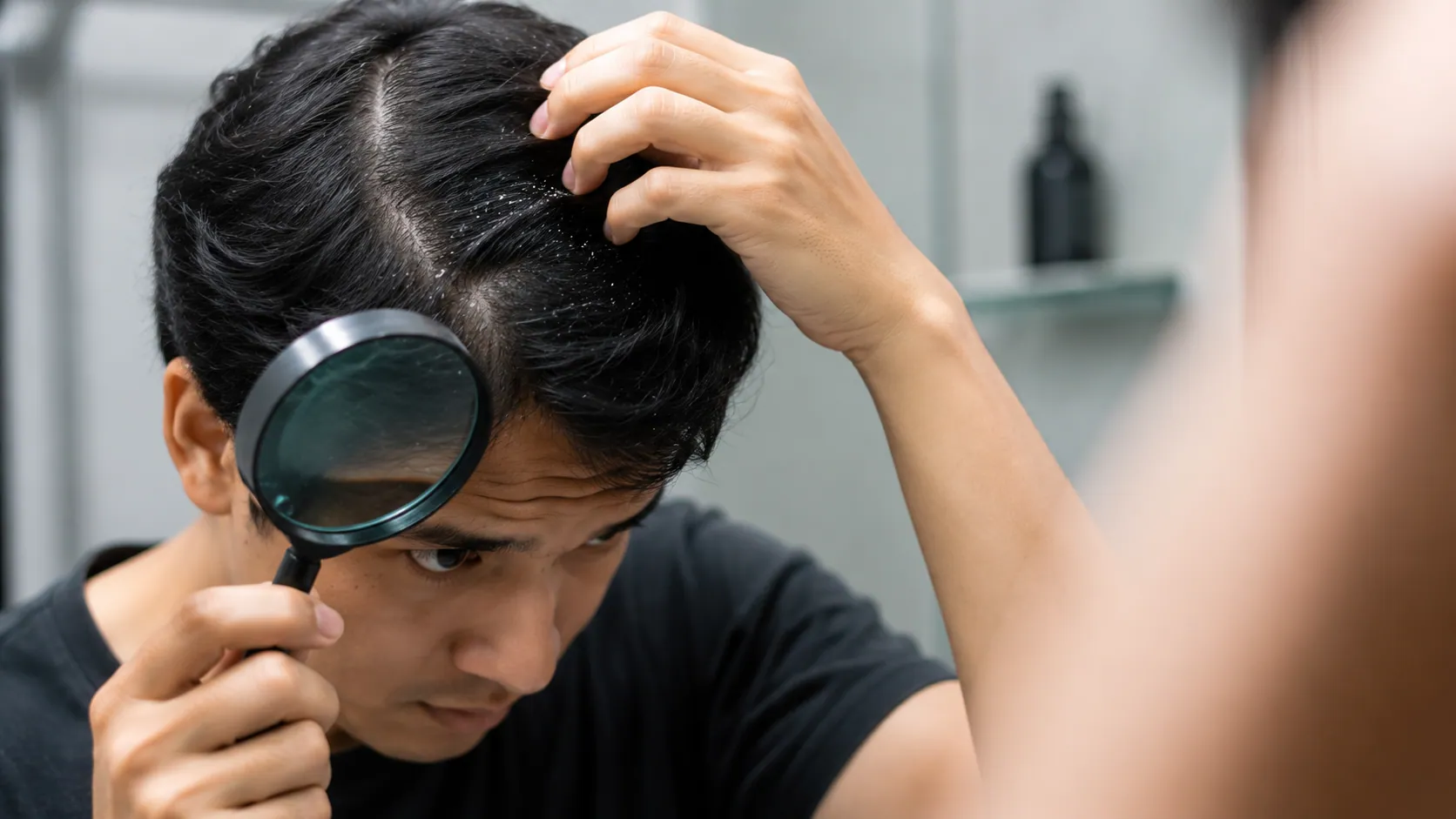
The answer is not a simple yes or no. In most cases, dandruff itself does not directly destroy hair follicles or cause permanent baldness. However, when dandruff becomes severe, itchy, inflamed, or untreated, it can create scalp conditions that may lead to temporary hair shedding, hair breakage, or the appearance of thinner hair.
Many people start to worry when they notice flakes and hair fall at the same time. It is easy to assume that dandruff is the only reason their hair is shedding. But in reality, dandruff and hair loss can happen together for many different reasons. The cause may be simple dandruff, seborrheic dermatitis, stress, postpartum shedding, genetics, harsh hair products, over-scratching, or another scalp condition.
A flaky scalp can also become uncomfortable. When the scalp feels itchy, people may scratch without thinking. Over time, this repeated scratching can irritate the skin, weaken hair strands, and make itchy scalp and hair fall feel connected. This does not always mean the hair roots are permanently damaged, but it does mean the scalp needs proper care.
The good news is that flaky scalp hair loss is often manageable when the real cause is found early. If the shedding is linked to scalp irritation, inflammation, or scratching, improving scalp health may help reduce breakage and support normal hair growth again. But if hair loss is sudden, patchy, painful, or getting worse, it is important to look beyond ordinary dandruff and consider medical advice.
Does Dandruff Directly Cause Hair Loss?
Ordinary dandruff usually does not directly cause permanent hair loss. Dandruff is mainly a scalp-flaking condition, not a classic hair-loss disorder. It affects the surface of the scalp by causing white or yellowish flakes, mild itching, dryness, or oiliness. Hair loss, on the other hand, usually involves the hair follicle, hormones, genetics, illness, stress, nutrition, or inflammation around the root.
A simple way to understand this is: hair grows from follicles under the scalp, while dandruff usually affects the outer scalp surface. Mild flakes alone do not normally damage the follicle deeply enough to cause baldness. The real problem begins when dandruff leads to strong itching, repeated scratching, inflammation, or infection. These issues can disturb the scalp environment and may contribute to temporary hair shedding or hair breakage.
For example, if someone has mild dandruff with only a few flakes, they may not experience any real hair loss. But if the scalp becomes very itchy and the person scratches often, the hair may break near the root or shed more noticeably. If the dandruff is actually part of seborrheic dermatitis, inflammation may make shedding worse. And if a person already has genetic hair thinning, dandruff may make the scalp look more visible, even though it is not the main cause.
Here is the key distinction:
| Situation | What Usually Happens |
| Mild dandruff only | Flakes and mild itching, usually no true hair loss |
| Severe itching and scratching | Hair breakage, shedding, and scalp irritation |
| Seborrheic dermatitis | Inflammation may worsen shedding |
| Genetic hair loss with dandruff | Dandruff may make thinning look worse but is not the root cause |
So, does dandruff cause hair fall? Not usually in a direct or permanent way. But dandruff can indirectly play a role when it causes itching, scratching, redness, inflammation, or poor scalp comfort. This is why treating dandruff early matters. A calmer scalp is less likely to itch, and less scratching means less risk of breakage, irritation, and unnecessary shedding.
How Dandruff May Lead to Temporary Hair Shedding
Dandruff may lead to temporary hair loss in an indirect way. The process is usually not because flakes are “pulling out” the hair. It is more often because dandruff makes the scalp itchy and uncomfortable, which leads to scratching and irritation.
A simple way to understand it is:
Dandruff → itching → scratching → scalp irritation → weaker hair strands or breakage → visible shedding
When the scalp is itchy, many people scratch without realizing how often they are doing it. Light scratching may not cause much harm, but aggressive or repeated scratching can damage the scalp surface. It may also weaken hair strands near the root, especially if the scalp is already inflamed, sore, oily, or covered with flakes.
This is why some people notice scratching scalp hair loss or extra hair fall after days or weeks of intense itching. The hair may not always be falling out from the follicle permanently. In many cases, it may be hair breakage from scratching, loose hairs coming out during washing, or temporary shedding linked to an irritated scalp.
In some people, scalp inflammation can also affect the area around the hair follicles. When the scalp is inflamed, the normal hair growth cycle may become disturbed. This can make shedding more noticeable for a while. Medical experts often explain that the main connection between dandruff and hair loss is not simple flaking, but itching, scratching, and inflammation.
The good news is that temporary hair loss from dandruff often improves when the scalp condition is treated early. Once itching is reduced and scratching stops, the scalp has a better chance to calm down. Hair breakage may also become less noticeable as the scalp and hair routine improve.
A helpful way to think about it is this: if you notice flakes on your shoulders and extra hair on your pillow, do not immediately assume you are going bald. First, check what your scalp feels and looks like. Is it itchy? Oily? Red? Sore? Are you scratching it several times a day? Does it burn after shampooing? These signs can help you understand whether the shedding may be connected to an itchy flaky scalp or whether another cause may be involved.
If the shedding is mild and happens along with dandruff, improving scalp care may help. But if the hair loss is sudden, patchy, painful, or heavy, it should not be ignored.
Dandruff vs. Seborrheic Dermatitis: Why the Difference Matters
Dandruff and seborrheic dermatitis are closely related, but they are not always the same in severity. Dandruff is usually a milder scalp-flaking problem. It may cause white flakes, mild itching, and dryness or oiliness on the scalp. Seborrheic dermatitis is usually more inflamed and can cause stronger itching, redness, irritation, and greasy or yellow-looking flakes.
This difference matters because seborrheic dermatitis hair loss is more likely to happen when inflammation and scratching become intense. The stronger the scalp irritation, the more likely a person is to scratch, rub, or disturb the scalp barrier.
Dandruff usually appears mainly on the scalp. Seborrheic dermatitis can also affect other oily areas of the body, such as the eyebrows, sides of the nose, beard area, behind the ears, chest, or upper back. If flakes are showing up in more than one oily area, the problem may be more than simple dandruff.
Here is an easy comparison:
| Mild Dandruff | Possible Seborrheic Dermatitis |
| White flakes | Yellow, greasy, or thick flakes |
| Mild itch | Strong itch, burning, or soreness |
| Little or no redness | Red, irritated scalp |
| Mostly scalp only | Scalp plus eyebrows, beard, nose folds, or ears |
People often describe seborrheic dermatitis as greasy dandruff because the flakes may look oily, thick, or yellow. The scalp may also feel tender, warm, or uncomfortable. In some cases, the skin may become red and irritated, especially after scratching.
This is important because an inflamed scalp is more likely to trigger noticeable shedding than mild dandruff alone. If the scalp is red, itchy, flaky, and sore, the hair may look thinner because of inflammation, scratching, and breakage. The flakes themselves are not usually the main reason for the shedding. The problem is the irritated scalp environment around the hair.
If someone has yellow flakes, strong itching, burning, or flakes around the eyebrows, beard, ears, or nose folds, they may need a more targeted dandruff treatment plan. A medicated shampoo may help, but persistent scalp dermatitis should be checked by a dermatologist or healthcare professional, especially if hair fall is getting worse.
Other Conditions That Can Look Like Dandruff and Cause Hair Loss
Not every flaky scalp and hair loss problem is simple dandruff. This is important because dandruff is common, but several scalp conditions can also cause flakes, itching, irritation, and shedding. If someone treats every scalp problem like ordinary dandruff, they may miss the real cause and delay proper care.
One condition that can look similar is scalp psoriasis. This may cause thick, dry, silvery, or crusty scales on the scalp. The flakes may be more stubborn than regular dandruff and can sometimes extend beyond the hairline. Scalp psoriasis hair loss may happen when the scalp becomes very inflamed or when a person scratches or picks at the thick scales. In many cases, hair can grow back once the scalp improves, but regrowth may take time.
A fungal scalp infection, also called ringworm of the scalp, can also be mistaken for dandruff. This condition may cause scaling, itching, broken hairs, and round or patchy areas of hair loss. Unlike ordinary dandruff, it can spread and usually needs medical treatment. If there are circular scaly patches, broken hairs, or bald spots, it is better to get the scalp checked instead of relying only on dandruff shampoo.
Eczema or allergic contact dermatitis can also cause flakes and hair shedding. This may happen after using hair dye, fragrance-heavy shampoo, strong oils, styling products, or harsh scalp treatments. A contact dermatitis scalp reaction may feel itchy, red, burning, or sore. In this case, the problem is not dandruff itself but irritation from something touching the scalp.
Sometimes, the issue is simpler: product buildup scalp irritation. Heavy oils, styling creams, gels, dry shampoo, and infrequent washing can leave residue on the scalp. This buildup may trap oil, sweat, and dead skin, making flakes and itching worse. People with oily scalps may notice that too much product makes the scalp feel greasy, coated, and uncomfortable.
Another common situation is genetic hair loss, also called androgenetic alopecia. A person may already be developing gradual thinning because of family history, hormones, or age, while also having dandruff at the same time. This can make dandruff look like the main cause, even when it is only happening alongside the real hair-loss condition.
That is why it helps to look at the full picture. Mild flakes with mild itching may be ordinary dandruff. But flakes with bald patches, pain, thick crusts, broken hairs, bleeding, or strong inflammation may point to something else. A proper diagnosis can prevent unnecessary stress and help protect the scalp sooner.
Common Causes and Triggers Behind Dandruff-Related Hair Fall
The causes of dandruff hair loss are usually connected to what is happening on the scalp. Dandruff can be influenced by scalp oil, yeast overgrowth, skin sensitivity, weather, stress, harsh products, and washing habits. Dandruff is common and not contagious, but it can be recurring and frustrating when the scalp keeps becoming itchy or flaky.
One major trigger is Malassezia scalp imbalance. Malassezia is a type of yeast that naturally lives on the scalp. In some people, it can irritate the skin when there is too much oil or sensitivity. This may lead to flakes, itching, and inflammation. When the scalp becomes itchy, scratching may then contribute to shedding or breakage.
Oily scalp dandruff is another common pattern. People with oily scalps may notice greasy flakes, scalp odor, or itching that becomes worse when they delay washing. Oil itself is not bad, but too much oil mixed with dead skin and product residue can make dandruff harder to control.
On the other hand, dry scalp flakes can appear in cold weather or low humidity. The scalp may feel tight, dry, and itchy. These flakes are often smaller and drier than greasy dandruff. Dryness can make the scalp more sensitive, especially if someone uses strong shampoos or washes with very hot water.
Stress and dandruff can also be connected. Stress does not always directly cause dandruff, but it may make scalp sensitivity, itching, and inflammation worse. Poor sleep, emotional pressure, and a busy routine can also affect how well someone cares for their scalp and hair.
Harsh shampoos, fragrances, hair dyes, bleach, sprays, and styling products may trigger irritation in some people. If the scalp starts itching or burning after a new product, the product may be part of the problem. Too many strong treatments at once can also damage the scalp barrier and make flakes worse.
Too much oiling can be another hidden trigger. Many people apply oils because they believe it will “feed” the scalp, but heavy oiling may worsen greasy dandruff in some people. If flakes are yellow, oily, or sticky, adding more oil may make the scalp feel more coated and irritated.
Infrequent washing can also worsen dandruff for oily scalps. When oil, sweat, flakes, and styling products sit on the scalp for too long, itching may increase. This does not mean everyone must wash daily, but the scalp should be cleaned often enough for that person’s hair type, oil level, and lifestyle.
Nutritional gaps may also matter when shedding is widespread. If someone is losing hair all over the scalp, not just near itchy or flaky areas, the cause may involve iron, vitamin D, protein intake, thyroid issues, illness, stress, or another internal factor. Dandruff treatment alone may not fix this type of shedding.
For new parents, especially postpartum mothers, postpartum hair shedding can overlap with dandruff. After childbirth, hormonal changes may cause more hair to shed than usual. At the same time, sleep loss, stress, reduced self-care, and scalp changes may make dandruff more noticeable. In this case, dandruff and shedding may happen together, but dandruff may not be the main reason for the hair fall.
This is why it is helpful to ask: did the shedding start with itching and flakes, or did it start after childbirth, illness, stress, medication, or a major life change? The answer can guide the next step.
Signs Your Hair Loss May Be More Than Dandruff
Dandruff can be uncomfortable, but certain symptoms suggest the problem may be more serious than ordinary flakes. Knowing when to see a dermatologist for dandruff is important, especially if hair loss is getting worse or the scalp looks irritated.
You should be more careful if you notice sudden patchy bald spots. Ordinary dandruff usually does not cause clean round bald patches. Patchy hair loss may be linked to conditions such as alopecia areata, fungal infection, psoriasis, or another scalp disorder.
Thick crusts, bleeding, pain, or pus are also warning signs. These symptoms may suggest infection, severe inflammation, or skin damage from scratching. A scalp that feels painful or develops open areas should not be treated casually.
Severe redness or burning is another sign that the scalp may be reacting to something. This can happen with allergic contact dermatitis, harsh hair products, chemical treatments, or strong medicated products used too often. If the scalp burns instead of simply itching, stop and reassess the products being used.
Hair falling out in clumps may also be more than dandruff. Shedding a few strands while washing or brushing is normal, but clumps of hair may point to stress-related shedding, postpartum shedding, illness, medication effects, nutritional problems, or another health issue.
Circular scaly patches should also be checked. These may suggest a scalp infection symptom, especially if there are broken hairs or bald spots. Fungal scalp infections usually need proper medical treatment and should not be ignored.
Hair loss after illness, childbirth, medication, surgery, rapid weight loss, or major stress may not be caused by dandruff. These events can trigger temporary shedding from inside the body. Dandruff may still be present, but it may not be the root cause.
If your dandruff is not going away after several weeks of proper shampoo use, that is another reason to seek advice. Sometimes the problem is not dandruff, or the scalp may need a different treatment.
Eyebrow, beard, or body hair involvement can also give clues. Flakes around the eyebrows, beard, nose folds, or ears may suggest seborrheic dermatitis. Hair loss in multiple areas may need a broader medical check.
For babies or children, severe flakes, swelling, redness, broken hairs, pus, or patchy hair loss should be taken seriously. Children can develop scalp infections that look like dandruff but need medical care.
A safe rule is simple: if the hair loss is sudden, patchy, painful, severe, or worrying, do not assume it is “just dandruff.” Getting a professional opinion can help identify the real cause and prevent the condition from becoming worse.
Best Treatments to Control Dandruff and Protect Hair Growth
Treating dandruff properly can help reduce itching, scratching, and scalp irritation. This matters because dandruff-related shedding is often linked to the way the scalp reacts, not just to the flakes themselves. When the scalp is calmer, people usually scratch less. Less scratching means less risk of breakage, soreness, and visible shedding.
The best dandruff shampoo for hair loss concerns is usually not a “hair growth shampoo.” It is a shampoo that controls the scalp problem causing itching and inflammation. If dandruff is contributing to shedding, the goal is to reduce flakes, calm irritation, and keep the scalp clean without making it dry or sensitive.
Different active ingredients work in different ways:
| Ingredient | Best For |
| Ketoconazole | Yeast-related dandruff and seborrheic dermatitis |
| Zinc pyrithione | Flaking, itching, and yeast control |
| Selenium sulfide | Oily flakes and fast skin-cell buildup |
| Salicylic acid | Thick scale and product buildup |
| Coal tar | Slowing excess skin-cell turnover |
| Sulfur | Flake control in some formulas |
A ketoconazole shampoo may be useful when dandruff is linked with yeast overgrowth or seborrheic dermatitis. A zinc pyrithione shampoo may help with common flaking and itching. Selenium sulfide is often used for oily dandruff, while salicylic acid shampoo can help loosen thick scale and buildup. Coal tar and sulfur may also be used in some medicated formulas.
The American Academy of Dermatology recommends choosing dandruff shampoos with active ingredients such as zinc pyrithione, salicylic acid, sulfur, selenium sulfide, ketoconazole, or coal tar. It also advises following the bottle directions carefully because some dandruff shampoos need to stay on the scalp for several minutes before rinsing.
This is an important point many people miss. A medicated dandruff shampoo should be applied to the scalp, not just rubbed through the hair. If it is rinsed out too quickly, it may not have enough contact time to work well. Mayo Clinic also notes that most dandruff shampoos need to sit on the scalp for several minutes before rinsing and that people may need to try different shampoos if one does not work.
For mild dandruff, regular gentle washing may be enough. If flakes and itching continue, medicated shampoos may be needed. Some people use them a few times weekly, while others need a different schedule depending on hair type, scalp sensitivity, and the product label. Mayo Clinic notes that medicated shampoos for seborrheic dermatitis may be used once daily or two to three times weekly for several weeks, depending on symptoms and hair-grooming practices.
People with textured, curly, coily, dry, or fragile hair may need a gentler approach. Washing too often or using strong shampoos too frequently can make the hair feel dry. In that case, it may help to focus the medicated shampoo on the scalp, condition the hair lengths well, and follow advice from a dermatologist or pharmacist if irritation continues.
A Simple Scalp Care Routine to Reduce Flakes and Shedding
A good scalp care routine does not need to be complicated. The main goal is to clean the scalp properly, reduce flakes, calm itching, and avoid habits that make irritation worse. If you are trying to understand how to stop dandruff hair fall, start with consistent scalp care before jumping to multiple products.
Step 1: Wash the scalp, not just the hair.
Dandruff starts on the scalp, so the shampoo needs to reach the skin. Use your fingertips to gently massage the scalp. Do not rely on shampoo running through the hair lengths.
Step 2: Let medicated shampoo sit as directed before rinsing.
Many anti-dandruff shampoos need a few minutes of contact time. Read the label and follow the directions. Leaving it on too briefly may reduce its effect.
Step 3: Use conditioner on the mid-lengths and ends.
Conditioner helps keep the hair soft, but heavy conditioner on the scalp may worsen buildup for some people. Apply it mainly to the hair lengths unless the product is designed for scalp use.
Step 4: Avoid scratching with nails.
If the scalp itches, try pressing gently or massaging with fingertips instead of scratching with nails. This can help reduce scalp itching without causing small cuts or irritation.
Step 5: Avoid heavy oils if flakes are greasy or yellow.
Oils may feel soothing for dryness, but they can worsen greasy flakes in some people. If the scalp already feels oily, coated, or inflamed, heavy oiling may make the problem harder to control.
Step 6: Keep brushes, pillowcases, hats, and hair tools clean.
Sweat, oil, flakes, and product residue can build up on items that touch the scalp often. Cleaning them regularly supports a healthy scalp for hair growth.
Step 7: Track improvement for 3–4 weeks.
Dandruff often needs consistency. The NHS recommends using anti-dandruff shampoo for about a month to see whether dandruff improves and notes that more than one type may need to be tried.
A helpful personal tip is to take a quick scalp photo once a week in the same lighting. This makes it easier to see whether redness, flakes, oiliness, and shedding are actually improving. Many people judge progress day by day and feel discouraged too soon. Weekly tracking gives a clearer picture.
If the scalp feels calmer, flakes are reducing, and shedding is slowing down, the routine may be working. If dandruff does not improve after several weeks, or if hair loss becomes patchy, painful, or severe, it is better to ask a dermatologist or pharmacist for advice.
What Not to Do If You Have Dandruff and Hair Fall
When dandruff and hair fall happen together, it is easy to panic and try too many things at once. But some common dandruff mistakes can make the scalp more irritated and may worsen shedding.
Do not scratch aggressively. Scratching may feel good for a moment, but repeated scratching can damage the scalp surface. Over time, scratching scalp damage may lead to soreness, breakage, and more visible shedding.
Do not apply random oils if the dandruff is greasy or inflamed. Many people use oils for dandruff because they believe oil will remove flakes. But if the flakes are yellow, sticky, or oily, adding more oil may feed buildup and make itching worse for some people.
Do not stop washing completely if the scalp is oily. Some people avoid shampoo because they fear more hair will fall during washing. In reality, loose hairs often come out during washing because they were already ready to shed. If oil, sweat, and flakes stay on the scalp too long, dandruff may become worse.
Do not use multiple harsh treatments at once. Combining strong shampoos, scalp scrubs, essential oils, chemical treatments, and home remedies can irritate the scalp barrier. Harsh shampoo hair fall can happen when the scalp becomes dry, burning, or inflamed from over-treatment.
Do not use anti-dandruff shampoo only on the hair ends. Dandruff shampoo is made for the scalp. If it does not touch the scalp long enough, it may not control flakes or itching properly.
Do not assume all hair loss is from dandruff. Dandruff may happen at the same time as genetic hair loss, postpartum shedding, thyroid issues, nutritional deficiency, alopecia areata, medication-related shedding, or scalp infection. Treating dandruff may help the scalp, but it may not solve every hair-loss problem.
Do not delay care if there are bald patches, pain, thick crusting, bleeding, pus, or signs of infection. These symptoms are not typical of mild dandruff and should be checked.
Also, pay attention to how your scalp reacts to shampoo. If a dandruff shampoo causes burning, stinging, rash, swelling, or signs of an allergic reaction, stop using it and seek medical advice. Mayo Clinic advises reading and following shampoo directions and notes that some ingredients, such as coal tar, can have specific precautions, including staining light-colored hair or increasing sun sensitivity.
The safest approach is steady and simple: use the right product correctly, avoid scratching, keep the scalp clean, and do not ignore warning signs. This helps control dandruff without creating new dandruff treatment mistakes that make hair fall feel worse.
Will Hair Grow Back After Dandruff Is Treated?
Will hair grow back after dandruff? In many cases, yes — especially if the hair loss is mainly related to scratching, irritation, inflammation, or breakage. When dandruff is controlled and the scalp becomes calmer, shedding often improves gradually. The hair may also look healthier because there is less itching, less rubbing, and less damage near the roots.
However, dandruff hair regrowth depends on the real cause of the hair loss. If the shedding is mostly from an itchy, irritated scalp, then treating dandruff may help a lot. But if the hair loss is caused by genetics, thyroid problems, postpartum shedding, alopecia areata, nutritional deficiency, medication, illness, or a scalp infection, dandruff treatment alone may not be enough.
This is why it is important not to blame every hair-loss problem on flakes. Dandruff can make shedding look worse, but it may only be one part of the problem. Mayo Clinic notes that hair loss can be related to heredity, hormonal changes, medical conditions, aging, and other factors, so the cause should be considered carefully when shedding is ongoing or severe.
The timing also matters. Scalp comfort may improve first. You may notice less itching, fewer flakes, and less redness before you see visible changes in hair thickness. Hair shedding recovery can take longer because hair grows slowly, and the hair growth cycle needs time to settle.
For some people, shedding improves within weeks after the scalp becomes less inflamed. For others, visible fullness may take a few months. This does not always mean the treatment is failing. Hair density changes slowly, especially after temporary hair loss.
A realistic approach is to watch for signs of scalp inflammation recovery first. These include less itching, less soreness, fewer flakes, and reduced scratching. If those signs improve, the scalp is likely moving in the right direction. If hair continues falling heavily, comes out in clumps, or forms bald patches, it is better to get medical advice rather than waiting too long.
Conclusion: Can Dandruff Cause Hair Loss?
Can dandruff cause hair loss is best answered this way: dandruff usually does not directly cause permanent hair loss, but it can contribute to temporary hair shedding when itching, scratching, inflammation, or seborrheic dermatitis affects the scalp.
Most mild cases can improve with the right dandruff treatment, a consistent shampoo routine, gentle scalp care, and avoiding aggressive scratching. If the scalp becomes less itchy and less inflamed, hair breakage and shedding may also become less noticeable over time.
Still, hair loss should not be ignored if it is sudden, patchy, painful, severe, or not improving. In those cases, the cause may be more than dandruff. The NHS advises seeing a GP if dandruff symptoms continue after using anti-dandruff shampoo for a month, or if the scalp is very itchy, red, or swollen.
A healthy scalp gives hair a better place to grow, so treating dandruff early is not just about removing flakes — it is also about protecting comfort, confidence, and long-term hair growth.
FAQ About Dandruff and Hair Loss
Can dandruff cause permanent hair loss?
Usually, no. Mild dandruff does not normally cause permanent hair loss or baldness. However, severe untreated inflammation, constant scratching, infection, or another scalp disease may increase the risk of damage. So, can dandruff cause baldness? Ordinary dandruff usually does not, but serious scalp problems should not be ignored.
Can dandruff make hair look thinner?
Yes. Dandruff can make hair look thinner in a few ways. Flakes can make the scalp more visible, oily buildup can make hair look flat, and scratching can cause breakage. If shedding is also happening, the hair may seem less full even when the follicles are not permanently damaged.
Is hair fall from dandruff temporary?
Often, yes. Hair fall linked to dandruff is commonly temporary when the main issue is itching, scratching, irritation, or mild inflammation. Once the scalp improves and scratching stops, shedding may reduce over time. But if another condition is causing the hair loss, it may need separate treatment.
Can anti-dandruff shampoo stop hair fall?
An anti-dandruff shampoo may help if dandruff-related itching or inflammation is contributing to shedding. It can reduce flakes and calm the scalp, which may lower scratching-related breakage. However, it will not treat every cause of hair loss. If the root cause is genetic hair loss, postpartum shedding, thyroid issues, nutritional deficiency, or alopecia, a dandruff shampoo alone may not solve it.
How often should I use dandruff shampoo?
Follow the product label because different shampoos have different instructions. Mayo Clinic notes that some people can tolerate dandruff shampoo 2 to 3 times a week, while people with curly, coiled, or textured hair may need to use it less often.
For seborrheic dermatitis, medicated shampoos may sometimes be used once daily or 2 to 3 times weekly for several weeks, depending on symptoms and hair-grooming needs. The product should usually sit on the scalp for a few minutes before rinsing, based on package directions.
Should new parents worry about dandruff and hair shedding?
New parents, especially postpartum mothers, may notice more shedding because of hormonal changes after childbirth. Dandruff can happen at the same time, but it may not be the true cause of the hair fall. Postpartum dandruff hair loss concerns should be handled carefully because the shedding may be temporary hormonal shedding, scalp irritation, stress, poor sleep, or a combination of factors.
If shedding is mild and spread evenly across the scalp, it may improve with time and gentle care. If it is patchy, painful, severe, or comes with redness, crusting, or infection signs, it is safer to ask a healthcare professional.
Disclaimer
This article is for general informational purposes only and is not a substitute for professional medical advice, diagnosis, or treatment. Scalp conditions, dandruff severity, hair shedding, and treatment results can vary from person to person. If you have sudden, severe, painful, or ongoing hair loss, consult a qualified healthcare professional or dermatologist.