
 By adnanshabbir942@gmail.com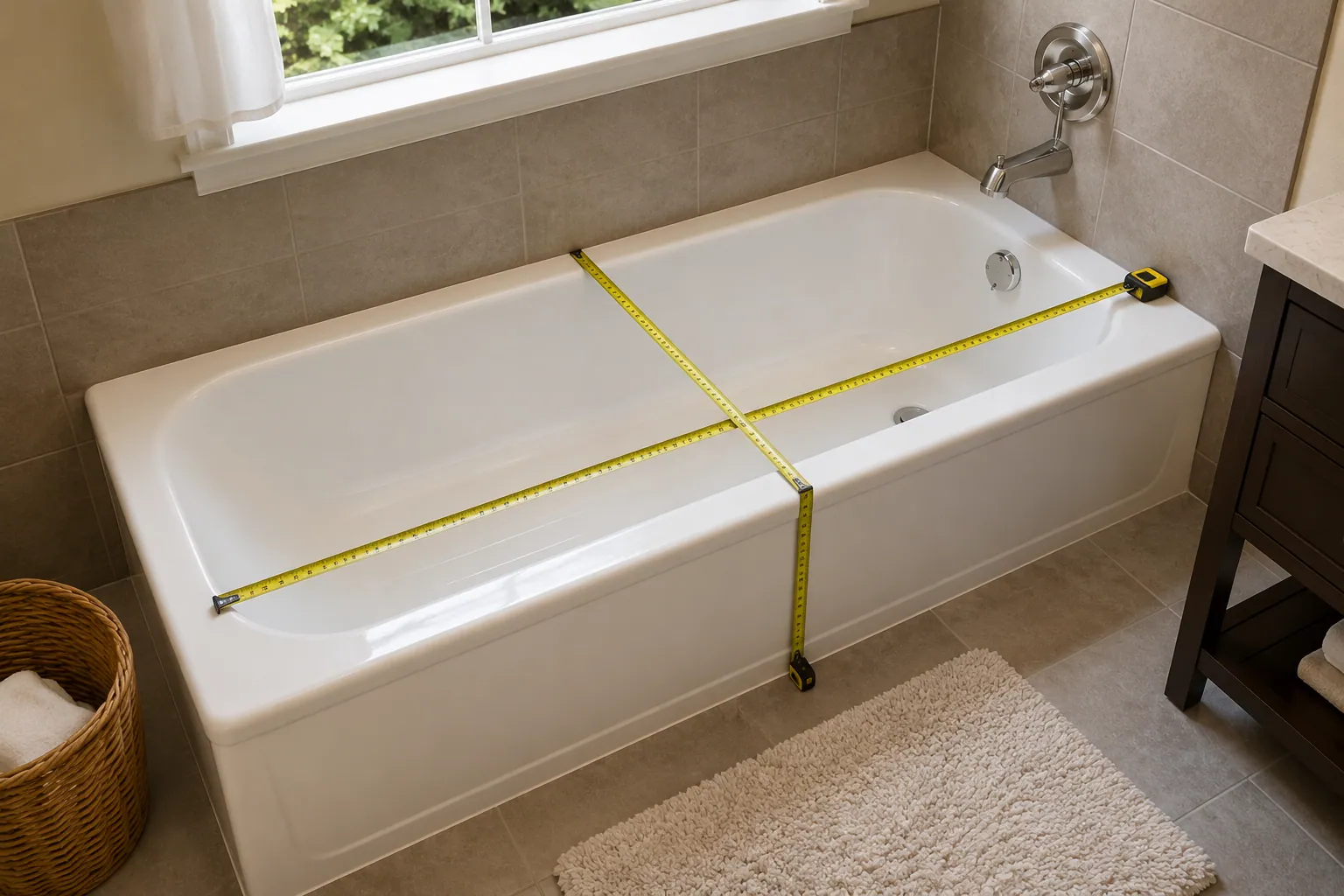
What are the measurements of a standard bathtub? A standard bathtub usually measures about 60 inches long, 30 to 32 inches wide, and 14 to 16 inches high, although the exact bathtub dimensions can change depending on the tub type, country, material, and installation style.
For most homeowners, remodelers, and buyers, the term standard bathtub size usually refers to a 5-foot alcove bathtub. This is the common tub found in many bathrooms, especially in a typical shower-tub combo where the bathtub sits between three walls. However, not every tub labeled “standard” gives you the same interior bathing space. The outside size, inside basin, soaking depth, drain location, and wall opening all matter.
This guide explains standard bathtub measurements in inches, feet, centimeters, and millimeters. It also covers bathtub length, width, height, depth, soaking depth, bathtub types, small bathroom sizes, replacement measuring tips, clearance, water capacity, and buying mistakes to avoid before ordering a new tub.
Standard Bathtub Measurements at a Glance
The most common standard bathtub dimensions in the United States are approximately 60 inches long, 30 to 32 inches wide, and 14 to 16 inches high. Some models may be listed with a total height or depth closer to 14 to 20 inches, depending on the tub design.
| Measurement | Standard U.S. Alcove Bathtub |
| Length | 60 inches / 5 feet / 152 cm / 1524 mm |
| Width | 30–32 inches / 76–81 cm / 762–813 mm |
| Height | 14–16 inches / 35–41 cm / 356–406 mm |
| Depth Range | Often around 14–20 inches, depending on model |
| Common Type | Alcove bathtub or shower-tub combo |
In simple terms, a standard bathtub size in inches is often written as 60″ L × 30–32″ W × 14–20″ H/Depth. This size works well in many full bathrooms because it fits a common wall-to-wall alcove and leaves enough room for nearby fixtures.
Still, these numbers should be used as a guide, not a final purchase measurement. Before buying a bathtub, always check the bathtub spec sheet, manufacturer specification, drain placement, and your actual finished wall-to-wall measurement.
What Is Considered a Standard Bathtub?
A standard bathtub is usually an alcove tub designed to fit into a three-wall opening. This type of tub has a finished front, often called an apron, and unfinished sides that sit against bathroom walls. It is practical, space-saving, and common in family bathrooms, guest bathrooms, rental properties, apartments, and older homes.
In the U.S., when someone asks, “What is the standard bathtub size?”, the expected answer is usually a 60-inch alcove bathtub. That means the bathtub is about 5 feet long and roughly 30 to 32 inches wide. This size is also common for a tub/shower combo, where the bathtub also functions as the base for a shower.
However, “standard” does not mean universal. A tub can be standard in one region and slightly different in another. A UK standard bath size is commonly around 1700mm × 700mm, while many Australian baths are around 1500–1700 mm long and 700–800 mm wide. Even within the same country, different brands may have slightly different external dimensions, internal basin sizes, and soaking depths.
That is why it is important to understand both the advertised size and the real installation size before buying.
Bathtub Length, Width, Height, and Depth Explained
When comparing bathtub measurements, many people focus only on the length. But a bathtub has several important measurements: length, width, height, depth, soaking depth, basin size, and drain position.
Bathtub Length
Bathtub length is measured from one end of the tub to the other. For a standard alcove bathtub, this is usually 60 inches. This is why you often hear people call it a 5-foot tub.
If you are replacing a bathtub, measure the full length of the existing tub or the wall opening where the new tub will go. A small difference can matter, especially if tile, drywall, cement board, or wall framing reduces the finished opening.
Bathtub Width
Bathtub width is measured from the back wall side to the front edge of the tub. Most standard bathtubs are about 30 to 32 inches wide. A wider tub may give you more shoulder room, but it can also take space away from the toilet, vanity, door swing, or walkway.
Bathtub Height
Bathtub height usually means the measurement from the bathroom floor to the top rim of the tub. A standard tub is often around 14 to 16 inches high, while deeper soaking tubs may be closer to 20 to 24 inches high.
Height also affects safety. A lower tub may be easier for children, older adults, and people with mobility needs to step into. A taller tub may feel more luxurious but can be harder to enter and exit.
Bathtub Depth and Soaking Depth
Bathtub depth can be confusing because people use the word in different ways. Sometimes it means the outside height of the tub. Other times it means the internal depth or the usable water depth.
The more useful measurement is soaking depth, which is usually the water depth from the bottom of the tub to the overflow drain. A tub may be 20 inches tall on the outside but hold less usable water because the overflow opening limits the fill level.
Standard Bathtub Dimensions by Type
Not all bathtubs follow the same size range. An alcove bathtub is usually the “standard” choice, but freestanding tubs, soaking tubs, drop-in tubs, corner tubs, whirlpool tubs, and walk-in tubs can be very different.
| Bathtub Type | Common Dimensions | Best For |
| Alcove bathtub | 54–60″ L × 30–32″ W × about 15″ H | Standard bathrooms and shower-tub combos |
| Soaking tub | 60–72″ L × 30–40″ W × 20–24″ H | Deeper soaking and full-body immersion |
| Freestanding tub | 55–72″ L × 27–32″ W × 15–20″ H | Design-focused or luxury bathrooms |
| Drop-in tub | 45–72″ L × 30–32″ W × 14–20″ H | Custom-built decks and tiled surrounds |
| Whirlpool tub | 60–72″ L × 32–36″ W × 18–23″ H | Spa-like bathing and hydrotherapy |
| Corner tub | Around 60″ × 60″ × 22″ H | Larger bathrooms with open floor space |
| Walk-in tub | 48–60″ L × 28–32″ W × 36–40″ H | Accessibility and safer entry |
| Compact tub | Around 45–54″ long | Small bathrooms, apartments, and tight remodels |
An alcove tub is usually best when you want a practical replacement. A freestanding bathtub works better when the bathroom has extra floor area and design space. A soaking tub is best if comfort and depth matter more than saving space. A walk-in bathtub may be better for aging-in-place or accessibility needs.
The right choice depends on your bathroom layout, available footprint, plumbing rough-in, daily habits, and desired comfort.
Standard Bathtub Size in Inches, Feet, Centimeters, and Millimeters
Bathtub dimensions are not always listed in the same unit. U.S. retailers often use inches, while UK, Australian, European, and many global suppliers use millimeters or centimeters. A simple bathtub size conversion chart can make comparison easier.
| Format | Standard Bathtub Approximation |
| Inches | 60″ × 30–32″ × 14–16″ |
| Feet | 5 ft × 2.5–2.67 ft |
| Centimeters | 152 cm × 76–81 cm × 35–41 cm |
| Millimeters | 1524 mm × 762–813 mm × 356–406 mm |
If you see a bathtub listed as 1524 mm long, that is roughly the same as a 60-inch bathtub. A width of 762 mm is about 30 inches, while 813 mm is about 32 inches.
This conversion matters when buying imported products, reading manufacturer specifications, or comparing a U.S. standard bathtub with a UK or Australian bath size. Always compare the same measurement type: overall dimensions to overall dimensions, not outside size to interior basin size.
U.S. vs UK vs Australia: Are Standard Bathtub Sizes Different?
Yes, standard bathtub sizes can be different by region. The general idea is similar, but the measurements and terminology vary.
| Region | Common Standard Size |
| United States | About 60″ × 30–32″ |
| UK | About 1700mm × 700mm |
| Australia | About 1500–1700mm × 700–800mm |
| South Africa / Similar Metric Markets | Often around 1500–1800mm × 700–850mm |
In the United States, “standard bathtub” often means a 60-inch alcove tub. In the UK, a standard bath is often around 1700mm long and 700mm wide, which is close to 5 feet 6 inches by about 27.5 inches. In Australia, many baths fall between 1500 and 1700 mm long, with widths around 700 to 800 mm.
This is important because someone searching for standard bath size may not always mean the same thing as someone searching for standard bathtub size in inches. If you are buying online, check whether the product page uses imperial or metric dimensions, and confirm whether the listed size includes the rim, apron, flange, or installation clearance.
Bathtub Height vs Soaking Depth: What Is the Difference?
Bathtub height and soaking depth are not the same thing. This is one of the biggest areas of confusion when people compare standard bathtub dimensions.
Bathtub height is the outside measurement from the floor to the top rim of the tub. For a standard tub, this may be around 14 to 16 inches. For a deeper soaking tub, it may be 20 inches or more.
Soaking depth, however, is the usable water depth inside the tub. It is usually measured from the bottom of the basin to the overflow drain. Because the overflow drain prevents water from rising all the way to the rim, the soaking depth is usually less than the total height.
For example, a tub may look deep from the outside but have a shallow internal basin or a low overflow opening. Another tub may have a similar outside height but provide better full-body immersion, shoulder submersion, and reclining comfort because of its interior shape.
If you want a deeper bath, do not look only at the tub height. Check the water depth to overflow, internal basin length, backrest slope, and soaking depth on the manufacturer’s spec sheet.
What Size Bathtub Fits in a Small Bathroom?
A standard 60-inch bathtub often works well in a common 5×8 bathroom, which is about 60 inches by 96 inches. This is one reason the 5-foot alcove tub is so popular. It can fit along one short wall while leaving space for a toilet, vanity, door swing, and walkway.
For smaller bathrooms, compact bathtubs may range from 45 to 54 inches long. Some older homes, apartments, guest bathrooms, and tight remodel openings may require a 54-inch tub or even a shorter model. A shower-tub combo is often the most practical choice when the bathroom must serve both bathing and showering needs.
However, smaller is not always better. A compact bathtub can save floor space, but it may feel cramped for adults. If you are tall or want more legroom, shoulder room, or soaking comfort, a short tub may not be ideal.
When planning a small bathroom, also consider:
| Factor | Why It Matters |
| Door swing | The bathroom door should not hit the tub or block access |
| Vanity depth | A deep vanity can reduce walkway space |
| Toilet clearance | The toilet needs comfortable usable space |
| Tub apron width | The front edge affects floor clearance |
| Drain location | Matching the old drain can reduce plumbing work |
A good rule is to choose the largest tub that fits comfortably without making the bathroom feel crowded or unsafe.
How to Measure for a Replacement Bathtub
If you are replacing an old tub, measuring correctly is more important than simply buying another 60-inch bathtub. A small measurement mistake can lead to poor fit, extra plumbing work, tile damage, or a return.
Measure the Existing Tub Length
Measure from one end of the tub to the other. If the bathtub sits in an alcove, measure the finished wall-to-wall distance. If you are remodeling after demolition, you may also need the stud-to-stud measurement.
Measure the Width
Measure from the back wall to the outside front edge or apron of the tub. This helps you understand how much floor space the tub uses and whether nearby fixtures will still have enough clearance.
Measure the Height
Measure from the finished bathroom floor to the top rim of the tub. This is especially important for children, seniors, and anyone who may have difficulty stepping over a high tub wall.
Check the Drain Side
Look at the tub from the open side. If the drain is on your left, you need a left-hand drain bathtub. If it is on your right, you need a right-hand drain bathtub. Some tubs use a center drain, especially freestanding and soaking models.
Measure the Finished Opening
A common mistake is measuring the rough wall space but forgetting that tile, cement board, drywall, waterproofing membrane, or wall panels reduce the final opening. Always compare your real opening with the manufacturer specification and bathtub cut sheet.
Before ordering, confirm the overall dimensions, flange-to-flange measurement, drain centerline, overflow centerline, and rough-in measurements.
Overall Bathtub Dimensions vs Interior Basin Dimensions
A bathtub’s outside size does not tell you everything about comfort. The overall bathtub dimensions describe the exterior footprint, while the interior basin dimensions describe the actual bathing space.
For example, a tub may be advertised as 60 inches long, but the inside sitting area may be much shorter because of the rim, sloped backrest, apron, and raised ends. The same is true for width. A 32-inch-wide tub does not always provide 32 inches of shoulder room inside the basin.
This is why some standard tubs feel cramped even when they fit the bathroom perfectly. The internal basin length, bottom basin length, backrest angle, and shoulder width inside the bathtub affect how comfortable the tub feels.
If you want more comfort, look beyond the basic size. Check:
| Measurement | What It Tells You |
| Overall length | How much wall space the tub needs |
| Interior basin length | How much legroom you actually get |
| Overall width | How much bathroom floor space the tub uses |
| Interior width | How much shoulder room you get |
| Overall height | Step-over height and outside tub height |
| Soaking depth | How deep the water can be |
This is especially important for tall users, adults who want deeper soaking, and anyone comparing a standard tub to a soaker tub.
Common Bathtub Measurement Mistakes to Avoid
Many bathtub buying problems happen because the measurement seems simple at first. A tub looks like a standard size online, but the real bathroom conditions create problems during installation.
One common mistake is measuring only the old tub instead of the full finished opening. If your walls are not square, or if tile thickness changes during remodeling, the new tub may not fit as expected.
Another mistake is confusing height with soaking depth. A taller tub does not always mean deeper water. You need to check the overflow height and usable water depth.
People also forget about drain placement. A left-drain tub will not easily replace a right-drain tub without plumbing changes. Moving plumbing can increase labor, cost, and project time.
Delivery access is another overlooked issue. Before buying, think about whether the tub can fit through the bathroom door, hallway turns, stairs, and tight corners. This matters even more for heavy or oversized tubs.
Also consider weight. A lightweight acrylic or fiberglass bathtub is usually easier to install than a cast iron, solid surface, stone, or oversized freestanding tub. Once a tub is filled with water, the total weight can be much higher. Some bathrooms may need floor support or floor reinforcement, especially for heavy materials.
A safe rule: never rely only on the product title. Always read the bathtub spec sheet.
How Much Clearance Do You Need Around a Bathtub?
Bathtub size is not only about the tub itself. You also need enough space around it for safe entry, cleaning, movement, and comfort.
For a standard alcove tub, the main clearance concern is the open area in front. Many bathroom layouts work best when there is at least 24 inches of clear space in front of the tub, though more space feels better. Some layouts allow around 36 inches of room, which is more comfortable for entering, exiting, helping children bathe, or assisting older adults.
Freestanding tubs need additional side space. Some layouts allow 50–100 mm around freestanding baths for cleaning access, but more space usually looks and functions better. In some metric bathroom planning guides, around 700–900 mm of clear floor space in front of a tub is a useful target.
Clearance also depends on nearby fixtures. A vanity, toilet, towel rail, door swing, or window placement can make a technically “fitting” tub feel awkward in daily use.
A bathtub should not only fit the room. It should leave enough room for safe entry and exit, cleaning access, and a practical bathroom routine.
How Much Water Does a Standard Bathtub Hold?
A standard bathtub’s water capacity depends on its shape, size, and fill level. Many standard bathtubs use around 35 to 50 gallons per bath, or about 132 to 189 liters, depending on how high the water is filled.
Some bathtub models may have a total capacity closer to 80 gallons, or around 302 liters, but that does not always mean people use that much water for every bath. The real amount depends on the waterline, the overflow drain, and the person sitting in the tub.
Larger tubs, freestanding tubs, whirlpool tubs, and two-person soaking tubs often use more water. A built-in or drop-in bath may hold around 150–250 L, while some freestanding or back-to-wall baths may hold around 220–300 L. Large two-person tubs can reach 300–400 L or more.
Water capacity matters because it affects:
| Factor | Why It Matters |
| Hot water supply | A deeper tub needs more hot water |
| Water bills | Larger tubs can increase water use |
| Heating costs | More water requires more energy |
| Floor load | Water weight adds to total tub weight |
| Comfort | More water can improve soaking depth |
If you want a deep soaking experience, make sure your water heater can comfortably fill the tub.
Which Bathtub Size Is Best for Your Bathroom?
The best bathtub size depends on the room, the users, and the purpose of the tub. A standard 60-inch alcove bathtub is usually the best choice for most standard bathrooms because it is practical, affordable, easy to find, and compatible with many existing layouts.
For small bathrooms, a compact bathtub or shower-tub combo may be better. These tubs save space and work well in apartments, guest bathrooms, and older homes.
For tall users, a standard tub may feel too short. A longer 66-inch or 72-inch bathtub can provide more legroom. For deeper soaking, look for a soaking tub with at least 20 inches of depth or a higher water depth to overflow.
For seniors or people with mobility concerns, a walk-in tub or a lower step-over bathtub may be safer. Accessibility matters more than luxury when entry and exit are difficult.
For luxury bathrooms, a freestanding, oversized, or two-person bathtub can create a strong focal point. But these options need more floor space, more water, and sometimes stronger floor support.
A simple buying principle is this: choose a bathtub that fits the bathroom physically, supports your daily routine, and feels comfortable for the people who will actually use it.
Bathtub Materials and Why They Affect Size, Weight, and Installation
Bathtub material does not always change the listed dimensions, but it can affect installation, weight, comfort, durability, and heat retention.
Acrylic bathtubs and fiberglass bathtubs are common choices for standard alcove tubs because they are lightweight, affordable, and easier to install. They are popular in bathroom remodels and shower-tub combos.
Cast iron bathtubs are heavier but durable and known for good heat retention. However, the weight of a cast iron tub, especially when filled with water, may require more attention to floor support.
Solid surface, cast-stone, natural stone, and copper baths are often used in high-end bathrooms. They can look beautiful, but they are usually heavier and more expensive. Installation may require professional planning, stronger flooring, and careful delivery access.
Material also affects comfort. Some tubs hold heat better, some feel warmer to the touch, and some provide a smoother or more premium bathing experience. Still, even the best material will not help if the bathtub size is wrong for the room.
Standard Bathtub Buying Checklist Before You Order
Before ordering a bathtub online or from a showroom, go through a simple checklist. This can help you avoid buying the wrong size or creating extra installation work.
| Checklist Item | Why It Matters |
| Confirm overall dimensions | Makes sure the tub fits the bathroom footprint |
| Check interior basin size | Helps predict real comfort and legroom |
| Confirm drain location | Avoids left-drain/right-drain mistakes |
| Measure finished opening | Accounts for tile, drywall, and wall finishes |
| Review rough-in measurements | Helps match plumbing and installation needs |
| Check tub height | Affects step-over comfort and safety |
| Check soaking depth | Determines how deep the bath feels |
| Confirm delivery path | Makes sure the tub fits through doors and halls |
| Check tub weight | Important for floor support and installation |
| Read the spec sheet | Gives exact manufacturer dimensions |
If you are unsure, ask a plumber, contractor, or installer to confirm the measurements before you order. A professional measurement can prevent returns, delays, tile damage, and expensive plumbing changes.
Frequently Asked Questions About Standard Bathtub Measurements
What is the most common bathtub size?
The most common bathtub size is about 60 inches long and 30 to 32 inches wide. This usually refers to a standard alcove bathtub or 5-foot tub.
Is a 60-inch bathtub big enough?
A 60-inch bathtub is big enough for many standard bathrooms and everyday bathing. However, taller users may prefer a 66-inch or 72-inch tub for more legroom and comfort.
What is the standard bathtub size in feet?
The standard bathtub size in feet is about 5 feet long and 2.5 to 2.67 feet wide. This is the common size for many alcove tubs and shower-tub combinations.
What is the standard bathtub size in cm?
A standard bathtub is usually about 152 cm long and 76 to 81 cm wide. The height is often around 35 to 41 cm, depending on the model.
How deep is a standard bathtub?
A standard bathtub is often around 14 to 20 inches in height or depth range, but the actual soaking depth may be less because water usually stops at the overflow drain.
What size bathtub fits in a 5×8 bathroom?
A 60-inch alcove bathtub usually fits well in a 5×8 bathroom, which is about 60 inches by 96 inches. This layout is common in many full bathrooms.
Do bathtub measurements include the flange?
Not always. Some product dimensions focus on the overall tub size, while others include installation features such as the flange or apron. Always check the manufacturer cut sheet or bathtub specification sheet.
What is the difference between a soaking tub and a standard tub?
A standard tub is usually shallower and designed for everyday bathing or shower-tub use. A soaking tub is usually deeper, sometimes longer or wider, and designed for better full-body immersion.
Conclusion: Choose the Right Bathtub Size Before You Buy
The most common answer to what are the measurements of a standard bathtub is 60 inches long, 30 to 32 inches wide, and 14 to 16 inches high. That size usually refers to a standard alcove bathtub, but real bathtub dimensions can vary by type, brand, region, material, and installation style.
Before buying, check more than the advertised size. Review the overall dimensions, interior basin dimensions, soaking depth, drain placement, finished wall measurement, and bathtub spec sheet. A bathtub should fit your bathroom, match your plumbing, feel comfortable, and leave enough clearance for safe daily use.
Disclaimer:
This article is for general informational and home improvement guidance only. Bathtub sizes, measurements, installation needs, plumbing layouts, and building requirements can vary by brand, model, bathroom layout, and location. Always check the manufacturer’s spec sheet and consult a qualified plumber or contractor before buying or installing a bathtub.