
 By adnanshabbir942@gmail.com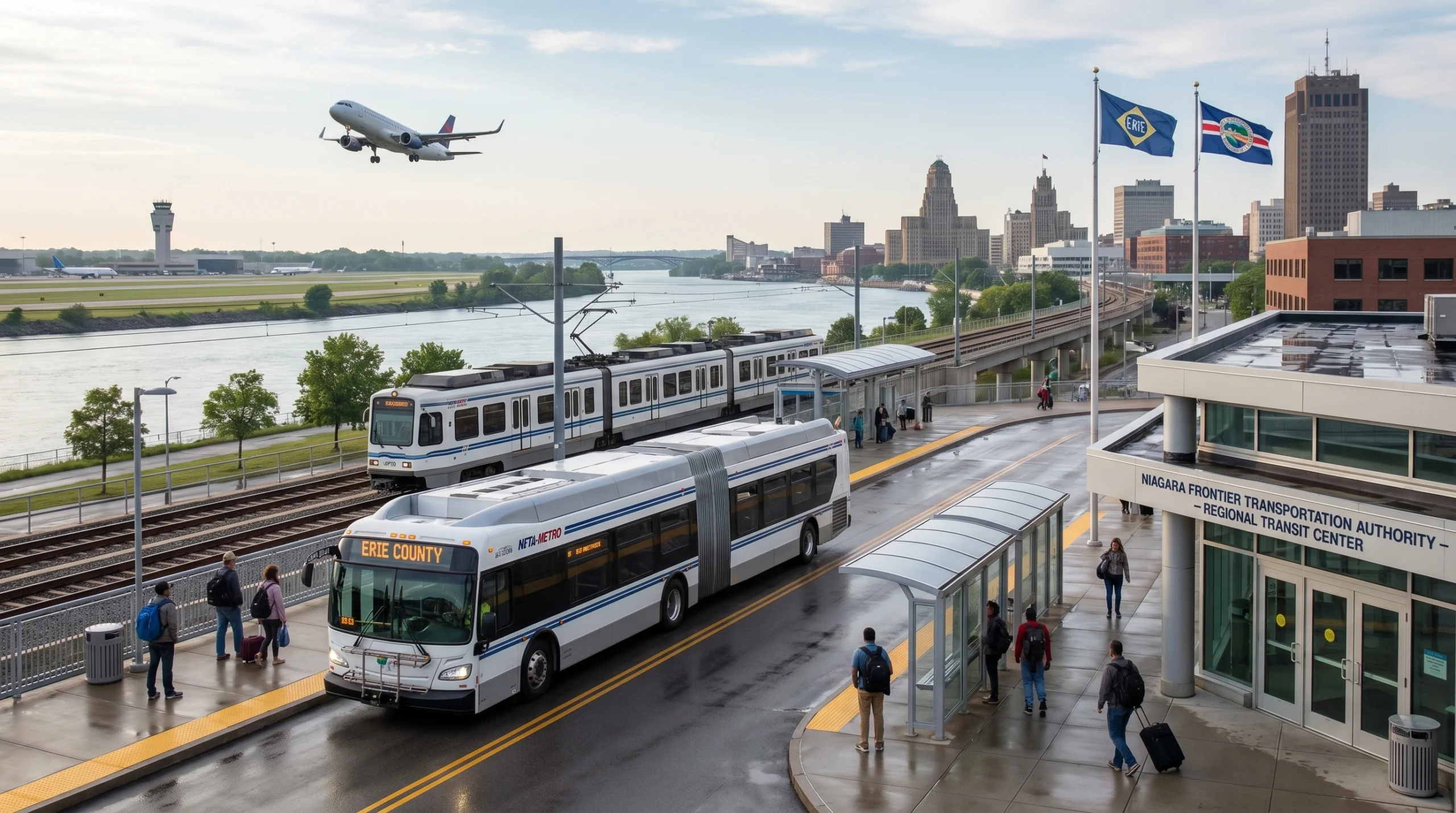
The NFTA operates in the Buffalo-Niagara region of Western New York, primarily serving Erie County and Niagara County through public transportation, bus routes, rail service, paratransit, airport operations, and regional transportation facilities.
For many people, the name NFTA is closely connected with Buffalo public transportation, but the authority’s role is much broader than buses running through downtown Buffalo. The Niagara Frontier Transportation Authority, commonly called the NFTA, supports transportation across the wider Buffalo-Niagara region, including major places such as Buffalo, Niagara Falls, Lockport, Lackawanna, Tonawanda, North Tonawanda, Amherst, Cheektowaga, and other surrounding communities.
In simple terms, the NFTA service area is centered in Western New York, especially the counties that make up much of the Buffalo–Niagara Falls metropolitan area. Its public-facing transit system, NFTA Metro, includes NFTA Metro Bus, NFTA Metro Rail, and NFTA PAL paratransit, while the broader authority is also tied to major transportation assets such as Buffalo Niagara International Airport and Niagara Falls International Airport.
Quick Answer: NFTA Operates in the Buffalo-Niagara Region
The NFTA region is best described as the Buffalo-Niagara region of Western New York. More specifically, the authority’s main public transportation coverage is focused on Erie County and Niagara County.
That means if someone asks, “Where does NFTA operate?” or “What area does NFTA serve?”, the clearest answer is:
The NFTA operates mainly in Erie County and Niagara County in Western New York, serving the Buffalo-Niagara region through bus, rail, paratransit, airport, and transportation hub operations.
Here is a simple breakdown:
| Category | NFTA Coverage |
| Main region | Buffalo-Niagara region |
| Broader area | Western New York |
| Primary counties | Erie County and Niagara County |
| Major city hub | Buffalo, New York |
| Major tourism city | Niagara Falls, New York |
| Core transit brand | NFTA Metro |
| Main services | Bus, Metro Rail, paratransit, airport operations, transit centers |
The NFTA does not operate across all of New York State. It is a regional transportation authority, not a statewide transit system. Its work is mainly concentrated around Buffalo, Niagara Falls, and nearby urban, suburban, and regional communities.
What Is the NFTA?
NFTA stands for Niagara Frontier Transportation Authority. It is a regional transportation authority and public transportation authority serving the Buffalo-Niagara region in New York State.
Many riders know the agency through NFTA Metro, which is the bus and rail system used for everyday travel. However, the Niagara Frontier Transportation Authority itself is larger than just Metro Bus or Metro Rail. It is responsible for multiple transportation-related services and facilities that help people move around Erie County, Niagara County, and the broader Western New York area.
The authority’s work includes public transit, airport operations, transportation centers, regional mobility planning, and support for passengers who need accessible transportation. This is why the NFTA often appears in searches related to bus routes, rail stations, airport travel, paratransit, and Buffalo-Niagara transportation.
A simple way to understand it is this:
| Term | Meaning |
| NFTA | The broader transportation authority for the region |
| NFTA Metro | The public bus and rail service operated by NFTA |
| NFTA Metro Bus | Bus service across many parts of Erie and Niagara counties |
| NFTA Metro Rail | Light rail service mainly within Buffalo |
| NFTA PAL | Paratransit service for eligible riders |
| NFTA Aviation | Airport-related operations in the Buffalo-Niagara region |
So, when people ask “what does the Niagara Frontier Transportation Authority do?”, the answer is that it manages and supports key transportation services across the Buffalo-Niagara region, including both daily public transit and larger regional transportation assets.
What Region Does the NFTA Operate?
The NFTA operates in the Buffalo-Niagara region, which is part of Western New York. Its main public transportation service area covers Erie County and Niagara County, two counties that include some of the most important cities, suburbs, airports, and travel corridors in the region.
The NFTA operating region includes the city of Buffalo, which is the largest urban center in the area and a major hub for NFTA Metro Bus and NFTA Metro Rail. It also includes Niagara Falls, a major tourism destination and important part of the Niagara County public transportation network.
This does not mean every street in every town has the same level of service. Some areas have frequent bus or rail connections, while others may have more limited service, express routes, commuter-focused routes, or paratransit options. Still, the overall NFTA service area is built around connecting people across the Erie-Niagara transportation network.
The region includes several types of places:
| Area Type | Examples |
| Urban centers | Buffalo, Niagara Falls, Lackawanna |
| Suburban communities | Amherst, Cheektowaga, West Seneca, Hamburg, Lancaster |
| Regional cities and towns | Lockport, Tonawanda, North Tonawanda, Lewiston, Wheatfield |
| Transportation hubs | Buffalo Metropolitan Transportation Center, Niagara Falls Transportation Center |
| Airports | Buffalo Niagara International Airport, Niagara Falls International Airport |
This regional structure is why the phrase “NFTA geographic coverage” should not be understood as only downtown Buffalo. The authority’s regional footprint reaches across the larger Buffalo-Niagara transit region.
What Counties, Cities, and Communities Does NFTA Serve?
The most important answer to “what counties does NFTA serve?” is Erie County and Niagara County. These two counties form the core of the NFTA county coverage and represent the heart of the authority’s public transportation network.
In Erie County, NFTA service is strongly connected to Buffalo, but it also reaches many surrounding communities. These may include areas such as Amherst, Cheektowaga, Lackawanna, Lancaster, West Seneca, Hamburg, Orchard Park, Grand Island, East Aurora, and other communities depending on the route and schedule.
In Niagara County, the NFTA is connected with places such as Niagara Falls, Lockport, Tonawanda, North Tonawanda, Lewiston, Wheatfield, Pendleton, and Sanborn. This is especially important for people searching “does NFTA serve Niagara Falls?” or “does NFTA run buses in Niagara County?”
| County | NFTA Coverage Summary | Example Communities |
| Erie County | Core bus, rail, airport, commuter, and local transit coverage | Buffalo, Amherst, Cheektowaga, Lackawanna, Lancaster, West Seneca, Hamburg |
| Niagara County | Bus and regional connections serving Niagara Falls and nearby communities | Niagara Falls, Lockport, Tonawanda, North Tonawanda, Lewiston, Wheatfield, Sanborn |
The answer to “what cities does NFTA serve?” includes several major names, but Buffalo and Niagara Falls are the two most recognizable. Buffalo acts as the central transit hub, while Niagara Falls is important for both residents and visitors.
The NFTA also supports connections to educational, medical, business, and event destinations. These can include places near University at Buffalo, the Buffalo Niagara Medical Campus, Downtown Buffalo, KeyBank Center, Highmark Stadium event routes, and other regional destinations.
NFTA Metro: Bus, Rail, and Paratransit Services
NFTA Metro is the part of the NFTA that most riders interact with directly. It includes NFTA Metro Bus, NFTA Metro Rail, and NFTA PAL, also known as Para-transit Access Line.
The NFTA Metro Bus service area covers many communities across Erie County and Niagara County. Bus routes help riders travel to work, school, airports, shopping areas, medical centers, downtown districts, and transfer points. These routes may include local service, express service, special event service, and regional connections.
The NFTA Metro Rail service area is more focused. Buffalo Metro Rail mainly operates within Buffalo, serving important areas such as downtown, business districts, university-related corridors, and medical areas. It is not a rail system that stretches across the entire Buffalo-Niagara region, but it is an important part of the Buffalo public transportation network.
NFTA PAL paratransit provides accessible transportation for eligible riders who cannot use regular fixed-route buses or rail service because of a disability. This makes NFTA’s role broader than standard bus and rail service.
| Service | What It Does |
| NFTA Metro Bus | Provides local, express, and regional bus routes |
| NFTA Metro Rail | Provides light rail service mainly in Buffalo |
| NFTA PAL | Offers paratransit for eligible riders |
| MetroLink / specialized service | Supports certain limited or special route needs |
Some competitor data mentions scale-related facts such as 61 bus routes, 13 light rail stations, and a 6.1 mile Metro Rail route. These figures help show that the NFTA is not a small local shuttle provider. It is a significant public transit system serving a major part of Western New York.
Does NFTA Operate Only in Buffalo?
No, NFTA does not operate only in Buffalo. Buffalo is a major hub, and many people associate NFTA with Buffalo Metro Rail, downtown buses, and the Buffalo Metropolitan Transportation Center, but the authority’s reach is wider.
The NFTA service boundaries extend beyond the city into other parts of Erie County and Niagara County. That means NFTA is connected to communities outside Buffalo, including places like Niagara Falls, Lockport, Tonawanda, North Tonawanda, Amherst, Cheektowaga, and West Seneca.
This distinction matters because a person searching “is NFTA only in Buffalo?” may be trying to understand whether the agency can help them travel elsewhere in the Buffalo-Niagara region. The answer is yes, depending on the route, schedule, and destination.
However, it is also important to be realistic. NFTA coverage is not identical in every community. A dense urban area such as Buffalo may have more frequent transit service, while a suburban or outer community may have fewer routes or more limited hours. Riders should always check current NFTA Metro schedules, route maps, and service alerts before planning a trip.
In short, Buffalo is the center of the network, but the NFTA region is broader than Buffalo alone.
NFTA Airport Operations in the Buffalo-Niagara Region
One of the most important things to understand is that the NFTA is not only a bus service. The authority also plays a major role in airport operations in the Buffalo-Niagara region.
Two major aviation-related entities connected with the NFTA are Buffalo Niagara International Airport and Niagara Falls International Airport. These airports are important transportation gateways for both local residents and visitors coming to Western New York, especially those traveling to Buffalo, Niagara Falls, and nearby Canadian border areas.
This matters for the keyword “what region does the NFTA operate” because airport operations show the broader regional role of the authority. NFTA does not simply move riders along bus routes. It helps support a larger transportation ecosystem that includes air travel, airport shuttle operations, parking-related transportation, and regional mobility planning.
For example, someone flying into Buffalo Niagara International Airport may also be searching for NFTA airport to downtown Buffalo, Buffalo airport to Niagara Falls public transportation, or does NFTA connect Buffalo airport to Niagara Falls. These searches show that users often connect NFTA with both transit and travel planning.
By including airport coverage, an article becomes more complete than a page that only says NFTA runs buses and rail. The NFTA’s role in the Buffalo-Niagara region includes both everyday commuting and larger transportation infrastructure.
NFTA vs. NFTA Metro: What’s the Difference?
A common source of confusion is the difference between NFTA and NFTA Metro. These names are related, but they do not mean exactly the same thing.
NFTA means Niagara Frontier Transportation Authority. It is the broader regional transportation authority responsible for multiple transportation services and facilities. NFTA Metro is the public transit brand that includes Metro Bus, Metro Rail, and related rider services.
Think of it this way: NFTA is the authority, while NFTA Metro is the bus and rail system people use for daily travel.
| Name | Simple Explanation |
| NFTA | The full regional transportation authority |
| NFTA Metro | The passenger transit system operated by NFTA |
| NFTA Metro Bus | Bus routes across parts of Erie and Niagara counties |
| NFTA Metro Rail | Light rail service mainly in Buffalo |
| NFTA PAL | Paratransit service for eligible riders |
| NFTA Aviation | Airport-related operations in the region |
This distinction helps answer questions such as “is NFTA the same as NFTA Metro?” and “what is the difference between NFTA and NFTA Metro?”
If you are talking about the agency’s full regional responsibilities, including airports and transportation facilities, use NFTA. If you are talking about bus routes, rail stations, fares, passes, or daily public transit, use NFTA Metro.
This is especially helpful for new residents, students, tourists, and people trying to understand public transportation in Western New York for the first time.
How NFTA Helps Tourists, Commuters, and Local Riders
The NFTA service area matters because people use transportation for many different reasons. Some are daily commuters. Some are students. Some are airport passengers. Others are tourists trying to visit Niagara Falls State Park, Downtown Buffalo, or other local attractions.
For commuters, NFTA helps connect homes, workplaces, schools, hospitals, and business districts. Routes serving Buffalo, Amherst, Cheektowaga, Niagara Falls, Lockport, and other areas support people traveling across Erie County and Niagara County.
For students, NFTA can be part of travel to places such as University at Buffalo, Buffalo State University, Erie Community College, and Niagara County Community College. Public transit can be especially useful for students who do not own a car or who need access to downtown, campus areas, or transfer points.
For visitors, NFTA may help with getting around Buffalo without a car or understanding public transportation for Niagara Falls visitors. A tourist may search “Buffalo to Niagara Falls public transportation” or “can tourists use NFTA to reach Niagara Falls?” because the region includes both a major city and one of the most famous natural attractions in North America.
A simple case example: imagine a traveler arrives at Buffalo Niagara International Airport, stays in Downtown Buffalo, and wants to visit Niagara Falls, New York. That person needs to understand not just one bus route, but the broader Buffalo-Niagara transportation network. NFTA is part of that network, though schedules, transfers, and service frequency should always be checked before traveling.
NFTA Network Size, Transit Hubs, and Key Facts
The NFTA’s operating region becomes easier to understand when you look at its network size and key transportation hubs. The authority is connected with a mix of bus routes, rail stations, transit centers, airports, and regional transfer points.
Competitor research includes useful digit-based entities such as 61 bus routes, 13 light rail stations, 6.1 mile Metro Rail route, 325 buses, 27 light rail vehicles, and FYE 2025 performance references. These figures show that NFTA is a major transportation organization in Western New York, not a small neighborhood service.
Important facilities and hubs include Buffalo Metropolitan Transportation Center, Niagara Falls Transportation Center, Portage Road Transit Center, and other transfer points across the region. These locations help riders move between local buses, rail, intercity bus services, and regional destinations.
| Network Feature | Example Detail |
| Bus network | Local, express, and regional routes |
| Rail network | Buffalo Metro Rail with light rail stations |
| Major counties | Erie County and Niagara County |
| Major hubs | Buffalo Metropolitan Transportation Center, Niagara Falls Transportation Center |
| Airport links | Buffalo Niagara International Airport, Niagara Falls International Airport |
Transit hubs matter because public transportation is not only about single routes. A rider often needs to transfer between services. Someone may take a local bus to a transit center, transfer to another route, connect with Metro Rail, or reach an intercity bus operator such as Greyhound, Trailways of New York, Coach USA, FlixBus, or Barons Bus Lines.
This is why the NFTA’s role is best understood as part of a larger regional mobility system.
Is NFTA’s Region the Same as All of New York State?
No, the NFTA region is not the same as all of New York State. The NFTA is connected to New York State as a public authority, but its actual operating focus is the Buffalo-Niagara region of Western New York.
This is an important boundary clarification. Someone may see the phrase New York State public transportation authority and assume that NFTA operates statewide. It does not. Other parts of New York have different transportation authorities and transit systems.
For example, the Buffalo-Niagara region is different from the Rochester area, Central New York, the Capital District, and the New York City metropolitan area. The NFTA’s core service region is focused on Erie County and Niagara County, not every county in the state.
Another common question is whether NFTA serves Canada or crosses into Ontario. NFTA is primarily focused on Western New York. Travelers planning cross-border trips should check separate cross-border transportation options, border rules, and current travel requirements.
So, when answering “where does NFTA operate?”, the safest and clearest wording is:
NFTA operates in the Buffalo-Niagara region of Western New York, mainly serving Erie County and Niagara County.
Content Gaps Competitors Often Miss
Many competitor pages provide useful facts, but they often miss the simple user-focused explanation behind the search. Someone typing “what region does the NFTA operate” probably does not want a long agency history first. They want a clear answer.
The first content gap is the direct answer. Your article should say early and clearly that the NFTA operates in the Buffalo-Niagara region, mainly Erie County and Niagara County.
The second content gap is the difference between NFTA vs. NFTA Metro. Competitors may mention both, but many readers need a plain explanation. The distinction between the broader authority and the bus and rail system is essential.
The third gap is tourist intent. Many users care about whether NFTA serves Niagara Falls, whether it connects with airports, and whether it helps with getting around Buffalo without a car.
The fourth gap is service boundaries. A helpful article should answer questions like does NFTA go outside Buffalo, does NFTA serve Canada, does NFTA cover suburbs, and does NFTA operate outside Western New York.
The fifth gap is practical context. Rather than only listing routes and facilities, strong content should explain how NFTA supports commuters, students, airport travelers, visitors, and local residents.
By covering these gaps, the article becomes more useful than a basic encyclopedia-style page.
FAQs About NFTA’s Operating Region
What region does the NFTA operate?
The NFTA operates in the Buffalo-Niagara region of Western New York. Its main public transit coverage is centered on Erie County and Niagara County, including Buffalo, Niagara Falls, and nearby communities.
What counties does NFTA serve?
The NFTA primarily serves Erie County and Niagara County. These counties include major communities such as Buffalo, Niagara Falls, Lockport, Lackawanna, Tonawanda, North Tonawanda, Amherst, and Cheektowaga.
Does NFTA operate only in Buffalo?
No. NFTA does not operate only in Buffalo. Buffalo is a major hub, especially for Metro Rail, but NFTA services also extend into other parts of Erie County and Niagara County.
Does NFTA serve Niagara Falls?
Yes. NFTA serves Niagara Falls, New York, through regional bus connections and transportation services. Niagara Falls is an important part of the NFTA service area, especially for local riders and visitors.
Is NFTA the same as NFTA Metro?
Not exactly. NFTA is the broader Niagara Frontier Transportation Authority, while NFTA Metro is the bus and rail system operated by the authority. NFTA also has responsibilities connected to airports and transportation facilities.
Does NFTA operate airports?
Yes. NFTA is connected with major airport operations in the region, including Buffalo Niagara International Airport and Niagara Falls International Airport. This is one reason NFTA’s role is larger than local bus service.
Does NFTA serve Canada or Ontario?
NFTA is mainly focused on Western New York, especially Erie County and Niagara County. It does not function as a general Canadian or Ontario transit agency. Cross-border travelers should check separate transportation and border-crossing options.
Where does NFTA Metro Rail run?
NFTA Metro Rail, also called Buffalo Metro Rail, mainly runs within Buffalo. It serves important city corridors, downtown areas, and major local destinations, but it does not cover the entire NFTA region.
Conclusion: NFTA’s Role in the Buffalo-Niagara Region
The answer to what region does the NFTA operate is clear: the NFTA operates in the Buffalo-Niagara region of Western New York, primarily across Erie County and Niagara County.
The authority supports much more than one city or one type of transportation. Through NFTA Metro Bus, NFTA Metro Rail, NFTA PAL paratransit, Buffalo Niagara International Airport, Niagara Falls International Airport, and key transit hubs, the Niagara Frontier Transportation Authority plays a major role in regional mobility.
Buffalo may be the center of the network, but the NFTA service area extends beyond Buffalo into the wider Buffalo-Niagara region, helping commuters, students, tourists, airport travelers, and local residents move through Western New York.
Disclaimer:
This article is for general informational purposes only. NFTA routes, schedules, service areas, fares, airport services, and transit policies may change over time. Readers should always check the official NFTA or NFTA Metro website, current route maps, service alerts, and schedules before planning travel in the Buffalo-Niagara region. This content is not affiliated with, endorsed by, or officially published by the Niagara Frontier Transportation Authority.