
 By adnanshabbir942@gmail.com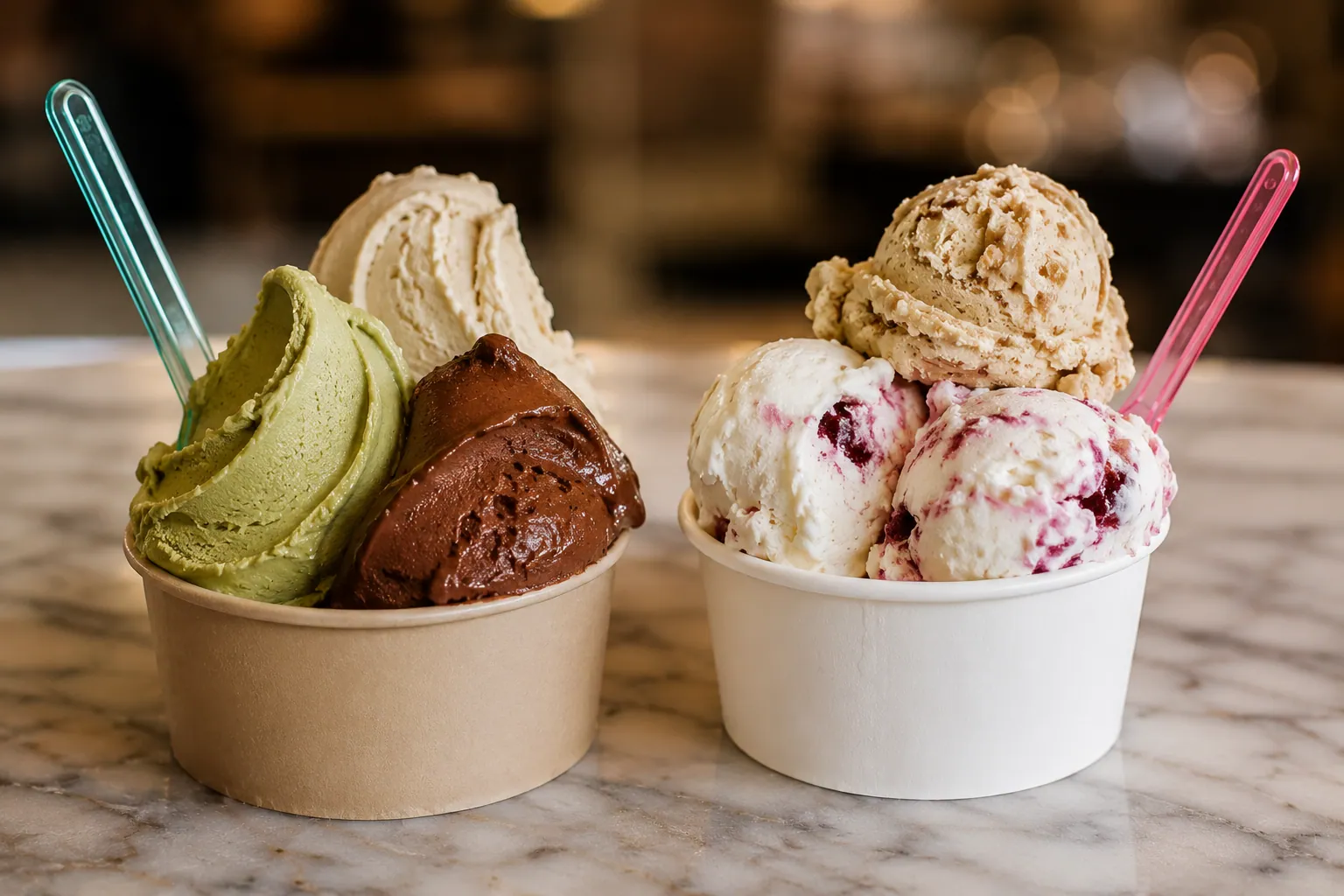
At a glance, they may look similar, but they are not the same dessert. In most cases, gelato uses more milk and less cream, contains less fat, is churned more slowly with less air, and is served at a warmer temperature than traditional ice cream. Those differences affect everything from texture and mouthfeel to flavor intensity and even how fast each one melts. Many gelato references put its fat content around 4–9%, while ice cream is commonly described as starting at 10% milk fat in the U.S. and often going higher in premium styles. Gelato is also often served around 15°F / -9°C, while ice cream is typically kept closer to 0°F / -18°C.
That is the short answer. The more interesting answer is why those details matter. A dessert with less butterfat and less overrun can taste more direct, more vivid, and more dense on the tongue. A dessert with more cream and more incorporated air can feel colder, fluffier, and richer in a different way. So when people search gelato vs ice cream, they are usually not just asking for a dictionary definition. They want to know which one is creamier, which one is healthier, which one has more flavor, and which one they should pick at the counter.
Gelato vs Ice Cream: Quick Comparison Table
Before getting into the details, here is the easiest way to see the difference between gelato and ice cream side by side:
| Feature | Gelato | Ice Cream |
| Main dairy base | More milk, less cream | More cream |
| Fat content | Often 4–9% | Usually 10%+, often 10–25% |
| Eggs | Sometimes absent | Often present in some styles, especially custard-style |
| Churning | Slower | Faster |
| Air content / overrun | Lower | Higher |
| Texture | Dense, silky, smooth | Lighter, fluffier, airy |
| Serving temperature | Warmer | Colder |
| Flavor perception | Often more intense | Often richer but more muted |
| Typical feel | Soft, velvety | Firm, creamy |
That chart captures the main comparison intent behind what is the difference between gelato and ice cream. Still, each row deserves a fuller explanation, because the magic is in how those pieces work together.
What Is Gelato?
Gelato is an Italian frozen dessert that is usually made with milk, sugar, and flavorings, with less cream than standard ice cream. It is often churned more slowly, which means less air content gets incorporated into the mix. That slower process is a major reason gelato feels denser, smoother, and more velvety. It is also commonly served warmer than ice cream, which makes it softer and helps flavors hit your taste buds more quickly.
There is also a cultural side to Italian gelato that matters. In many shops, gelato is treated as an artisan dessert, with an emphasis on fresh ingredients and strong flavor definition. A good pistachio, hazelnut, stracciatella, or fruit gelato is meant to taste clearly like the ingredient itself, not just like sweetness and cream. Some historical accounts also link the development of modern gelato to Italy, often mentioning Bernardo Buontalenti and Florence during the 16th century, though food history is rarely as neat as a single invented-on-this-date story.
What Is Ice Cream?
Ice cream is a frozen dairy dessert usually built with a higher proportion of cream, plus milk, sugar, and sometimes egg yolks, depending on the recipe and style. In the United States, standard ice cream must contain at least 10% milk fat, and premium versions often contain much more. That higher fat level creates a rich, creamy body, while faster churning introduces more air, giving ice cream its familiar light and fluffy texture.
This is why standard supermarket vanilla ice cream and artisan gelato can feel so different even when they use similar base ingredients. Ice cream tends to feel colder and firmer right out of the freezer. It is often built for scoopability after deep freezing and for a style of richness that comes from more fat and more volume. That does not make it worse. It just makes it a different dessert with a different sensory goal.
Ingredients: Milk, Cream, Sugar, and Egg Yolks
One of the clearest gelato vs ice cream differences starts with the ingredient ratios. Gelato uses more milk and less cream, while ice cream usually leans more heavily on cream. That one change has a big effect on butterfat, texture, and flavor release. Many comparisons also note that gelato may contain little to no egg yolks, while many ice creams, especially French-style or custard-style versions, include them.
The shared ingredients still matter. Both desserts usually include milk, cream, sugar, and flavorings such as vanilla, chocolate, fruit, coffee, or nuts. But the proportions change the finished result. More cream generally means more fat. More egg yolks can push the dessert toward a richer custard base. More milk and less cream can create a cleaner route for flavor to come through. That is why a spoonful of fruit gelato often tastes especially vivid compared with standard fruit ice cream.
It is also worth noting that not every gelato or every ice cream follows one exact formula. There are exceptions. Some gelato can be richer than expected. Some ice creams can be lower in fat than premium brands. That is why the most accurate approach is to think in terms of typical style, not absolute rule.
Fat Content: Why Gelato Can Taste Richer With Less Fat
This is the part that surprises people most. Gelato contains less fat, yet many people say it tastes more intense. That sounds backward until you understand how butterfat behaves. Fat can coat the palate and soften flavor perception. When there is a little less fat in the mix, the flavor may land more directly. Several sources place gelato in roughly the 4–9% fat range, while traditional ice cream begins at 10% milk fat in the U.S. and often rises much higher in premium products.
So when someone asks, why gelato tastes more intense than ice cream, the answer is not just “because it is Italian” or “because it is fancy.” The answer is partly structural. Less fat can mean less masking. Add warmer serving temperature and lower air content, and flavors feel more pronounced. That is especially true for delicate flavors like pistachio, lemon, hazelnut, or fruit-based varieties, where clarity matters more than pure richness.
Air Content and Churning: What “Overrun” Means
A technical word that deserves more attention is overrun. In frozen dessert language, overrun refers to the amount of air incorporated during churning. More air means a lighter, larger-volume product. Less air means a denser one. Gelato is generally churned more slowly, so it picks up less air. Ice cream is usually churned faster and contains more air, which helps create that fluffy, scoopable texture many people associate with classic ice cream.
Some comparative sources describe gelato as having roughly 20–30% air, while ice cream may range from around 20% to 45% and sometimes approach 50% depending on style and manufacture. The exact figures vary by brand and method, but the pattern stays the same: gelato is denser because it has lower overrun.
That one idea explains a lot. It explains why gelato feels heavier on the spoon, why it melts into a smooth sheet on the tongue, and why a small serving can feel satisfying even though the portion looks modest. It also explains why ice cream feels almost whipped by comparison. If you ever wanted a simple answer to why ice cream is fluffier and why gelato feels denser than ice cream, overrun is a big part of it.
Texture and Mouthfeel: Why Gelato Feels Denser
Because of the lower fat, lower air, and warmer serving temperature, gelato usually has a dense, silky, elastic texture. Many people describe the mouthfeel as velvety. It spreads across the palate more slowly than ice cream, and that helps flavors feel concentrated. Ice cream, by contrast, usually feels lighter, colder, and airier. Its structure can feel softer in one sense, but also fluffier and more insulated by air.
Think of it like this: gelato is often about flavor clarity and density, while ice cream is often about creaminess and lift. Neither experience is automatically better. They simply create different expectations. Someone who wants a deep, smooth bite with strong nut or fruit character may lean toward gelato. Someone who wants a cold, rich, cloudier scoop with lots of body may prefer ice cream. That is the real difference between gelato and ice cream texture.
Serving Temperature: Why Gelato Is Usually Served Warmer
Serving temperature is one of the most important, and most overlooked, differences. Gelato is served warmer than ice cream, often around 15°F / -9°C, while ice cream is commonly stored or served around 0°F / -18°C. Some comparisons also describe gelato as best served in the 10 to 22°F range and ice cream around 6 to 10°F. That warmer temperature makes gelato softer, more pliable, and easier to taste fully.
Temperature changes aroma release and texture. A very cold dessert can mute flavor. A slightly warmer dessert can feel more aromatic and more immediate. That is why gelato often seems to “open up” faster in your mouth. It is not just softer. It is more expressive. That is also why many people believe gelato melts faster. In practice, it may seem that way because it is already being served closer to its ideal eating state.
Flavor: Why Gelato Often Tastes More Intense
When you combine less fat, less air, and warmer serving temperature, you get a dessert that often tastes more intense. This is why sources repeatedly describe gelato as having stronger flavor impact even though it may contain less fat than ice cream. The flavor is not being buried under as much creaminess or muted by extreme cold.
That does not mean ice cream is bland. Far from it. Ice cream can deliver beautiful flavor too, especially in chocolate, caramel, vanilla, and custard-based profiles where richness is the point. But if your question is why gelato tastes stronger, the answer comes back to structure, not hype. Lower butterfat, lower overrun, and slightly warmer serving all help flavor show itself more clearly.
Good gelato lets the main ingredient speak first; good ice cream lets richness speak with it.
Is Gelato Healthier Than Ice Cream?
This is where people often want a yes-or-no answer, but the honest answer is more nuanced. Gelato is often lower in fat than ice cream, and some comparisons also note fewer calories in certain servings. For example, one comparison cited about 160 calories for a half-cup vanilla gelato versus about 210 calories for a similar serving of vanilla ice cream. But that does not automatically make gelato “healthy.” Both desserts can still be high in sugar and calories.
The better question is not just is gelato healthier than ice cream, but healthier in what way. Lower fat? Often yes. Lower sugar? Not always. Easier portion control? Maybe, depending on serving size and how rich the flavor feels. Better for someone with lactose intolerance? Not necessarily, because traditional gelato is still dairy-based unless it is a dairy-free or fruit-based version such as sorbetto.
So the smart takeaway is simple: gelato may be lower in fat, but both are treats. If nutrition matters to you, check the actual label, compare serving size, and pay attention to sugar rather than assuming the word gelato means lighter in every sense.
Gelato vs Frozen Custard vs Frozen Yogurt
To build real topical authority, it helps to place gelato in the bigger frozen dessert family. Frozen custard is closer to ice cream than gelato, but it must include egg yolks, which make it especially rich and smooth. Frozen yogurt uses cultured yogurt and may have a tangier flavor profile. It can sometimes contain live cultures, though that depends on the product and processing. Sorbet or sorbetto, meanwhile, is usually fruit-based and dairy-free.
This matters because many users do not just search what’s the difference between gelato and ice cream. They also want to know how gelato compares with frozen custard, soft serve, or frozen yogurt. In that wider context, gelato usually sits between richness and intensity: less airy than ice cream, less eggy than custard, and more dairy-centered than sorbetto. That makes it a distinctive category, not just a fancy synonym.
A Short History: Is Gelato Just Italian Ice Cream?
Not exactly. While the word gelato does literally mean “frozen” in Italian usage, modern gelato is not just a translated label for any ice cream. It refers to a distinct style with different production choices and sensory goals. Historical accounts often trace parts of gelato’s story through Italy, with figures like Bernardo Buontalenti linked to its development in Florence during the Renaissance, though frozen desserts themselves are much older than that.
That historical identity matters because gelato culture emphasizes freshness, batch quality, and flavor expression. It is one reason so many travelers return from Rome or Florence convinced that gelato is in a category of its own. Sometimes they are reacting to technique. Sometimes to ingredients. Sometimes to the setting. Usually, it is all three.
Which Should You Choose?
Choose gelato if you want a dessert that feels dense, silky, and strongly flavored. It is a great choice when you care about ingredient clarity, especially with nut, coffee, chocolate, and fruit flavors. Choose ice cream if you want something colder, richer, and fluffier, with that classic creamy body many people grew up with.
If you are comparing them for nutrition, do not decide by name alone. Read the label. If you are comparing them for pleasure, the answer is easier: pick the one that matches the experience you want. Gelato is about density and direct flavor. Ice cream is about creamy richness and airy indulgence. Both can be excellent when made well.
Final Words
So, what’s the difference between gelato and ice cream? The core differences come down to ingredients, fat content, air content, overrun, texture, flavor intensity, and serving temperature. Gelato usually contains more milk, less cream, less air, and less fat, and it is served warmer, which gives it a denser texture and more direct flavor. Ice cream usually contains more cream, more air, and at least 10% milk fat, which makes it fluffier, colder, and richer in a more classic creamy way.
If your goal is a simple answer, that is it. If your goal is the best scoop for your taste, the real answer is even better: gelato and ice cream are different pleasures, not rivals that need one winner.
Disclaimer:
This article is for general informational purposes only. Gelato and ice cream ingredients, nutrition, fat content, serving style, and texture can vary by recipe, brand, shop, and preparation method. Use this guide as a simple comparison, and check product labels or ingredient details if you have dietary needs or allergies.