
 By adnanshabbir942@gmail.com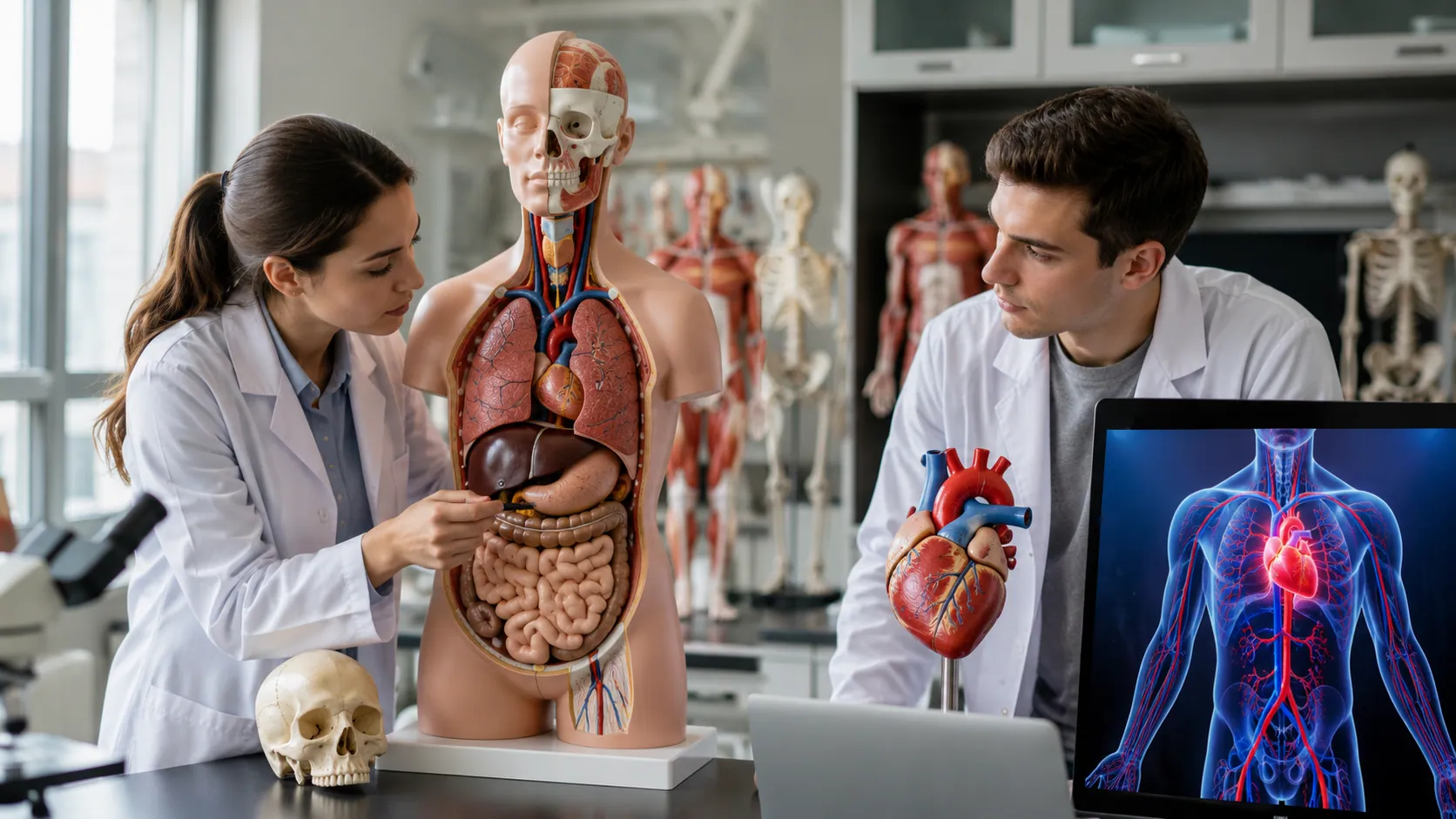
What is the difference between anatomy and physiology? The simple answer is that anatomy studies the structure of the body, while physiology studies the function of the body. Anatomy explains what body parts are, where they are located, and what they look like. Physiology explains how those body parts work, why they work that way, and how they help keep the body alive.
A helpful way to remember the difference between anatomy and physiology is this: anatomy is the body’s map, and physiology is the body’s operation system. For example, anatomy looks at the heart’s chambers, valves, and blood vessels. Physiology explains how the heart pumps blood, controls circulation, and responds when you exercise.
Both subjects are usually studied together because structure and function are deeply connected. You cannot fully understand how the body works without first understanding what the body is made of.
What Is Anatomy?
Anatomy is the scientific study of body structures. It focuses on the form, shape, size, location, and organization of body parts. When students study human anatomy, they learn about bones, muscles, organs, tissues, cells, nerves, blood vessels, and the major body systems that make up the human body.
In simple words, anatomy answers questions like:
| Anatomy Question | Example |
| What is this body part? | This is the heart. |
| Where is it located? | The heart is in the chest cavity. |
| What does it look like? | It has chambers, valves, and blood vessels. |
| What is it made of? | It contains muscle tissue, nerves, and blood vessels. |
Anatomy can be studied in different ways. Gross anatomy looks at larger structures that can be seen without a microscope, such as the brain, lungs, stomach, bones, and muscles. Microscopic anatomy studies tiny structures, such as cells and tissues, using a microscope. Histology focuses on tissues, while cytology focuses on cells.
Students and medical professionals may study anatomy through diagrams, dissection, 3D anatomy models, medical imaging, CT scans, MRIs, and virtual tools. This makes anatomy a very visual subject. It often requires memorization, labeling, and recognizing structures accurately.
In short, anatomy is the study of body structure. It tells us what the body is made of and how its parts are arranged.
What Is Physiology?
Physiology is the study of body function. It explains how body parts work, how body systems interact, and how biological processes keep the body alive. If anatomy identifies the parts, physiology explains what those parts do.
For example, anatomy studies the lungs as physical organs. Physiology explains how the lungs move air, exchange oxygen and carbon dioxide, and support respiration. Anatomy studies the stomach and intestines. Physiology explains how digestion breaks down food and absorbs nutrients.
Human physiology includes many important processes, such as blood circulation, breathing, nerve impulses, muscle contraction, hormone signaling, digestion, metabolism, and body temperature regulation. These processes often happen at the cellular level, molecular level, organ level, and whole-body level.
Physiology answers questions like:
| Physiology Question | Example |
| How does this body part work? | The heart pumps blood through blood vessels. |
| Why does this process happen? | Breathing brings oxygen into the body. |
| How do systems interact? | The nervous system and muscular system work together for movement. |
| How does the body stay balanced? | Homeostasis keeps internal conditions stable. |
A major concept in physiology is homeostasis, which means the body’s ability to maintain stable internal conditions. For example, the body regulates blood pressure, body temperature, blood sugar, and fluid balance through different physiological processes.
So, physiology is the study of function. It explains how the body works in real life.
Main Difference Between Anatomy and Physiology
The main difference between anatomy and physiology is that anatomy focuses on structure, while physiology focuses on function.
Anatomy describes the body’s parts. Physiology explains how those parts work. Anatomy is usually more about identification and location, while physiology is more about processes, movement, and cause-and-effect relationships.
For example, if you are studying the heart anatomically, you may learn about the atria, ventricles, valves, muscle tissue, and blood vessels. If you are studying the heart physiologically, you learn how it contracts, pumps blood, controls blood pressure, and responds to exercise or stress.
A simple way to compare them is:
| Feature | Anatomy | Physiology |
| Main focus | Structure | Function |
| Main question | What is it? Where is it? | How does it work? Why does it happen? |
| Learning style | Identification and memorization | Understanding processes |
| Example | Heart chambers | Heart pumping blood |
| Study tools | Dissection, diagrams, imaging | Experiments, measurements, observation |
| Related fields | Gross anatomy, histology, cytology | Cell physiology, organ physiology, systems physiology |
Think of anatomy as the blueprint of the human body and physiology as the engineering that explains how the blueprint works. A blueprint shows where the rooms, walls, and pipes are. The engineering explains how electricity flows, how water moves, and how the whole building operates.
In the same way, anatomy shows the body’s structure, while physiology explains the body’s action.
Anatomy vs Physiology in Simple Words
If you want the anatomy vs physiology simple explanation, remember this sentence:
Anatomy names the parts. Physiology explains what the parts do.
Anatomy tells you that the lungs contain tiny air sacs called alveoli. Physiology explains how alveoli help oxygen enter the blood and how carbon dioxide leaves the body. Anatomy tells you where the brain, spinal cord, and nerves are located. Physiology explains how nerve signals travel and control movement, feeling, thinking, and reaction.
Another easy comparison is:
- Anatomy = what the body is made of
- Physiology = how the body works
This is why anatomy and physiology are often taught together in an A&P course. If you only study anatomy, you may know the names of body parts but not how they work. If you only study physiology, you may understand processes but not the structures involved.
The two subjects support each other. Structure supports function, and function depends on structure.
Examples of Anatomy and Physiology in the Human Body
Examples make the anatomy and physiology difference much easier to understand. The same body system can be studied in two ways: anatomically and physiologically.
| Body Part or System | Anatomy Example | Physiology Example |
| Heart | Chambers, valves, blood vessels, cardiac muscle | Pumps blood and maintains circulation |
| Lungs | Bronchi, alveoli, lung tissue | Exchanges oxygen and carbon dioxide |
| Muscles | Muscle fibers, tendons, skeletal muscles | Contract to create movement |
| Brain | Brain regions, nerve cells, neural tissue | Processes signals, memory, vision, and thinking |
| Digestive system | Stomach, intestines, liver, pancreas | Breaks down food and absorbs nutrients |
| Nervous system | Brain, spinal cord, nerves | Sends electrochemical signals |
| Endocrine system | Glands and hormone-producing tissues | Regulates body processes through hormones |
For example, the anatomy of the heart includes its chambers, valves, and blood vessels. The physiology of the heart explains how it beats, pumps blood, and adjusts to the body’s oxygen needs.
The anatomy of the lungs includes the trachea, bronchi, lung tissue, and alveoli. The physiology of breathing explains how air moves in and out, how oxygen enters the blood, and how carbon dioxide is removed.
The anatomy of muscles includes muscle fibers, tendons, and attachment points. The physiology of muscle contraction explains how muscles shorten, use energy, and create movement.
These examples show why anatomy and physiology work hand in hand. The body’s shape, location, and structure make its functions possible.
How Are Anatomy and Physiology Related?
Anatomy and physiology are related because the structure of a body part directly affects how it functions. This is called the structure-function relationship or form and function.
For example, the alveoli in the lungs are tiny and thin-walled. Their structure helps oxygen and carbon dioxide move quickly between the lungs and blood. The heart has chambers and valves that support one-way blood flow. Muscle fibers are arranged in a way that allows them to contract and produce movement.
This relationship appears throughout the body:
| Structure | Function It Supports |
| Thin alveoli walls | Gas exchange |
| Heart valves | One-way blood flow |
| Long nerve cells | Fast communication |
| Muscle fibers | Contraction and movement |
| Intestinal folds | Nutrient absorption |
| Blood vessels | Circulation and pressure control |
This is why students should not study anatomy as isolated names. A bone, organ, tissue, or cell is easier to remember when you understand what it does. In the same way, physiological processes are easier to understand when you know the structures involved.
A simple rule is: anatomy gives the body its form, and physiology gives the body its activity.
Branches of Anatomy
Anatomy has several branches, and each one studies body structures in a different way.
Gross anatomy, also called macroscopic anatomy, studies larger structures that can be seen without a microscope. This includes organs, muscles, bones, blood vessels, and body regions. For example, studying the chest, abdomen, heart, lungs, or limbs is part of gross anatomy.
Microscopic anatomy studies structures that are too small to see with the naked eye. It includes histology, the study of tissues, and cytology, the study of cells. These fields help explain how tiny structures build larger body parts.
Regional anatomy studies all structures in a specific region of the body. For example, a student may study the head and neck, thorax, abdomen, pelvis, upper extremities, or lower extremities.
Systemic anatomy studies one body system at a time, such as the cardiovascular system, respiratory system, muscular system, nervous system, or endocrine system.
Developmental anatomy studies how the body changes during growth and development. Embryology focuses on early development before birth.
Some anatomy lessons also divide the body into important regions. The body can be discussed through axial and appendicular regions, and the abdomen may be described using nine abdominal regions or four abdominal quadrants. These anatomical divisions help healthcare professionals describe locations clearly.
Branches of Physiology
Physiology also has several branches, each focused on how different levels of the body function.
Cell physiology studies how cells work. It looks at the plasma membrane, cell communication, metabolism, chemical compounds, and movement of substances in and out of cells.
Organ physiology studies how individual organs function. For example, it may explain how the heart pumps blood, how the kidneys filter waste, or how the stomach digests food.
Systems physiology studies how entire body systems work. This includes the cardiovascular system, respiratory system, nervous system, muscular system, reproductive system, excretory system, and endocrine system.
Neurophysiology focuses on the nervous system. It explains how the brain, spinal cord, nerves, and nerve cells send signals.
Cardiovascular physiology explains how the heart and blood vessels control blood circulation, blood pressure, and oxygen delivery.
Respiratory physiology explains how breathing works and how gas exchange happens in the lungs.
Exercise physiology studies how the body responds to physical activity, including changes in heart rate, breathing, muscle function, and energy use.
Together, these branches show that physiology is not just about one organ. It explains how integrated body systems work together to support life.
Why Are Anatomy and Physiology Studied Together?
Anatomy and physiology are studied together because the human body does not separate structure from function. A body part’s shape, location, and tissue type usually explain what it does.
In many biology, nursing, pre-med, pre-vet, and healthcare programs, students take Anatomy and Physiology I or a similar A&P course. These courses combine both subjects so students can understand the body as a working system.
For example, a nursing student needs anatomy to know where organs are located and physiology to understand symptoms, vital signs, disease processes, and treatment responses. A physical therapy student needs anatomy to understand muscles and joints, and physiology to understand movement, recovery, and pain.
Studying anatomy without physiology can become a list of names. Studying physiology without anatomy can feel confusing because you may not know which structures are involved. Together, they create a complete picture of the human body.
This is why anatomy and physiology are foundational for college biology, medical school, nursing, physical therapy, sports medicine, veterinary science, and healthcare education.
How Homeostasis Connects Anatomy and Physiology
Homeostasis is one of the strongest links between anatomy and physiology. It means the body keeps internal conditions stable, even when the outside environment changes.
Anatomy provides the structures involved in regulation. Physiology explains the processes that make regulation happen.
For example, the skin, blood vessels, sweat glands, brain, and hormones all help regulate body temperature. The anatomy includes the structures. The physiology includes sweating, blood vessel widening, nerve signaling, and hormone responses.
Homeostasis often works through feedback loops. A simple feedback loop includes a receptor, control center, and effector. The receptor detects a change, the control center decides what response is needed, and the effector carries out the response.
A common example is negative feedback, which brings the body back to balance. If body temperature rises, the body may sweat to cool down. If blood pressure changes, the cardiovascular system responds to help restore balance.
This shows how body regulation depends on both anatomical structures and physiological processes.
Anatomy, Physiology, and Pathophysiology
After students understand anatomy and physiology, they are better prepared to understand pathophysiology. Pathophysiology explains how disease or injury changes normal body function.
Here is a simple way to understand the connection:
| Field | What It Studies |
| Anatomy | Normal body structure |
| Physiology | Normal body function |
| Pathophysiology | Abnormal function caused by disease or injury |
For example, anatomy explains the structure of the lungs, including bronchi and alveoli. Physiology explains normal breathing and gas exchange. Pathophysiology explains what happens when a disease such as asthma, pneumonia, or chronic lung disease interferes with breathing.
This is important in healthcare because doctors, nurses, medical assistants, and therapists need to understand both normal and abnormal function. Diagnosis and treatment depend on knowing how the body should work and what changes when something goes wrong.
Which Is Harder: Anatomy or Physiology?
Many students ask, “Anatomy vs physiology: which is harder?” The answer depends on the student.
Anatomy may feel harder if you struggle with memorization. It includes many names, locations, body regions, bones, muscles, organs, tissues, and medical terms. Students often need to label diagrams, recognize structures, and remember exact terminology.
Physiology may feel harder if you struggle with processes. It requires understanding cause and effect, body regulation, feedback loops, and how systems interact. Instead of only naming a structure, you must explain what it does and why it matters.
A simple comparison is:
| Subject | Main Challenge |
| Anatomy | Memorizing structures and locations |
| Physiology | Understanding processes and relationships |
The best way to study both is to connect every structure to a function. Instead of memorizing the heart’s chambers only as names, ask what each chamber does. Instead of memorizing alveoli only as tiny sacs, connect them to gas exchange.
That approach makes anatomy more meaningful and physiology easier to understand.
How to Study Anatomy and Physiology Effectively
To study anatomy and physiology effectively, begin with the structure, then connect it to function. This helps your brain organize the information instead of memorizing random facts.
Start with clear diagrams and simple labels. Learn the location and basic shape of a structure first. Then ask, “What does this part do?” For example, after identifying the lungs and alveoli, connect them to respiration and oxygen exchange.
Use flashcards for anatomy terms, but do not stop there. Add a function to each card. A flashcard for “alveoli” should not only say “tiny air sacs in the lungs”; it should also say “site of oxygen and carbon dioxide exchange.”
3D models, virtual dissections, diagrams, videos, and concept maps can also help. Anatomy is visual, so seeing structures from different angles improves understanding. Physiology is process-based, so explaining steps out loud can help you remember them.
Students can also use active recall and spaced repetition. Active recall means testing yourself without looking at the answer. Spaced repetition means reviewing information over several days instead of cramming everything at once.
The best study method is to keep asking: What is the structure, and what function does it support?
Why Anatomy and Physiology Matter in Healthcare Careers
Anatomy and physiology are essential in healthcare because patient care depends on understanding both structure and function.
Nurses use anatomy and physiology when assessing symptoms, checking vital signs, understanding medications, and monitoring patient changes. Doctors use them for diagnosis, treatment planning, and surgical procedures. Physical therapists use them to understand movement, injury recovery, muscle function, and joint mechanics.
In sports medicine, anatomy helps professionals understand muscles, bones, tendons, and joints, while physiology helps explain performance, fatigue, breathing, and recovery. In veterinary science, the same structure-function relationship applies to animals. In orthopedic medicine, anatomy is crucial for bones and joints, while physiology helps explain healing, inflammation, and movement.
Even medical assistants, pharmacy students, radiology workers, and healthcare educators benefit from understanding A&P. Medical imaging, blood tests, urine tests, biopsy results, and physical exams all make more sense when you understand the body’s structure and function.
In real patient care, anatomy helps answer “where is the problem?” Physiology helps answer “how is the problem affecting the body?”
Common Mistakes Students Make When Comparing Anatomy and Physiology
One common mistake is thinking anatomy and physiology are the same thing. They are closely related, but they are not identical. Anatomy studies structure, while physiology studies function.
Another mistake is memorizing anatomy without connecting it to physiology. If you memorize the names of bones, muscles, or organs without understanding what they do, the information may feel disconnected.
A third mistake is trying to learn physiology without knowing the anatomy first. For example, it is difficult to understand blood circulation if you do not know the heart’s chambers, valves, and blood vessels.
Students also sometimes study body systems as if they work alone. In reality, the body is made of integrated body systems. The respiratory system brings in oxygen, the cardiovascular system transports it, the nervous system controls many responses, and the muscular system uses oxygen for movement.
The best solution is to study anatomy and physiology together. Learn the structure, connect it to the function, and then ask how that function supports the whole body.
Anatomy vs Physiology Cheat Sheet
Here is a quick anatomy vs physiology cheat sheet:
| Quick Point | Anatomy | Physiology |
| Simple meaning | Structure | Function |
| Main question | What and where? | How and why? |
| Focus | Body parts | Body processes |
| Example | Heart chambers | Heart pumping blood |
| Example | Alveoli | Gas exchange |
| Example | Muscle fibers | Muscle contraction |
| Study style | Memorization and identification | Process understanding |
| Best learning method | Diagrams, labels, models | Flowcharts, examples, explanations |
Remember this simple summary: anatomy explains what the body is made of, and physiology explains how the body works.
FAQs About Anatomy and Physiology
Is anatomy only about memorization?
Anatomy does involve memorization, especially when learning bones, muscles, organs, body regions, tissues, and medical terms. However, anatomy becomes easier when you connect each structure to a function.
Is physiology harder than anatomy?
Physiology can feel harder because it focuses on processes, feedback loops, body regulation, and system interactions. Anatomy may be harder for students who dislike memorization, while physiology may be harder for students who struggle with cause-and-effect thinking.
Can you study physiology without anatomy?
You can learn basic physiology without deep anatomy, but you cannot fully understand physiology without knowing the structures involved. Physiologists need to understand anatomy because function depends on structure.
What is an example of anatomy vs physiology?
The heart’s chambers, valves, and blood vessels are anatomy. The way the heart pumps blood and maintains circulation is physiology.
Why is anatomy and physiology important in nursing?
Anatomy and physiology help nursing students understand patient symptoms, vital signs, medications, disease mechanisms, diagnosis, and treatment. This knowledge supports safe and effective patient care.
What comes after anatomy and physiology?
Many students next study pathophysiology, which explains how disease changes normal body function. This connects anatomy, physiology, health, and disease.
Conclusion: Anatomy Explains Structure, Physiology Explains Function
The difference between anatomy and physiology is simple but important: anatomy studies body structure, while physiology studies body function. Anatomy tells you what a body part is, where it is located, and what it looks like. Physiology tells you how that body part works and how it supports life.
Together, anatomy and physiology help students, healthcare workers, and curious readers understand the human body more completely. Whether you are studying the heart, lungs, brain, muscles, cells, tissues, or organ systems, the same rule applies: structure supports function.
Disclaimer:
This article is for general informational and educational purposes only. Anatomy and physiology topics may vary in depth depending on the course, textbook, healthcare field, or learning level. Use this guide as a simple learning overview, not as a substitute for professional medical, academic, or clinical advice.