
 By adnanshabbir942@gmail.com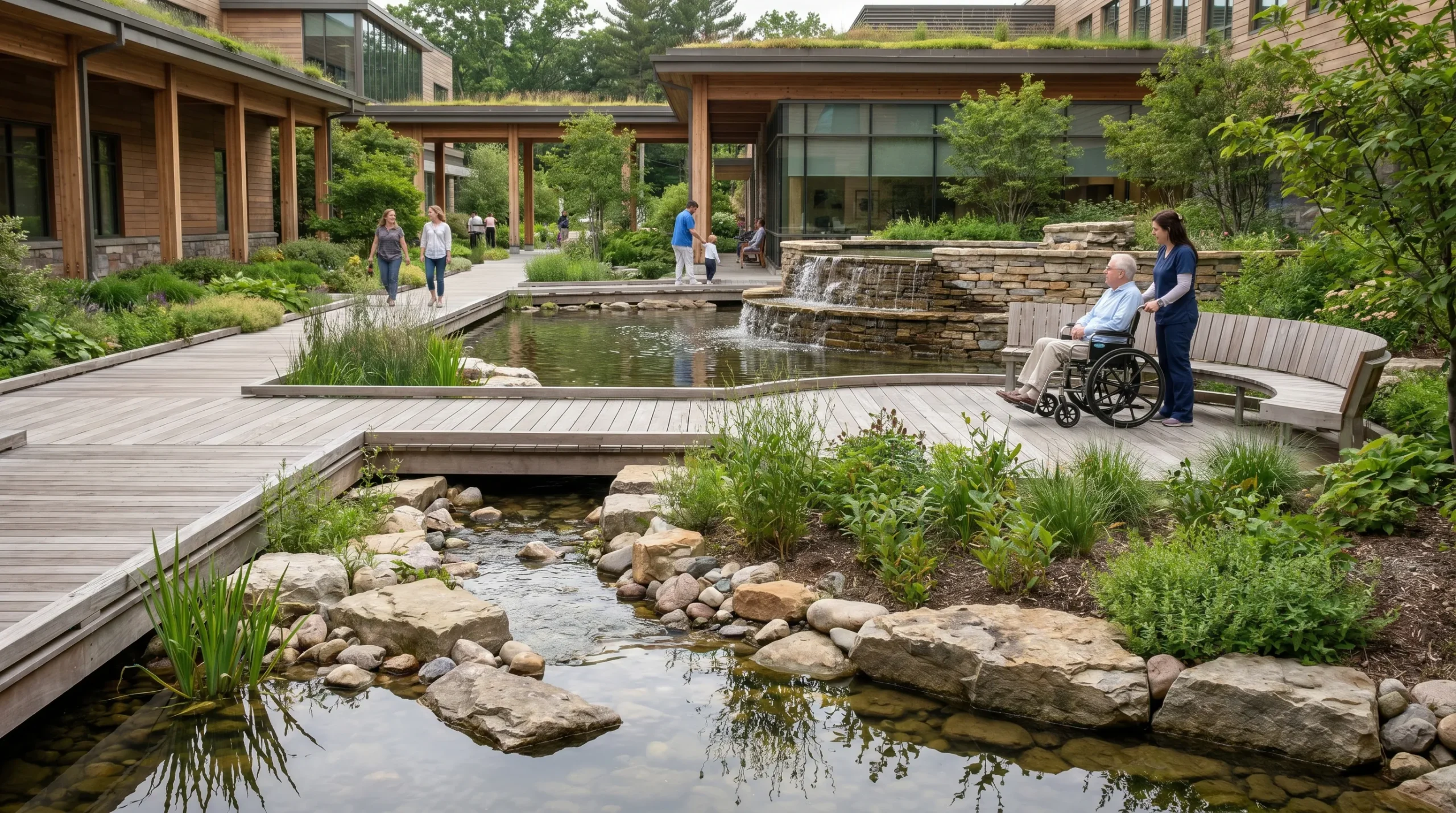
What is the therapeutic design of water conservation and development? At its core, it is a human-centered approach to sustainable design that aims to save water, protect natural systems, and create spaces that actively support comfort, calm, recovery, and well-being. Instead of treating water conservation as only a technical or engineering problem, this approach connects environmental design, sustainable water management, and restorative design so that buildings, landscapes, campuses, parks, and healthcare settings can become both resource-efficient and emotionally supportive.
That matters more than ever. Growing population growth, urban development, climate change, and pressure on freshwater supply are reshaping how designers think about space. Many projections point to a 40% shortfall in freshwater supply by 2030, while roughly 4 billion people already experience severe water scarcity at least part of the year. In other words, water conservation and sustainable development can no longer be separated from the way we design places for people to live, heal, learn, and work.
This article explains the meaning of therapeutic design of water conservation and development, the practical strategies behind it, and how rainwater harvesting, greywater recycling, efficient irrigation, water-wise landscaping, and water resources protection planning can be combined with healing environments, biophilic design, and wellness architecture.
Why Water Conservation Matters in Modern Design and Development
Modern design has to do more than look good. It has to respond to water scarcity, rising demand, and the environmental cost of waste. In many regions, one in four cities now faces water stress, while fast urbanization continues to place extra pressure on municipal water supplies, groundwater, and public infrastructure. That is why water conservation for environmental sustainability has become a central part of green building design, sustainable construction, and long-term planning.
At the building scale, poor water planning increases utility costs, strains local supply, and often leads to unnecessary energy consumption because pumping, treating, heating, and distributing water all consume energy. At the landscape scale, inefficient irrigation, thirsty planting, and bad drainage can turn a beautiful project into a long-term liability. At the city scale, weak planning contributes to water pollution, runoff issues, and declining resilience.
This is where sustainable design becomes more powerful than conventional design. It does not only ask, “How do we build this?” It asks, “How do we build this with less waste, lower impact, and greater long-term value?” That mindset supports sustainable building, water conservation in construction and design, and better outcomes for both ecosystems and communities.
A simple way to understand the shift is through this comparison:
| Traditional design focus | Therapeutic water-conscious design focus |
|---|---|
| Immediate function | Long-term resource resilience |
| Decorative appeal | Human well-being and usability |
| High-input systems | Water-efficient appliances and reuse |
| Water as a utility | Water as a limited shared resource |
| Isolated site decisions | Integrated ecological planning |
When designers adopt this perspective, water conservation techniques in sustainable design become part of a broader social and environmental responsibility.
What “Therapeutic Design” Means in This Context
The word therapeutic can sound medical, but in design it has a wider meaning. Therapeutic design refers to spaces that help people feel calmer, safer, healthier, and more comfortable. That can include a healing garden outside a hospital, a shaded public courtyard, a quiet campus landscape, or a community park designed for reflection and sensory comfort. The goal is not luxury. The goal is support.
In the context of water conservation and development, therapeutic design means building spaces that do two things at once. First, they reduce stress on freshwater resources through better systems, better planning, and smarter materials. Second, they create positive human experiences through shade, planting, movement, accessibility, sound, and contact with nature.
This is where terms like healing environment, therapeutic landscape, restorative outdoor environments, and evidence-based landscape design become important. A place can be sustainable but still feel harsh, dry, exposed, or uncomfortable. On the other hand, a place can feel soothing but waste huge amounts of water. The best projects avoid both extremes.
Think of a hospital courtyard that uses drought-tolerant plants, seating under shade, permeable surfaces, and a small recirculating water feature powered by a low-use system. That is more than a conservation strategy. It is a form of well-being in design. It improves the emotional quality of the space without ignoring water efficiency requirements.
A useful quote often repeated in design circles is this: good sustainable design should heal both people and place. That idea captures the heart of human-centered sustainable design.
The Three Pillars of Therapeutic Water-Conscious Design
To understand the therapeutic design of water conservation and development, it helps to break it into three pillars.
1. Environmental sustainability
This pillar focuses on protecting freshwater supply, reducing waste, improving reuse, and supporting sustainable utilization of water resources. It includes methods such as rainwater harvesting, greywater recycling, water reuse technologies for nonpotable purposes, efficient irrigation systems for sustainable landscaping, and careful stormwater planning.
2. Human well-being and sensory comfort
A place should not only conserve water. It should also improve daily life. That means designing for comfort, shade, accessibility, sound quality, privacy, and emotional ease. This is where biophilic design, sensory landscape design, and design for recovery and relaxation become essential.
3. Long-term function and resilience
A design is only successful if it works over time. Systems must be maintainable, affordable, and realistic for their climate. That means thinking about risk management, end-user needs, maintenance, and whether a project can perform through drought, heat, and changing patterns of use. In some cases, well-designed efficiency strategies can produce 5–10% energy and water resource savings, while certain retrofits can reduce water demand by up to 50% depending on the baseline.
These three pillars turn environmental design from a checklist into a smarter, more practical model.
Core Water Conservation Strategies Used in Sustainable Design
Every strong article on this topic needs to explain the mechanics behind it. Here are the strategies that appear again and again across water conservation in green buildings, landscapes, and development projects.
Rainwater harvesting
Rainwater harvesting in green buildings captures water from roofs or other surfaces and stores it for later use. Depending on local rules, that water may support irrigation, flushing, or other non-potable applications. This reduces pressure on potable water systems and improves site resilience.
Greywater recycling and reuse
Greywater recycling involves reusing lightly used water from sinks, showers, or similar sources after treatment. Systems vary in complexity, but the principle is simple: do not waste usable water when it can support toilets, irrigation, or other low-risk uses. In some projects, reuse systems can supply one-fifth of a city’s water requirements or significantly reduce dependence on centralized supply.
Efficient irrigation
In outdoor settings, efficient irrigation is essential. Drip irrigation, micro-sprinklers, and soil moisture sensors help apply water more precisely. This reduces evaporation, runoff, and overwatering. The best results come when irrigation is combined with water-wise landscaping, mulching, and plant selection suited to local conditions.
Water-wise landscaping
Water-wise landscaping for drought-prone areas focuses on native plants, drought-resistant plants, and drought-tolerant plants that need less water once established. This does not mean landscapes must look sparse or lifeless. With the right design, xeric planting can feel lush, layered, and highly therapeutic.
Water-efficient fixtures and systems
Inside buildings, water-efficient appliances, low-flow fixtures, showerheads, faucets, and dual-flush toilets help reduce demand without sacrificing comfort. When paired with smart monitoring and leak detection, they strengthen water conservation and demand management.
To make these strategies easier to compare, here is a simple summary:
| Strategy | Primary benefit | Therapeutic value |
|---|---|---|
| Rainwater harvesting | Reduces mains demand | Supports resilient landscapes |
| Greywater recycling | Reuses water efficiently | Helps maintain green outdoor spaces |
| Drip irrigation | Cuts waste and evaporation | Keeps planting healthy with less stress |
| Water-wise landscaping | Lowers long-term water needs | Creates calm, natural environments |
| Low-flow fixtures | Reduces indoor use | Supports sustainable daily comfort |
These methods form the practical base of sustainable water management.
How Therapeutic Design and Water Conservation Work Together
A common misunderstanding is that therapeutic spaces must use lots of water. That is not true. The real question is not whether water features can exist, but can water features be therapeutic without wasting water? The answer is yes, if they are planned correctly.
A small fountain that uses a recirculating water feature system is very different from a wasteful ornamental feature that constantly draws new potable water. A shaded courtyard with a low-evaporation water element, planting for cooling, and strong maintenance planning can deliver the sensory value of water without the excess.
This is where water-sensitive therapeutic design becomes powerful. Designers can use:
- recirculating water features
- low-evaporation water features
- non-potable water sources
- shaded placement
- planting to reduce heat stress
- surfaces that support thermal comfort
- maintenance systems that preserve water quality
The result is a space that feels calm and restorative while staying aligned with water conservation measures to reduce water waste loss or overuse.
Consider a public wellness garden. Without water planning, it might rely on high-demand turf, misting systems, and decorative pools. With thoughtful planning, the same space can become a water-conscious healing garden design using rain gardens, shaded seating, textured planting, and one carefully controlled water element that offers sound and sensory comfort. That is the difference between decorative excess and restorative water elements.
Therapeutic Design Principles for Landscapes, Hospitals, Campuses, and Public Spaces
The strongest therapeutic landscape design for water conservation is shaped by people’s experience on the ground. What do they see, hear, feel, and do in the space? Does it invite calm? Does it reduce stress? Is it accessible?
In healthcare landscape design, the answer often begins with hospital healing gardens. Patients, caregivers, and staff benefit from outdoor areas that offer shade, quiet, soft planting, and simple wayfinding. These spaces can include accessible healing gardens with low-water species, permeable paths, and seating designed for comfort and inclusion.
On campuses and in schools, designers can create spaces that support reflection, study, and social well-being while using sustainable landscaping with xeriscaping and native plants. A courtyard with shade trees, bioswales, and sensory planting can become both a conservation feature and a student wellness asset.
In parks and public spaces, inclusive landscape design and universal design in outdoor spaces matter just as much as the planting list. Therapeutic environments should work for older adults, children, people with mobility challenges, and users who need clear, calm, low-stress movement through space.
Here are the principles that most often strengthen outcomes:
- Use climate-appropriate planting
- Create shade and thermal comfort
- Design for accessibility and movement
- Reduce noise and visual clutter
- Use water carefully, not excessively
- Support privacy, pause, and reflection
These principles turn a site into a real community well-being space rather than just a landscaped project.
Water-Sensitive Planning Tools That Strengthen Therapeutic Development
While many competitors focus on systems inside the site, stronger projects look beyond the property line. This is where water-sensitive urban design, low-impact development, and blue-green infrastructure matter.
WSUD and LID aim to manage water naturally through the landscape rather than treating runoff as a problem to push away quickly. Techniques such as bioswales, rain gardens, permeable paving, and stormwater capture help store, filter, and slow water while improving environmental performance.
These tools are especially valuable in therapeutic settings because they can be both functional and beautiful. A rain garden is not just drainage. It can also be habitat, color, texture, and seasonal interest. A bioswale is not just a technical trench. It can become part of a calming edge condition in a campus or park.
This planning mindset also connects to nature-based solutions, green infrastructure, and sponge city design. In fast-growing cities, these strategies support climate resilience, public comfort, and long-term resource stability. That makes them highly relevant as we move toward 2030 and beyond.
Urban Water Resource Protection and Ecological Planning
A full explanation of this keyword also needs a planning lens. Water resources protection planning and urban water conservancy landscape work at a larger scale than individual buildings. They deal with watersheds, district systems, runoff, pollution-carrying capacity, and the relationship between growth and resource protection.
In some planning studies, regions are divided into 10 administrative regions, then simplified into three regions and two levels for management. Such models help planners align land use with environmental thresholds. In one cited case, planning outcomes were evaluated with scores such as 93.01%, 93.3%, and 93.11%, showing how technical frameworks can guide ecological concept in urban water conservancy landscape planning.
For general readers, the simpler takeaway is this: water conservation is not only a building issue. It is also a land-use, ecological, and development issue. If cities ignore water function zones, runoff quality, and carrying capacity, even efficient buildings will struggle within a failing wider system.
That is why planning and design of functional areas for water resource protection matters so much in long-term development.
Smart Technologies and Emerging Systems for Better Water Management
Technology is not the whole solution, but it can make good design perform better. Smart systems now support water management techniques through sensors, automation, and data. In landscaping, soil moisture sensors prevent overwatering. In buildings, leak detection can reduce hidden losses. At a larger scale, AI-driven predictive analytics can help forecast demand, track patterns, and support maintenance.
Emerging tools like digital twin technology and even niche innovations such as nanobubble technology are also entering the conversation. These are not necessary for every project, but they show how technology innovations are expanding the options for designers and operators.
The key point is simple: smart tools should support people, not replace design judgment. A poor landscape with expensive sensors is still a poor landscape. But a well-designed space with the right monitoring can become more efficient, more resilient, and easier to maintain.
Standards, Certifications, and Development Frameworks
Frameworks like LEED, BREEAM, and regional water standards help move conservation from good intention to actual practice. These systems reward strategies such as reduced potable water demand, landscape efficiency, reuse, and better building performance.
That matters because how LEED and BREEAM promote water conservation is not just about points. It is about creating a culture where regional standards for sustainable water practices in construction become normal. In areas facing drought or rapid growth, such standards can improve outcomes across housing, schools, healthcare, and commercial development.
Of course, certifications alone are not enough. A project can meet technical standards and still fail emotionally if it ignores human well-being. That is why the best work combines framework-driven performance with therapeutic design principles.
Real-World Examples of Therapeutic Water-Conscious Development
To make this more concrete, imagine three examples.
The first is a healthcare courtyard. Instead of turf-heavy planting and a high-maintenance pond, the design uses shaded seating, drought-tolerant planting, permeable paving, and a quiet recirculating wall fountain. The result is a healing environment that supports recovery and staff stress relief while keeping water use low.
The second is a university campus garden. The site integrates rainwater harvesting, bioswales, and native plants. Students use the area for study and quiet breaks. The water strategy is mostly invisible, but the emotional value is strong. This is a good model of water-efficient wellness spaces.
The third is a public park in a drought-prone region. Instead of decorative lawns, it uses drought-conscious healing gardens, shaded paths, and a multi-functional stormwater landscape. In a world where 4 billion people face water stress and major cities face supply pressure, this kind of practical, restorative design becomes much more important.
Common Mistakes to Avoid
Even well-meaning projects can go wrong. One mistake is treating water features as purely decorative. Without recirculation, source planning, and maintenance, they can become expensive and wasteful.
Another mistake is choosing planting for appearance alone. A beautiful design that ignores arid conditions, water demand, or maintenance reality will perform badly over time. The same is true when teams separate sustainability from user experience. A technically efficient site that feels hot, harsh, or inaccessible is not truly therapeutic.
Designers should also avoid ignoring water quality, risk management, and usability. A successful low-water environment should still feel welcoming and comfortable. This is especially important in public and healthcare settings.
Frequently Asked Questions
What is therapeutic design in sustainable development?
It is a design approach that combines resource efficiency, environmental responsibility, and human well-being. It creates places that save water and support healthier, calmer daily experiences.
Can a healing garden conserve water?
Yes. A healing garden can use native plants, efficient irrigation, mulching, shade, and carefully selected materials to reduce water demand while still feeling lush and restorative.
Are water features always wasteful?
No. Recirculating water features, non-potable supply, and climate-sensitive placement can make water features more sustainable. The issue is poor design, not water itself.
What is the best low-water strategy for public spaces?
There is no single answer, but the strongest combination usually includes water-wise landscaping, stormwater capture, permeable paving, and climate-responsive therapeutic design.
How does water-sensitive urban design support well-being?
Water-sensitive urban design helps create greener, cooler, healthier environments. It improves stormwater performance while also supporting comfort, habitat, visual quality, and public use.
Conclusion: Designing Places That Save Water and Support Well-Being
The therapeutic design of water conservation and development is not a trend phrase. It is a useful way of describing how modern places should work. The best spaces now need to be water-efficient, ecologically responsible, socially supportive, and emotionally restorative at the same time.
That means combining water conservation, sustainable design, rainwater harvesting, greywater recycling, water-wise landscaping, and ecological planning with the principles of therapeutic landscape, biophilic healing spaces, and community well-being spaces. When those elements come together, development becomes more resilient, more humane, and more future-ready.
Disclaimer:
This content is for general informational purposes only and should not be taken as professional advice. Always consult qualified experts for water conservation, design, or development decisions based on your specific site and conditions.