
 By adnanshabbir942@gmail.com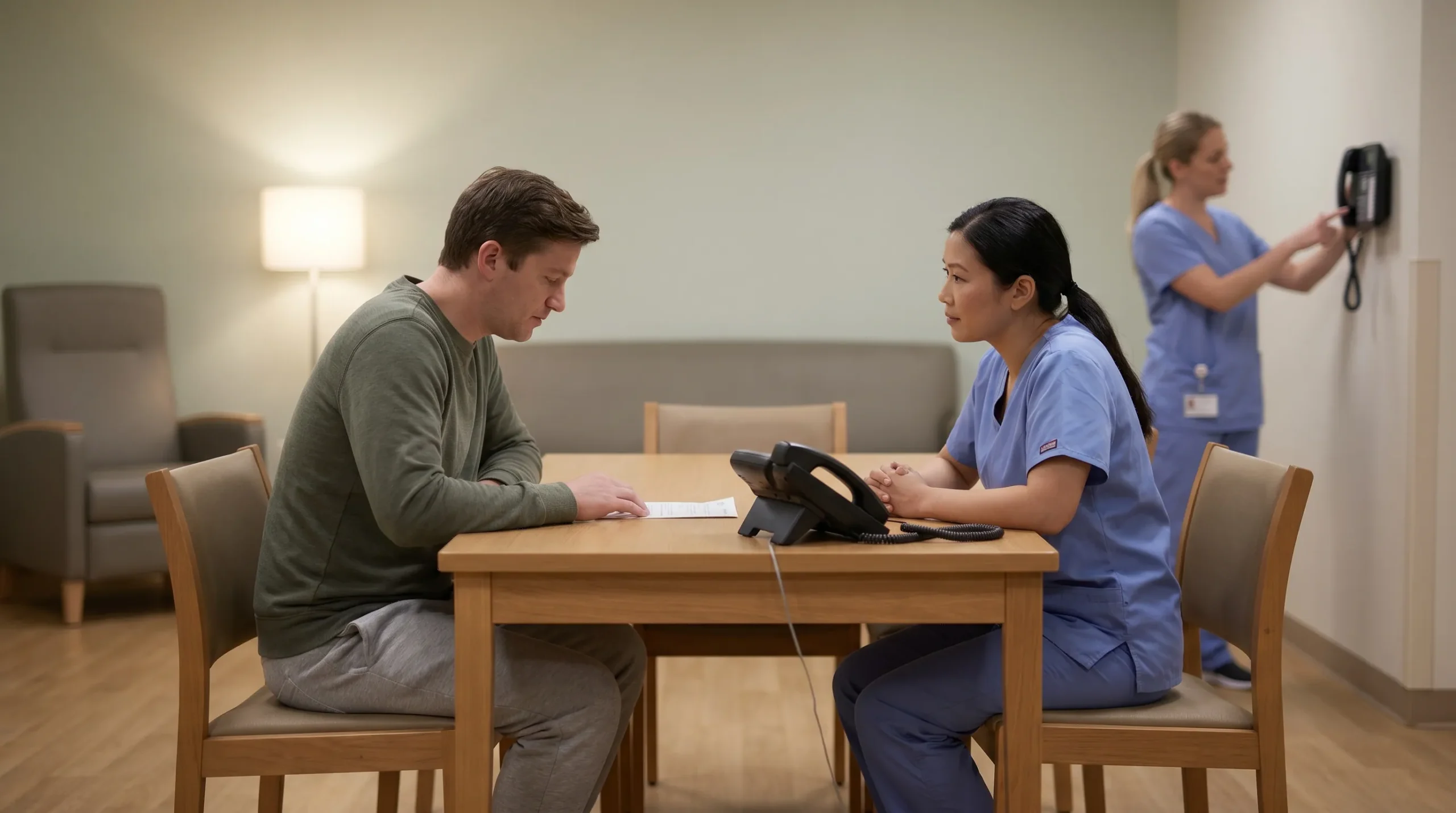
How to get a phone in the psych ward usually comes down to one simple truth: there is no single universal rule. Some psychiatric hospitals allow limited or supervised access, some let patients use a unit phone instead of a personal smartphone, and some restrict personal devices much more heavily because of privacy, safety, and treatment concerns. Even advocacy and hospital sources that are broadly supportive of patient communication stress that each hospital or unit has its own policies and rules.
That means the real answer is not usually “here is a trick to get your phone.” The better answer is: learn the unit’s phone policy, understand why restrictions exist, ask what alternatives are available, and prepare before admission whenever possible. In many inpatient settings, patients may still be able to call family, access important numbers, or use a phone during supervised periods, even when unrestricted personal smartphone use is not allowed.
Why psych wards restrict phones in the first place
Most psych ward cell phone policy decisions are built around four concerns: privacy, confidentiality, safety, and the need to preserve a therapeutic environment. Mental health hospitals may worry that phones can record other patients, capture private information, or create distress through social media, outside conflict, or treatment disruption. Rethink Mental Illness says restrictions are meant to protect the safety and privacy of all patients, help prevent interference with treatment, and maintain a therapeutic environment. The Brigham and Women’s Faulkner inpatient psychiatry project lists similar concerns, including possible recording of information, social media–related distress, and risks tied to cords or sharp device parts.
This is why are phones allowed in a psych ward is such a common question. It is not always about punishment or control. Often, staff are trying to balance patient rights with health privacy, confidentiality breaches, and the realities of caring for people during an acute episode of mental illness. In some units, that balance leads to full restriction. In others, it leads to supervised phone use in psychiatric units, limited access windows, or separate rules for different device features like the camera or internet access.
Do all psychiatric hospitals have the same phone policy?
No. Psychiatric hospital phone access varies widely by facility, country, unit type, and individual risk assessment. Rethink states that patients can have a mobile phone in a mental health hospital, but each hospital will have its own policy. NHS England likewise says patients should generally be free to use mobile phones in hospitals when local risk assessment shows use would not create a material threat to safety, privacy, or dignity. On the other hand, inpatient psychiatry literature notes that internet access and device use remain controversial and often vary by institution.
That variation matters because real psych ward phone rules by hospital can differ a lot. An adult psychiatric hospital may handle phones one way, while an adolescent ward, secure unit, or more restrictive behavioral health setting may handle them very differently. Some hospitals may allow access only in common areas or during staff-supervised times. Others may store the phone with personal belongings and provide access only when needed for telephone numbers, family contact, or discharge planning.
So if you are asking do psych wards let you keep your phone, the most accurate answer is: sometimes, but never assume. The unit’s own hospital policies and rules matter more than what happened to someone else at another hospital.
Can you keep your own phone, or will staff take it?
One of the biggest user fears is what happens to your phone in a psych ward. In many inpatient settings, staff may ask you to hand over your personal phone at admission, especially if the unit does not allow unrestricted device possession. That does not always mean you will have zero contact with the outside world. It often means your phone is stored safely with belongings and access is handled under the unit’s policy. Some hospitals may allow temporary phone access to get contact numbers or handle important practical issues. The Brigham and Women’s Faulkner project specifically describes patients being allowed access to phones with staff member presence so they could retrieve important telephone numbers.
In that project, the unit later moved from brief staff-assisted access to a daily supervised 30-minute period of phone use in a group setting, with a tape cover placed over the phone camera. That is a strong example of how can you use your phone in inpatient mental health is often not a yes-or-no issue. It may be a limited-access issue instead.
So, do they take your phone in a psychiatric hospital? They may. But the more useful question is: If my personal phone is restricted, what communication options will I still have?
What communication options do you have if personal phones are restricted?
Even where smartphones are limited, hospitals often still provide ways to communicate. NAMI notes that psychiatric facilities may have phones in common areas, and family members may be able to contact the unit, the nursing desk, or a patient phone area depending on the rules. That distinction is important: a patient may not have the right to keep a personal smartphone, but they may still have practical ways to talk with family members, friends, or other supportive people.
This is where a lot of searchers really need help. Alternatives if phones are not allowed in the psych ward can include a hospital landline for psychiatric patients, scheduled call periods, staff-assisted access to important numbers, or supervised personal-device use for limited tasks. The Faulkner project found that many patients considered features such as telephone calls, text messaging, and email important for recovery. Specifically, among 71 inpatients, the top phone features named as important for recovery were telephone calls (81.2%), text messaging (78.3%), and email (63.8%).
That matters for both users and SEO because it answers a real pain point: How do I call family from a psych ward if my phone is taken? The answer is often: through the unit’s approved communication process, not necessarily through unrestricted smartphone possession. In real life, that may look like calling during certain hours, asking staff for help, or using a monitored or shared phone space.
What rights do patients have about phone access and communication?
This is where many people get confused. Patient rights when admitted to a psych ward do not always equal a right to keep a personal smartphone. In the United States, privacy and mental health communication questions are shaped partly by HIPAA and facility policy. HHS guidance says providers may listen to information from family members and can communicate with family, law enforcement, or others when there is a serious and imminent threat of harm to self or others. NAMI also explains that providers can accept information from relatives and caregivers even when they cannot freely disclose protected information back without proper consent.
In plain language, that means communication rights and smartphone possession are not the same thing. A hospital may limit your personal device because of privacy and security concerns, but still allow clinically appropriate communication with loved ones. If a patient has signed a privacy release, has the needed capacity to consent, or has a psychiatric advance directive, that may affect how information can be shared. But it still does not automatically create unrestricted personal phone access on the unit.
The strongest, safest way to write this for readers is: You may have a right to reasonable communication and privacy protections, but the exact method of communication is often controlled by the facility’s safety and confidentiality policy.
Are phone rules different for teens, adults, voluntary patients, and secure units?
Yes, and this is one of the biggest content gaps competitors only touch lightly. Teen psych ward phone rules are often stricter than adult-unit policies because minors bring added privacy, guardian-consent, and supervision issues. A youth-focused hospital guide from Ireland says many young patients are asked to leave personal mobile phones at home or with a parent or guardian, though some may receive a basic mobile phone without camera or internet access, or be allowed to use a hospital landline instead.
For adults, the rules can still differ sharply between a standard inpatient unit and a secure unit. The Faulkner project, for example, took place on a 24-bed secure acute inpatient psychiatry unit and still found a way to create structured access through policy. That shows that even in more controlled settings, supervised phone use in psychiatric units can be possible when the hospital designs a workable process.
Whether someone is a voluntary or involuntary patient can also affect daily freedoms, but it is not safe to assume that voluntary status means automatic phone possession. Can voluntary patients keep their phones and can involuntary patients use a phone are both policy-specific questions. The most accurate advice is to ask the unit directly.
How phones can help recovery — and how they can also interfere
This is where the issue becomes more nuanced than most articles admit. Personal devices can support recovery-oriented care by helping patients stay connected to family and friends, manage life tasks, access emotional support, and use calming content such as music. The Faulkner inpatient psychiatry project noted that personal devices may help with paying online bills, messaging employers, contacting peers and family, and creating self-soothing sensory engagement through a personal music library. Over a 6-month period, the project found no patient breaches of confidentiality and reported that structured device use was well received by both staff and patients.
The numbers are also useful for authority. In that same project, 97.2% of patients owned a cell phone, 79.2% brought one to the hospital, and the most valued recovery-related features were telephone calls (81.2%), text messaging (78.3%), email (63.8%), social media (56.5%), pictures/videos (56.5%), and games (47.8%). Patients in the supervised-access period were also more satisfied with the policy and reported greater closeness with family and friends, even though not every comparison reached statistical significance.
At the same time, the concerns are real. Phones can create social media distraction, increase distress, undermine group participation, and raise risks around recording, privacy, or conflict from the outside world. The best policy is usually not “phones are always good” or “phones are always bad.” It is structured access that supports recovery without damaging safety, treatment, or confidentiality.
What to do before admission if you are worried about losing phone access
This is one of the most useful sections for readers because it solves a practical problem competitors mostly ignore. If you think inpatient admission may happen, prepare as if your personal phone might be limited. Write down the most important telephone numbers on paper. Make sure one trusted person knows how to contact your employer, family, or school if needed. If you use your phone for bills, banking, or app-based sign-ins, think ahead about what would happen if you could not access two-factor authentication for a few days. None of this guarantees a specific policy outcome, but it can reduce panic later.
It also helps to ask in advance about what to bring to a psychiatric hospital and what not to bring to a psych ward. Ask whether you can bring a printed contact list, whether family can call the unit, whether your phone will be stored securely, and whether there is any process for brief supervised access to retrieve numbers. Since the Faulkner project showed that important phone use often involved calls, texts, email, and life-management tasks, this kind of preparation is highly practical.
A simple preparation table can help:
| Write down key phone numbers | You may not have your contacts list |
| Tell one trusted person your situation | They can update others if needed |
| Ask about the unit’s phone policy | Rules vary by hospital |
| Check how family can reach you | A patient phone area or nursing desk may be used |
| Plan for account logins and bills | Phones often handle daily life tasks |
Questions to ask the hospital about phone rules before you go
If you can call ahead, do it. This is often the fastest way to answer psych ward communication rules without guessing. Ask:
- Are phones allowed in this psych ward?
- If not, what happens to my phone in the psych ward after admission?
- Can I access my contacts list or important telephone numbers?
- Can family call me in a psych ward, and how?
- Is there a patient phone area or scheduled phone time?
- Are rules different for adult, teen, or secure units?
- Are there exceptions for work, childcare, or urgent personal needs?
- Can patients access voicemail or email under supervision?
Those questions are simple, but they cover the biggest user pain points: family contact during hospitalization, privacy, logistics, and whether personal electronics can be used for urgent practical needs.
Frequently asked questions about phones in the psych ward
Are phones allowed in a psych ward?
Sometimes. Policies vary by hospital and unit. Some allow personal devices with restrictions, while others rely on shared or supervised communication options.
Do psych wards take your phone away?
They may. In many units, personal phones are stored and access is limited or supervised rather than fully open.
Can you call family from a psychiatric hospital?
Often, yes. The bigger question is how. Hospitals may use common-area phones, patient phone areas, or staff-assisted communication.
Can family call you in a psych ward?
Often yes, but it may happen through the unit or nursing desk rather than directly to your own phone. NAMI recommends contacting the facility to learn its process.
Can minors keep their phones in psychiatric hospitals?
Rules for minors are often stricter. Some youth settings may require the personal phone to stay home or with a guardian, while allowing a basic phone or hospital landline instead.
Can you text or use Wi-Fi in a psychiatric hospital?
Possibly, but not always. Texting, email, and internet access are among the most controversial parts of inpatient device policy and vary by institution.
The bottom line
If you are searching how to get a phone in the psych ward, the most honest answer is that you usually cannot force a hospital to let you keep unrestricted personal smartphone access. What you can do is understand the rules, ask direct questions, prepare important contacts ahead of time, and find out what approved communication options are available. Across current sources, the consistent pattern is that hospitals try to balance privacy, safety, patient confidentiality, and recovery—and many do allow some form of communication even when personal phones are restricted.
The strongest article angle, and the most useful answer for readers, is not “how to sneak a phone in.” It is how phone access really works, why restrictions exist, what rights and limits apply, and what you can do before admission to stay connected with family and manage life outside the hospital. That is the version most likely to help users and outperform thinner competitor content.
Disclaimer:
This content is for general informational purposes only and is not medical, psychiatric, or legal advice. Psychiatric hospital phone policies vary by facility and situation, so always follow the specific rules of the treating hospital and consult staff or qualified professionals for guidance in your case.